

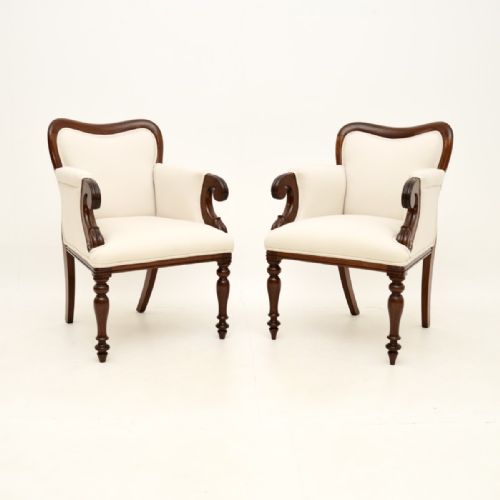


Regency Scroll Seat
Regency scroll seat pieces are elegant chairs, benches, and daybeds defined by sweeping arms and frames, offering classic seating for period interiors.
Regency Scroll Seat
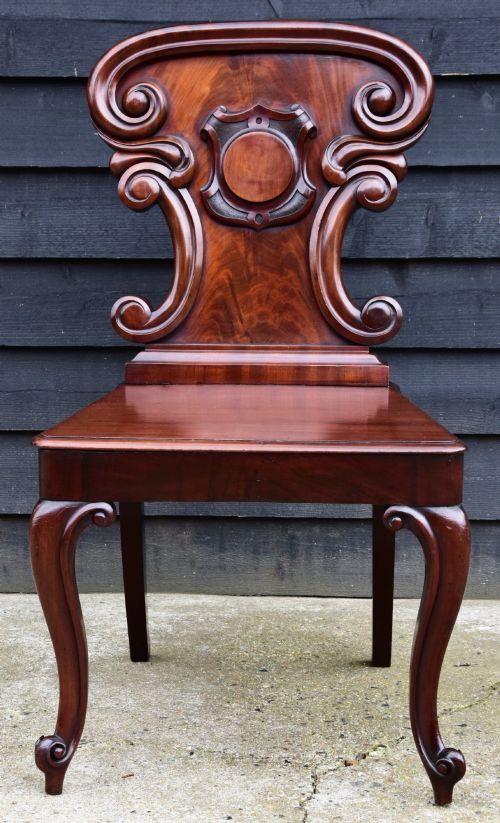
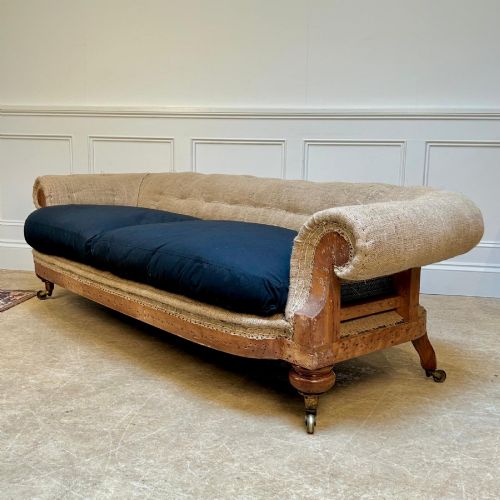
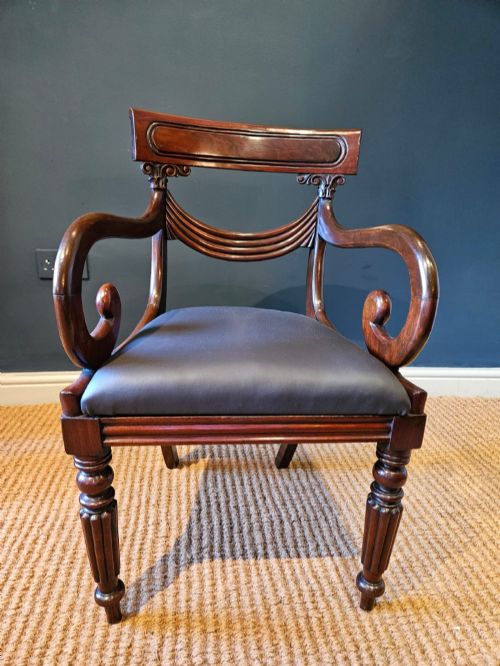
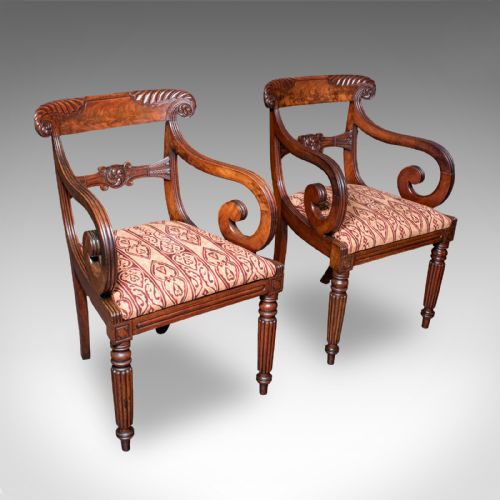
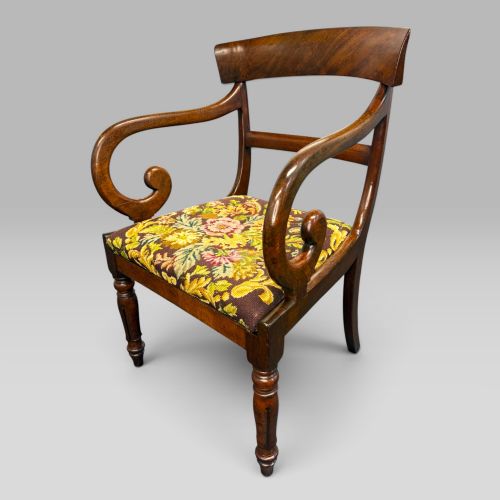
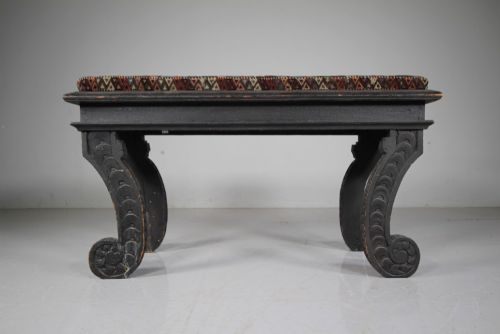
A regency scroll seat encompasses a range of seating forms including window seats, daybeds, hall benches, and armchairs designed with curved wooden terminals. The selection spans the Regency and William IV periods, alongside later Victorian interpretations and early twentieth-century revivals.
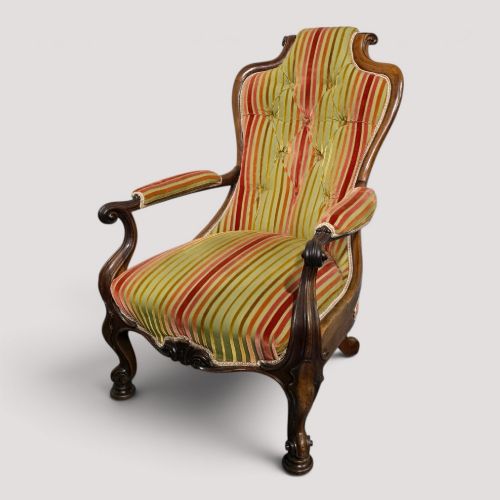
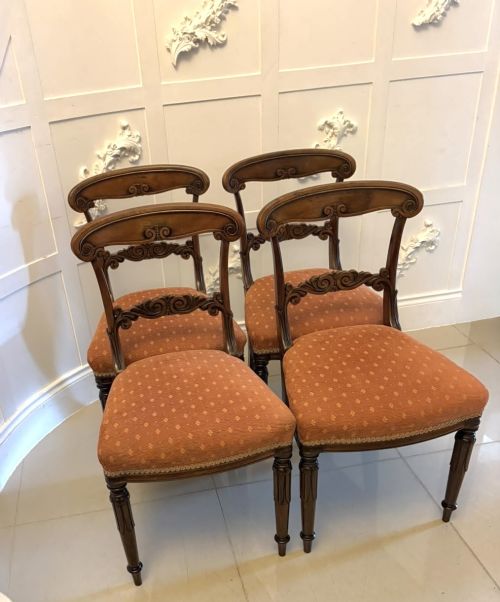
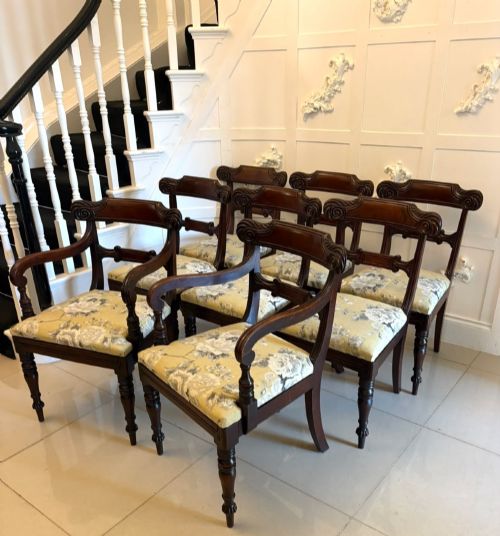
Buyers most frequently encounter mahogany and rosewood armchairs, alongside oak and simulated rosewood window seats featuring upholstered or cane seating. These pieces range from singular library chairs to matched sets of dining chairs and hall benches.
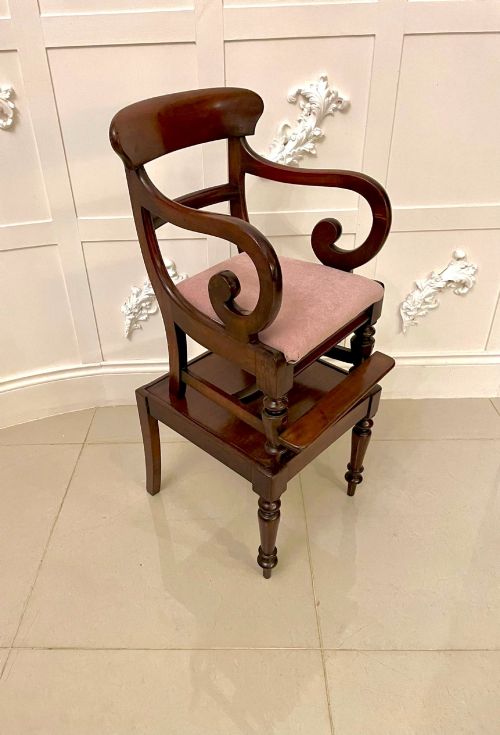
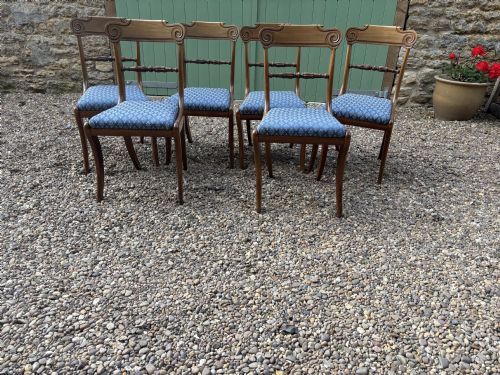
The aesthetic bridges late Georgian elegance and nineteenth-century comfort, utilising sabre legs, scroll arms, and show frames. Originating largely in English workshops, these items serve functional roles in reception rooms, drawing rooms, and hallways.
How they were made
Cabinetmakers constructed these frames primarily from solid mahogany, rosewood, and oak, frequently employing simulated grain finishes on alternative timbers such as pine or maple. Ebonised details and brass mounts provided contrast on select arms and legs.
Upholstery techniques varied from traditional drop-in pads and needlepoint to buttoned ticking stripe, hessian, and floral textiles. Caned seating panels also appeared on specific library and bergere armchairs for lighter support.
Joinery involved curved wooden components shaped to form the signature scroll arms and sabre legs seen across the period. Carved mahogany show frames and X-framed bases demonstrated structural joinery suited to heavy daily use.
Regency Scroll Seat Retail Price Guide 2026
Typical asking prices for regency scroll seat among the pieces listed under this phrase on Sellingantiques today, from the lower quarter to the upper quarter. They describe what is for sale here now, not the wider market.
Listings feature mahogany, rosewood, oak, and painted pine across chairs, benches, and daybeds from the Regency and William IV periods.
What varies in quality
The refinement of the timber grain and the depth of the wood carving dictate the upper tier of these pieces. Dense solid mahogany and richly figured rosewood separate superior examples from simpler painted pine or standard oak items.
Proportion and execution of the scroll arm terminals reveal the skill of the original maker, particularly in matched sets of dining chairs or hall benches. Crisp detailing on carved elements and integrated frame construction denote higher workshops.
The choice of secondary materials, such as cane seating panels or bespoke textile upholstery, influences the overall integrity. Pieces retaining original structural joinery sit above those altered extensively over subsequent centuries.
Gillows
The Regency Scroll Seat Glossary
- Bergere
- An enclosed upholstered armchair with a wooden frame, often featuring cane work to the sides and back. This form provides a lighter visual weight in formal reception rooms.
- Sabre leg
- A concave tapering furniture leg that curves outward towards the ground, typical of Regency seating design. It adds dynamic support to chairs and small benches.
- Daybed
- An elongated piece of furniture intended for reclining, combining elements of a chair and a sofa. These often feature a single raised scrolling end.
- Show frame
- A wooden structural frame left exposed around the upholstered elements of a sofa or armchair. This highlights the grain and carving of the timber.
- Window seat
- A bench-like form designed to fit within a window recess, typically featuring scrolled ends and upholstered seating. They appear in oak, mahogany, and painted pine.
Regency Scroll Seat: Frequently Asked Questions
What is a regency scroll seat?
A regency scroll seat refers to chairs, benches, and daybeds featuring distinctive curved wooden arm terminals or scrolling ends. These forms originate primarily from the early nineteenth century during the Regency and William IV eras.
They combine architectural timber frames with upholstered, leather, or cane seating designed for parlours, libraries, and hallways.
How do I identify a genuine piece?
Authentic pieces display period timber characteristics such as solid mahogany, rosewood, or oak construction with traditional joinery methods. Look for historical wear patterns and hand-carved details on the scroll arms and legs.
Comparison with documented examples from the Regency and William IV periods helps confirm the era of manufacture.
Were these seats used in dining rooms?
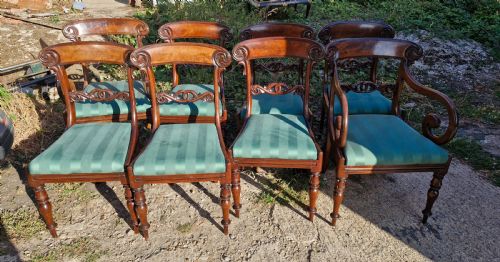
Sets of dining chairs frequently incorporated scroll arms and sabre legs during the Regency period. These elbow chairs matched larger dining tables in substantial country houses.
Single armchairs served alternative functions in libraries, morning rooms, and hallways as reading or desk seats.
How should I care for antique upholstery?
Maintenance depends on the specific textile, whether it is needlepoint, buttoned ticking stripe, velvet, or hessian. Regular light vacuuming with a soft attachment preserves fabric integrity.
Protect wooden frames and cane panels from direct sunlight and extreme humidity changes to prevent timber splitting.