

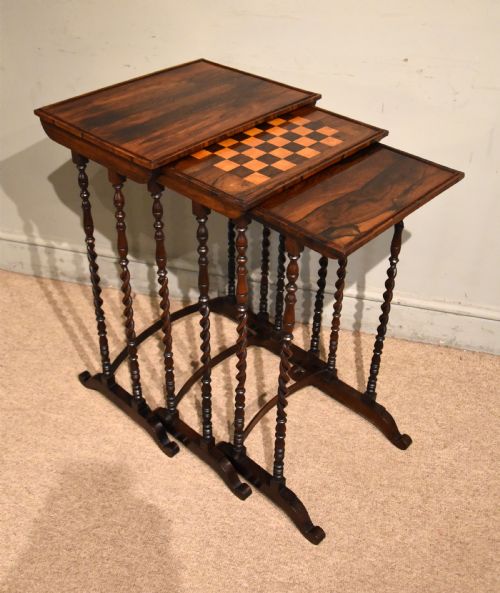


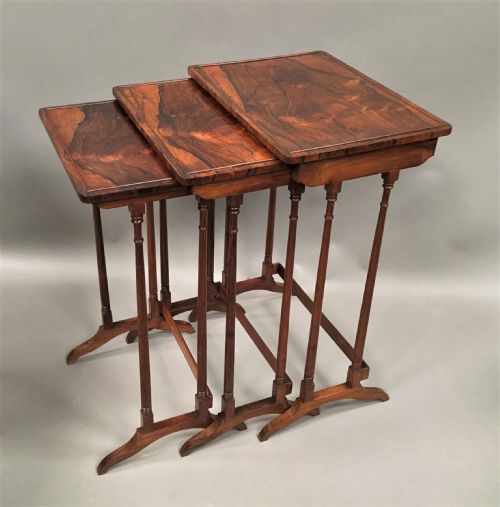
Regency Rosewood Quartetto Tables
Regency rosewood quartetto tables are clever nesting sets designed for compact elegance, offering layered surfaces that slide seamlessly away when floor space matters.
Regency Rosewood Quartetto Tables
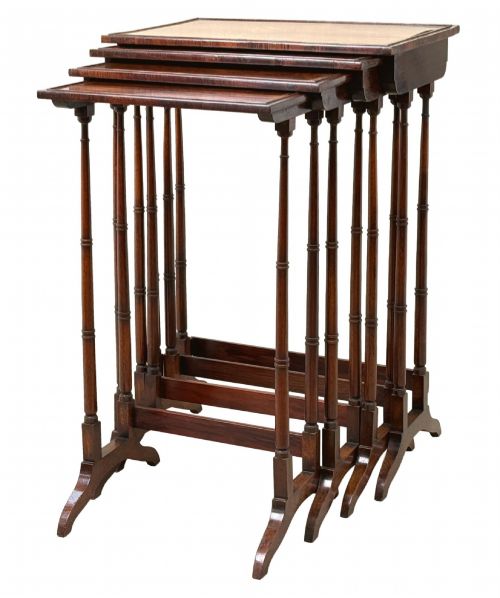
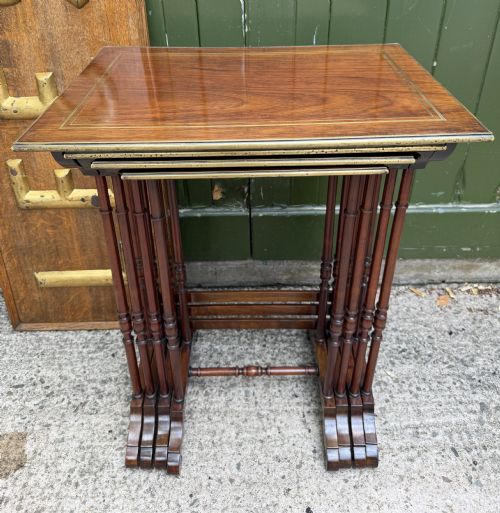
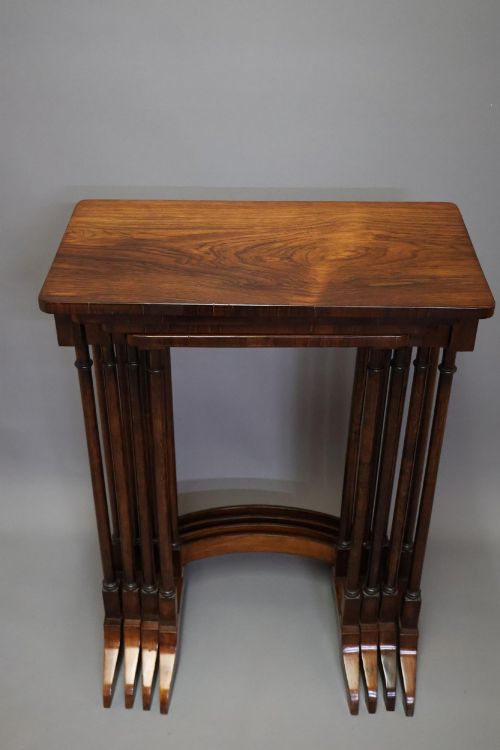
When you search for regency rosewood quartetto tables, you encounter sets of graduated occasional tables engineered to nest neatly inside one another. The evidence shows these pieces appearing primarily across the Regency and Georgian periods, alongside the nineteenth century.
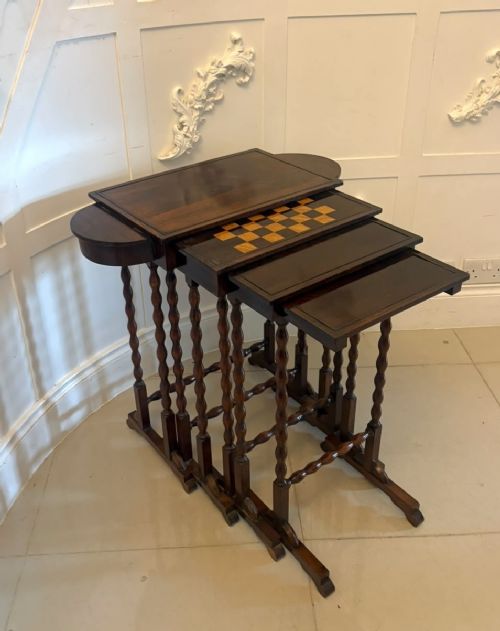
Most examples function as a nest of four tables, though sets of three also occur in the records. These pieces serve as versatile occasional tables, and some examples incorporate integrated chess boards or tables.
The materials and forms recorded point directly to British cabinet-making traditions of the early nineteenth century. Buyers meet authentic iterations that reflect both standard production and pieces attributed to prominent London workshops.
How they were made
Makers utilised rich rosewood as the primary timber, often framing or contrasting the rich grain with lighter woods such as satinwood and boxwood. Brass inlay appears on specific examples, adding precise geometric detail to the polished top surfaces.
Joinery had to remain exceptionally precise because the tables needed to slide smoothly into one another without binding. Timbers were selected for stability and figured grain to ensure the nested arrangement looked cohesive when stored.
Regency Rosewood Quartetto Tables Retail Price Guide 2026
Typical asking prices for regency rosewood quartetto tables among the pieces listed under this phrase on Sellingantiques today, from the lower quarter to the upper quarter. They describe what is for sale here now, not the wider market.
The listings span the Regency, Georgian, and nineteenth-century periods, utilising rosewood, satinwood, brass, boxwood, inlaid wood, and leather.
What varies in quality
Quality rests heavily on the selection of the rosewood veneer and the crispness of any inlaid decoration, such as boxwood or brass stringing. The cleverness of the nested structure requires exact tolerances so that each table seats correctly within the frame of the next.
Gillows·W&C Wilkinson London
The Regency Rosewood Quartetto Tables Glossary
- Quartetto tables
- A nest of four graduating tables designed to fit one beneath another. This term comes from the Italian for a group of four.
- Nesting tables
- A set of portable tables of descending size that store within the footprint of the largest. They provide extra surface space on demand.
- Rosewood
- A dense, heavily figured dark timber favoured for fine furniture during the nineteenth century. Its rich natural contrast makes it ideal for decorative tabletops.
- Stringing
- Thin lines of contrasting wood or metal inlaid into the surface of furniture. It creates delicate borders around panels and table edges.
- Occasional table
- A small, movable table intended for specific, temporary uses rather than a permanent position. These pieces are easily relocated around a room.
Regency Rosewood Quartetto Tables: Frequently Asked Questions
How were quartetto tables used originally?
These tables served as versatile furniture that could be deployed around a drawing room when guests required surfaces for drinks or writing. Once the gathering ended, the smaller tables slid back into the largest frame.
Some iterations doubled as game tables when fitted with a chess board top. This multifunctional design suited the elegant entertaining habits of the early nineteenth century.
How do I spot a maker?
Makers are identified through branded signatures, paper labels, or distinct construction methods documented in historical records. Names like W&C Wilkinson London appear on specific pieces.
Other sets carry strong stylistic attributions to workshops such as Gillows based on known design traits. Examining the joinery and timber selection helps connect unsigned tables to specific cabinet-makers.
How do I date these tables?
Dating relies on stylistic markers from the Regency and Georgian periods, alongside the nineteenth century. The use of rosewood and specific inlay techniques aligns with furniture trends of those decades.
Comparing the graduation mechanism and leg profiles with recorded archival pieces narrows down the manufacturing window. Physical wear and timber ageing provide additional clues to their age.