

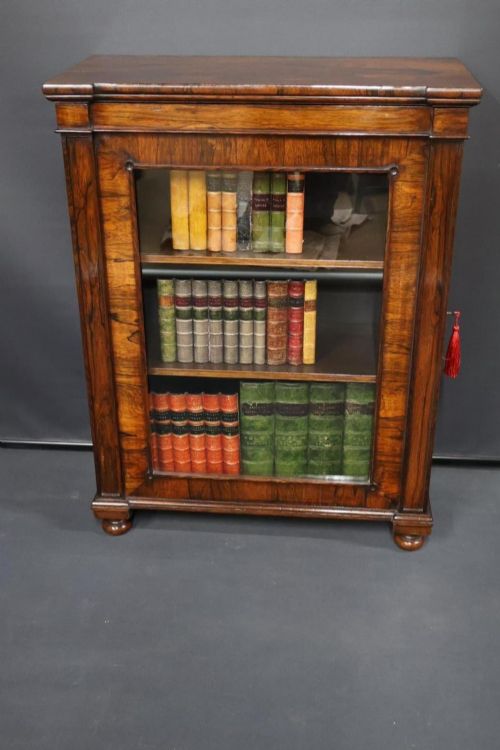


Regency Rosewood Pier Cabinet
A regency rosewood pier cabinet brings architectural elegance and dark timber grain to a drawing room, offering a display surface beside a window.
Regency Rosewood Pier Cabinet
A regency rosewood pier cabinet is a low storage piece designed to fit the wall space between tall windows, appearing across nineteenth-century rooms in styles from Regency to William IV. The forms seen in these records include side cabinets, pedestal cabinets, and chiffoniers, often built to house books or display decorative objects.
Most examples date from the nineteenth century, spanning periods from George IV through to mid-Victorian decades around eighteen fifty. They serve as compact storage units that combine a flat top surface, frequently finished in marble, with enclosed lower cupboards.
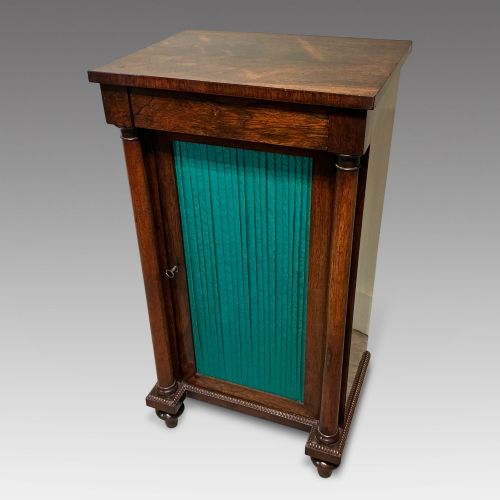
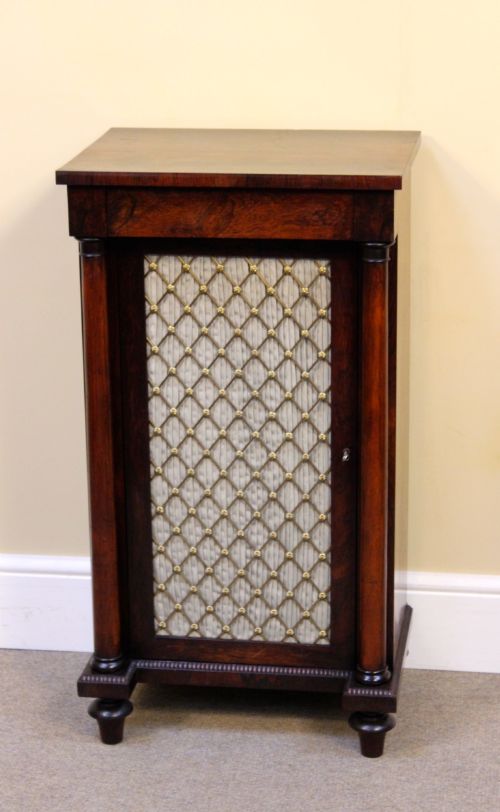
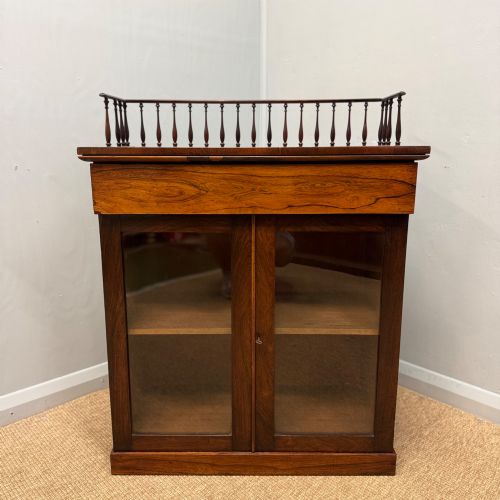
The version most commonly met on this page is the single or paired rosewood cabinet, sometimes fitted with glazed or brass grille doors and interior fabric linings. These pieces reflect the formal tastes of the Regency and Grand Regency eras, prioritising symmetrical design and rich dark wood.
How they were made
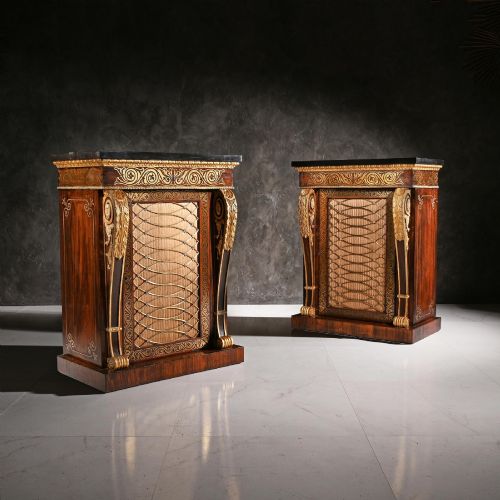
Cabinet makers utilised dense rosewood veneers applied to secondary carcase timbers, often accentuating the dark grain with contrasting ebony details. Brass inlay and giltwood mounts provide metallic highlights against the polished timber surfaces.
Interiors and upper sections integrate clear glass panels, mirrored glass, and silk fabric linings behind brass grilles. Selected pieces incorporate heavy marble slabs set into the top surface for durability and formal effect.
Regency Rosewood Pier Cabinet Retail Price Guide 2026
Typical asking prices for regency rosewood pier cabinet among the pieces listed under this phrase on Sellingantiques today, from the lower quarter to the upper quarter. They describe what is for sale here now, not the wider market.
Several cabinets hide their contents behind tiny brass grilles lined with pleated silk.
What varies in quality
The standard of a regency rosewood pier cabinet rests upon the precision of its brass inlay and the selection of the timber veneers. Finer workshops achieved seamless integration of metal work into the wood surface.
Proportion and the integration of secondary materials like marble tops or gilded mounts distinguish standard production from exceptional cabinet work. The handling of interior details such as silk linings and brass grilles also marks the tier of manufacture.
Louis Constantin Le Gaigneur
The Regency Rosewood Pier Cabinet Glossary
- Pier cabinet
- A low cabinet designed specifically for the wall space between windows, known as a pier. These pieces maximise vertical room without blocking natural light.
- Chiffonier
- A low sideboard or cabinet featuring a combination of drawers and enclosed shelving, popular during the nineteenth century. It serves as both a storage unit and a display surface.
- Brass grille
- A fine metal lattice fitted into cabinet doors in place of wood or glass, often backed with pleated silk fabric. This allowed air circulation while concealing the contents.
- Giltwood
- Timber carved and coated with gold leaf or a gold-coloured finish to provide decorative enrichment. It appears on mounts and architectural details.
Regency Rosewood Pier Cabinet: Frequently Asked Questions
Where should I place a pier cabinet?
These cabinets suit narrow wall spaces, particularly the wall section between two windows. They also function well as side pieces in a living room or hallway.
Because of their shallow depth, they do not crowd a room while still offering useful surface space and enclosed storage.
How do I care for rosewood surfaces?
Rosewood benefits from regular dusting with a soft, dry cloth to prevent the accumulation of particles on the polished finish. Avoid placing timber furniture in direct sunlight or near heat sources to prevent the wood from drying out.
Occasional application of appropriate wax polish helps maintain the lustre of the grain without building up a heavy residue.
Can I use a marble top cabinet for serving drinks?
Cabinets fitted with marble tops offer a durable surface that resists minor spills better than polished wood. This makes them practical for use as serving areas or display stands in a dining room or drawing room.
Care should still be taken with acidic liquids to protect the stone from etching over time.