
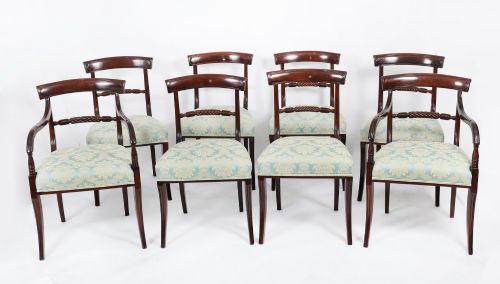

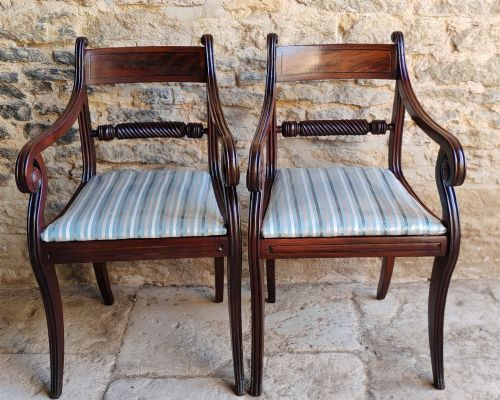


Regency Rope Twist Carver
Regency rope twist carver chairs are architectural hardwood seating pieces with carved backrails that bring early nineteenth-century elegance straight to the modern dining table.
Regency Rope Twist Carver
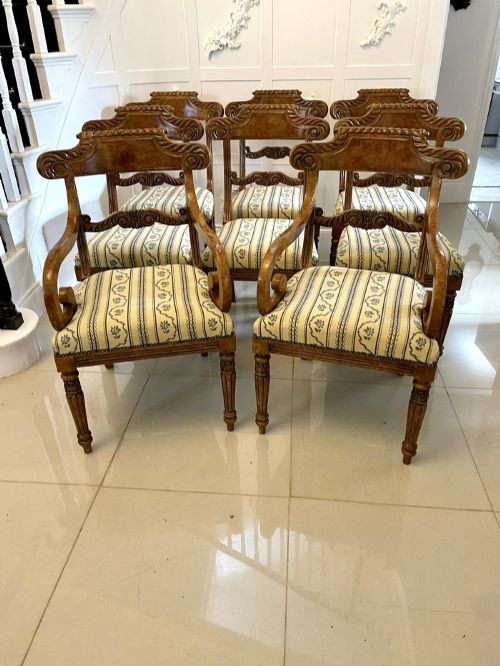
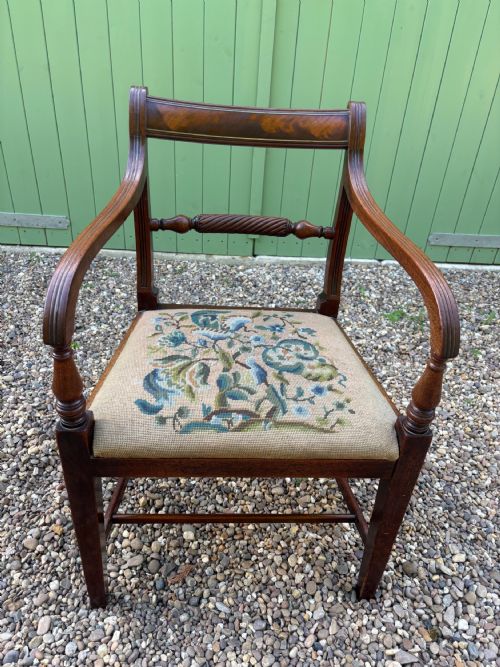
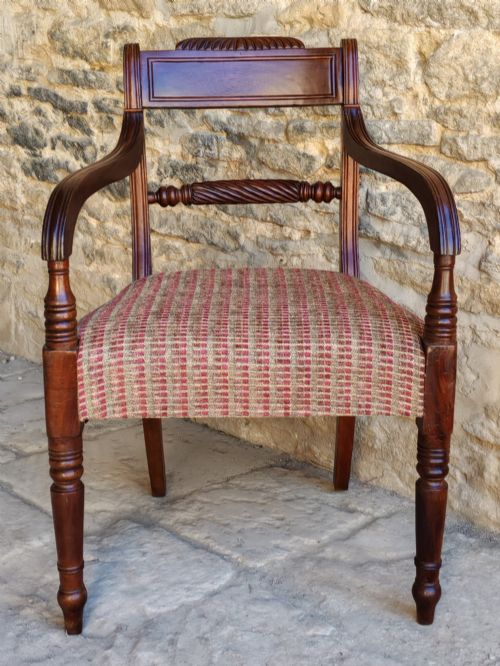
A regency rope twist carver is a sturdy wooden armchair designed with distinctive carved back rails resembling twisted rope, commonly paired with standard dining chairs in eighteenth and nineteenth-century rooms. These seating pieces typically emerge from the Georgian and Regency periods, alongside later twentieth-century interpretations, fashioned from rich timbers like mahogany.
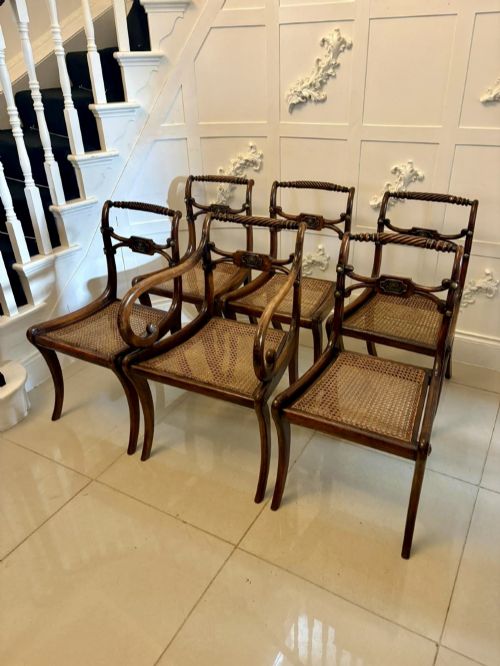
Most examples found on this page function as host chairs at the head of a dining table, featuring supportive armrests known as elbows. The construction balances formal architectural lines with practical seating, often incorporating drop-in upholstered pads, fabric coverings, or woven cane seats.
How they were made
Cabinetmakers constructed these carvers primarily using solid mahogany and diverse hardwoods, frequently employing specialised turning and hand-carving techniques to shape the signature rope motif along the top rail. Workshops also utilised decorative finishes, producing pieces with faux birdseye maple surfaces alongside traditional polished wood.
Seating areas required distinct craft methods, ranging from intricate cane weaving to drop-in frames built to hold upholstery fabric securely. Metal elements such as brass occasionally appeared in structural or decorative capacities, supporting the overall joinery of the hardwood frame.
Hosts could carve the Sunday roast with absolute authority once properly settled between the sturdy elbows of a rope twist carver.
What varies in quality
The standard of a regency rope twist carver rests upon the crispness of the hand-carved rope detail and the depth of the timber's grain. Superior pieces display deeply undercut carving and tightly joined hardwood frames that endure daily use without loosening.
Proportion and decorative ambition set finer examples apart from simpler workshop production. Elaborate stylistic influences, such as Chinese export details or faux maple finishes, demonstrate the maker's ambition and elevate the visual impact of the armchair.
The Regency Rope Twist Carver Glossary
- Carver
- An armchair designed to match a set of single dining chairs, traditionally placed at the head of the table. These pieces feature integral armrests for added comfort.
- Rope twist
- A carved decorative motif imitating the spiral strands of a rope, typically applied across the top rail of a chair back. This detail defines the aesthetic of the style.
- Regency
- An architectural and decorative style spanning the early nineteenth century, characterised by classical restraint and rich mahogany timbers. Pieces from this era often draw inspiration from ancient Roman and Greek designs.
- Drop-in seat
- A removable upholstered frame that fits neatly into the seat rails of a chair. This method allowed for easier recovering of the fabric without dismantling the wooden structure.
- Cane
- Woven plant material used to create resilient, lightweight seats. This technique provides a permeable surface that responds well to traditional chair frames.
Regency Rope Twist Carver: Frequently Asked Questions
What is a carver chair?
A carver is an armchair designed to match a set of dining chairs, typically placed at the head and foot of a table. These pieces provide additional arm support while maintaining a cohesive look with the single chairs.
Historically, the term distinguished the seat used by the person carving the meat at dinner. Today, these armchairs serve both practical seating and decorative roles in dining rooms.
How do I date a Regency chair?
Dating these chairs involves examining the wood species, joinery techniques, and stylistic markers recorded across the periods. Mahogany and specific hardwood constructions point towards early nineteenth-century workshop practices.
Comparing the turned legs and carved back details against documented Georgian and Regency examples helps establish an approximate decade. Subtle variations in the rope twist carving further indicate the manufacturing era.
Are these chairs comfortable for daily use?
These hardwood chairs offer sturdy support, particularly versions equipped with upholstered fabric or drop-in pads. The addition of armrests provides extra comfort during long dining sessions.
While period seating was built for upright posture rather than lounging, pairing them with appropriate seat cushions ensures they remain practical for modern living.