
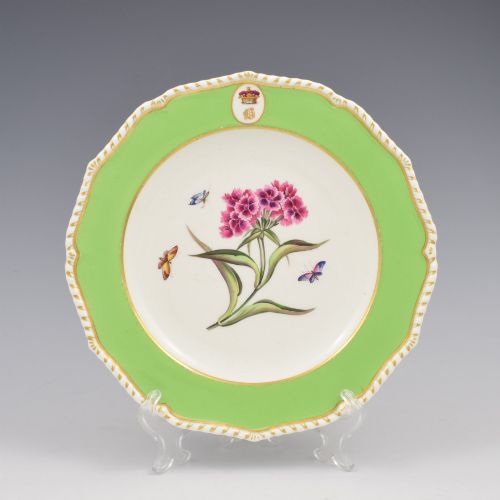


Regency Porcelain Dessert Plate
A regency porcelain dessert plate brings the elegance of early nineteenth-century dining tables into a modern room with rich handpainted botanicals and gilding.
Regency Porcelain Dessert Plate
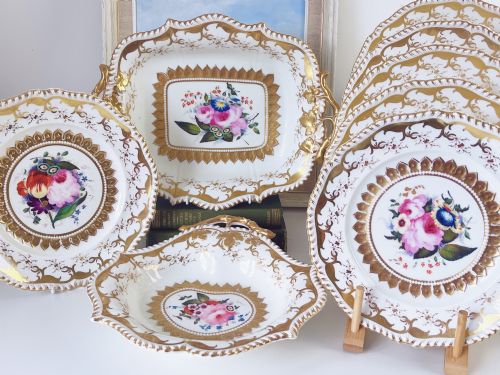
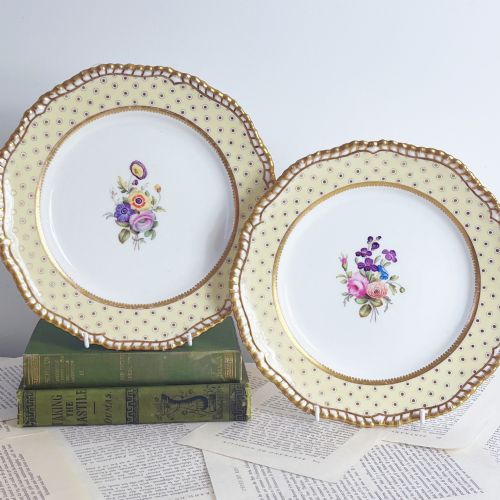
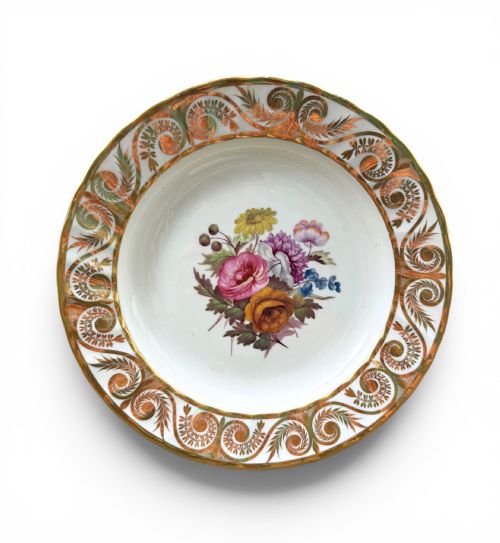
A regency porcelain dessert plate is a flat or slightly shaped ceramic dish intended for the final course of a formal meal. These pieces date from the early nineteenth century, spanning periods recorded as Georgian, Regency, and around 1800. On this page, buyers will find individual plates, pairs, part services, and serving dishes.
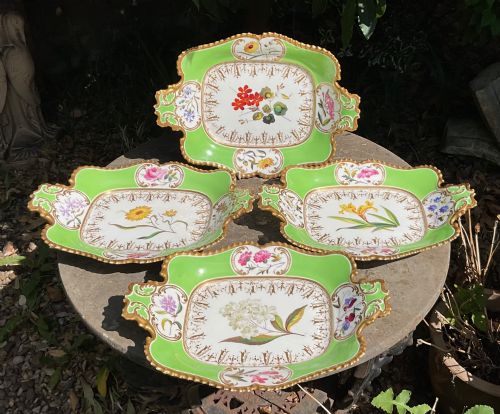
The forms vary from standard circular dessert plates to oval dessert dishes and square stone china tea plates. Makers produced cabinet plates and decorative dishes intended to impress guests as much as to hold fruit and sweetmeats.
Materials and manufacture
Makers utilised fine ceramic bodies, traditional porcelain, ironstone, and stone china to form the base of each piece. Some factories incorporated felspar into the paste to increase durability and whiteness.
Decoration relied on skilled handpainting in enamel colours, complemented by gold leaf, gilding, and gold gilt accents. Botanical studies, armorial crests, topographical scenes, and patterns such as Jabberwocky or Dragon in Compartments were applied by hand.
Plate painters occasionally snuck tiny caterpillars onto botanical sweet william plates to test if anyone was actually looking.
Assessing quality and craftsmanship
Quality rests primarily on the ambition of the handpainting and the precision of the gilding. Plates featuring named botanical specimens by known artists or detailed topographical views demand greater skill than standard floral repeats.
The weight and refinement of the porcelain body also set examples apart. Heavier ironstone and stone china offer robust utility, whereas translucent porcelain bodies show greater delicacy in moulding and finishing.
Grainger Lee And Co·Spode·Chamberlains Worcester·Derby·Bloor Derby·Minton·Coalport·Flight Barr And Barr·Masons·Barr Flight And Barr·Davenport·Ridgway
The Regency Porcelain Dessert Plate Glossary
- Armorial
- Bearing a family coat of arms or crest. These bespoke commissions were painted specifically for landed families.
- Felspar porcelain
- A ceramic body incorporating feldspathic rock, developed to improve the whiteness and strength of the ware. Spode famously utilised this formulation.
- Stone china
- A dense, durable ceramic body introduced by factories like Mason and Davenport as a robust alternative to soft-paste porcelain. It withstands frequent handling.
- Enamel
- Opaque coloured glass fused to the surface of the fired ceramic during decoration. It provides the vibrant reds, blues, and greens seen on botanical and pattern plates.
- Gilding
- The application of gold leaf or gold paint to the rims and borders of the plate. Burnishing brings this gold to a bright metallic shine.
Regency Porcelain Dessert Plate: Frequently Asked Questions
How were these plates used?
These dishes formed part of dessert services used to serve fruit, nuts, and sweetmeats at the conclusion of a formal dinner. They were displayed on the table as decorative centrepieces before being passed among guests.
Because dessert was the final course, the plates received some of the most elaborate and colourful painting in a dinner service, often matching the dessert service's serving dishes.
Can I use them for dining?
While these plates are robust enough to handle gentle use, most collectors prefer to display them on plate stands or hang them as cabinet pieces. Historic enamel and gilding can wear down with modern dishwashing and frequent cutlery contact.
Handwashing in lukewarm water with mild soap is essential if you choose to use them for special occasions. Avoid extremes of temperature to protect the antique ceramic body.
How do I identify a Regency plate?
Regency plates typically feature specific design traits from the early nineteenth century, including apple green borders, gadroon edges, and rich gold leaf highlights. Botanical subjects and armorial crests painted in enamels are particularly characteristic of this period.
Makers' marks stamped, painted, or impressed into the base help narrow down the date and factory. Comparing pattern numbers with factory archives also confirms the era of production.
What is the difference between porcelain and ironstone?
Traditional porcelain is finer, lighter, and often translucent when held to the light. It was favoured for delicate cabinet plates and high-end dessert services intended for visual display.
Ironstone and stone china are much heavier, opaque, and sturdier. Factories produced these denser wares to withstand more active daily use while still carrying rich colourful patterns.