

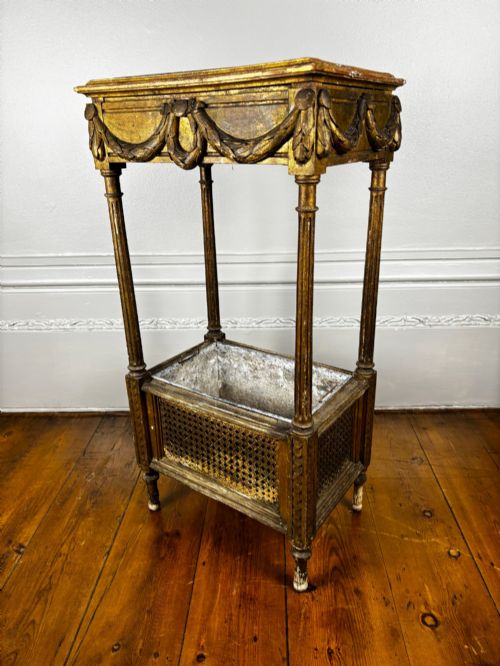
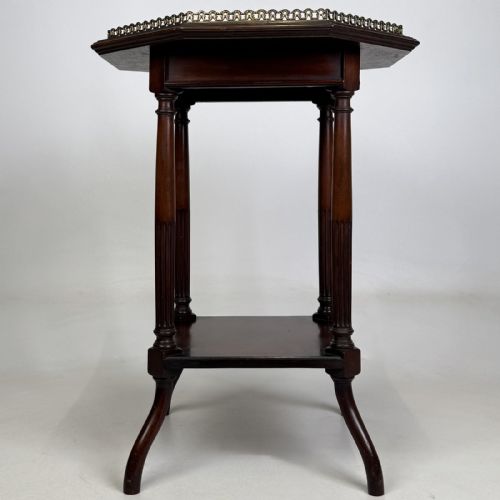

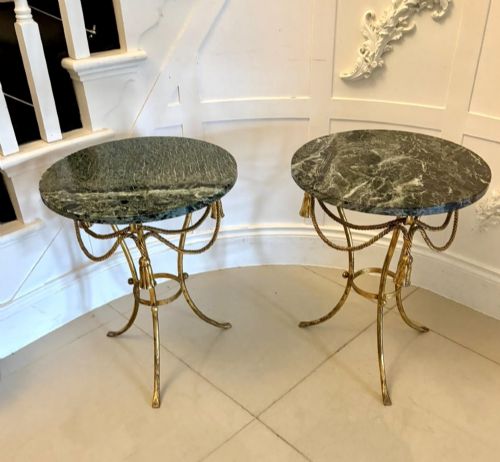
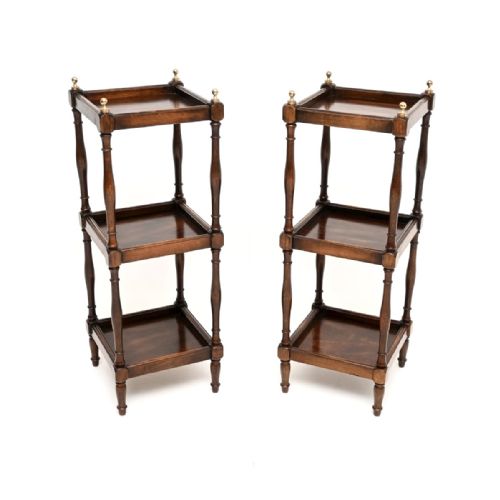


Regency Plant Table
These regency plant table examples bring architectural form and rich timber to interiors, offering a refined way to display greenery.
Regency Plant Table
A regency plant table combines practical display surfaces with the distinctive classical lines of the early nineteenth century. Buyers searching this phrase encounter jardiniere tables, torchere stands, and occasional tables designed to hold plants and urns.
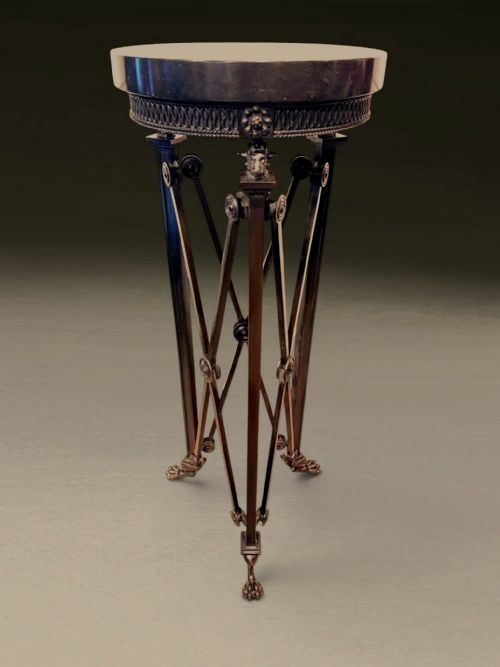
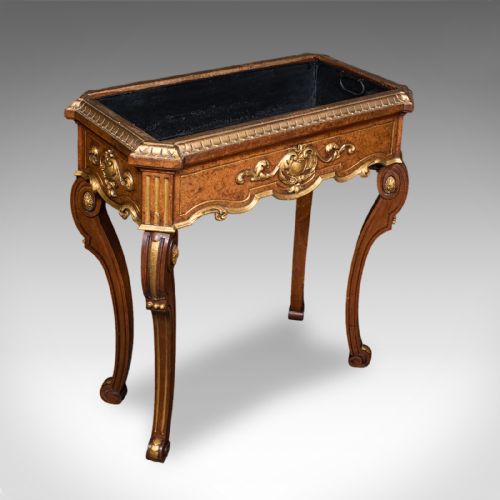
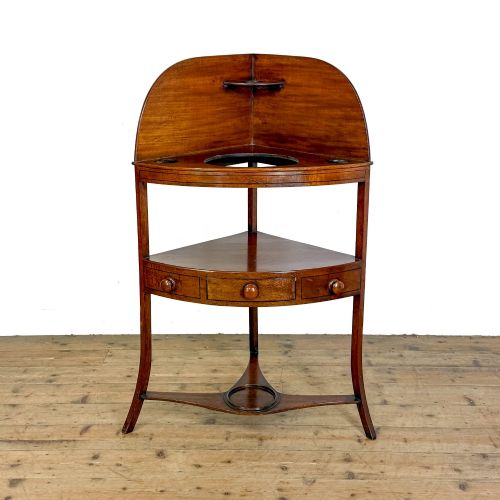
The pieces appearing here span the Regency, Georgian, and William IV periods, alongside later twentieth-century interpretations in the Regency style. Forms range from triangular corner stands and multi-tiered whatnots to circular pedestal tables fitted with metal liners.
Mahogany and rosewood dominate the selection, often accompanied by walnut, satinwood, and amboyna. Many incorporate galleries, marble inserts, or brass mounts to protect the timber from moisture and add decorative contrast.
Materials and construction methods
Cabinet makers built these stands using dense hardwoods such as mahogany, rosewood, and walnut, frequently selected for their rich grain patterns. Secondary timbers like oak appear in internal framing and structural supports.
Metal elements such as brass galleries, gilt metal mounts, and zinc liners were integrated to secure plant pots and contain water. Marble tops and faux marble finishes provided durable, moisture-resistant surfaces suited to botanical displays.
Joinery techniques included precise turning for pedestals, tripod base construction, and delicate framing for multi-tiered structures. Giltwood and carved detailing finished pieces intended for formal reception rooms.
Regency Plant Table Retail Price Guide 2026
Typical asking prices for regency plant table among the pieces listed under this phrase on Sellingantiques today, from the lower quarter to the upper quarter. They describe what is for sale here now, not the wider market.
Several stands include removable metal liners designed to catch stray garden soil before it reached the drawing-room carpet.
Distinctions in craftsmanship and materials
Quality rests upon the selection of timber figures and the crispness of carved or applied ornament. Superior examples feature well-figured rosewood or mahogany veneers and finely cast brass mounts rather than crude stampings.
Structural integrity differentiates standard production from finer workshop pieces, visible in stable pedestal joints and properly fitted marble or zinc inserts. The handling of secondary woods and the precision of turned components reveal the maker's hand.
James Mein of Kelso·Thomas Hope·Thomas King
The Regency Plant Table Glossary
- Jardiniere
- An ornamental stand or receptacle designed specifically for holding plants or flowers. These vessels often feature waterproof liners made of zinc or metal.
- Torchere
- A tall, slender stand or column intended to support a lamp, candle, or small decorative urn. They frequently employ tripod bases for stability.
- Gallery
- A raised decorative border surrounding the edge of a table top or shelf. It prevents items from sliding off and often incorporates pierced brass or carved timber.
- Whatnot
- An open set of multi-tiered shelves used for displaying small decorative objects. They appeared in various geometric shapes including octagonal and corner formats.
- Pedestal
- A structural column or support base carrying a table top or urn. They appear frequently in circular or hexagonal configurations within this furniture group.
Regency Plant Table: Frequently Asked Questions
What is a regency plant table used for?
These tables provide a raised platform to display potted plants, urns, or floral arrangements within a room. Their elevated design keeps foliage off the floor and showcases trailing plants.
Historically, they served wealthy households aiming to bring botanical specimens indoors. Today, they function equally well as lamp tables or decorative focal points in living spaces.
How do I care for the wood and marble?
Protect timber surfaces by using saucers or liners beneath plant pots to prevent water rings and moisture damage. Regular dusting with a soft cloth maintains the finish.
Marble tops require gentle cleaning with mild soap and water, avoiding acidic substances that can etch the stone. Waxing timber occasionally preserves the natural lustre of mahogany and rosewood.
How can I tell a Regency period piece apart?
Authentic pieces from the Regency era exhibit classical architectural proportions inspired by Greek, Roman, and Egyptian antiquity. Look for restrained carved ornament, sabre legs, and characteristic bronze or brass mounts.
Later revival pieces from the twentieth century often use machine-cut joins and lack the patina found on early nineteenth-century surfaces.
Where should I place a torchere stand?
Torchere stands suit corners, empty wall spaces, or beside seating where their vertical height draws the eye upward. Their narrow footprint makes them ideal for smaller rooms.
Ensure they stand on level flooring, particularly tripod versions, to maintain stability when supporting plants or decorative objects.