




Regency Period Urns
Regency period urns are neoclassical vessels of bronze, porcelain and ormolu that bring architectural scale and classical dignity to a room.
Regency Period Urns
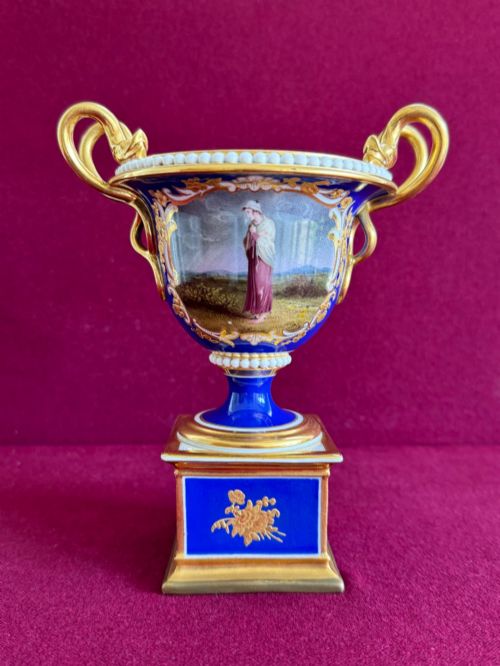
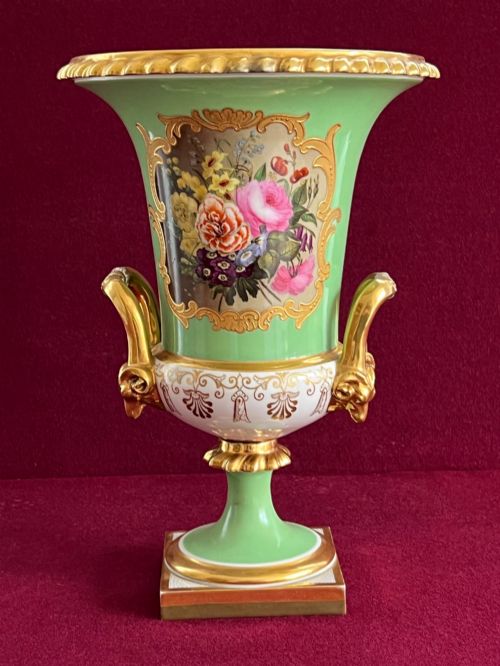
When you search for regency period urns, you encounter classical vessels, wine coolers, ice pails, and cassolettes created during the early nineteenth century and the wider Regency and Georgian eras. These pieces draw heavily on ancient Greek and Roman forms, frequently taking a campana shape with sweeping handles and raised footed bases.
The objects on this page span the 19th Century, Regency, and George IV periods, alongside related expressions such as French Empire and William IV styles. Alongside decorative vases and urns, the selection encompasses functional dining vessels like Old Sheffield plate wine coolers and bronze cassolettes.
Porcelain examples from English factories appear frequently, alongside metalwork in bronze, copper, and ormolu. Domestic items such as mantel clocks and door knockers also emerge within the broader stylistic category.
How they were made
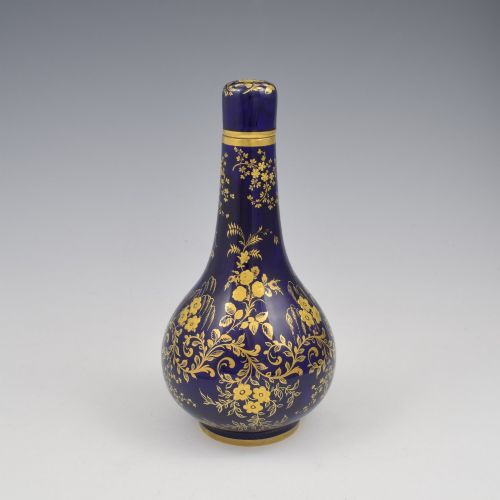
Makers utilised bronze, porcelain, ironstone, and glass, often combining cast metals with hand-applied gold leaf and enamel decoration. Ormolu mounts provide bright metallic contrast to deep patinated bronze surfaces.
Ceramic pieces from factories such as Worcester, Derby, and Spode involve wheel-thrown or moulded bodies finished with hand-painted enamel scenes and gilt highlights. Metal vessels employ casting, spinning, and silver-plating techniques typical of Old Sheffield plate production.
Regency Period Urns Retail Price Guide 2026
Typical asking prices for regency period urns among the pieces listed under this phrase on Sellingantiques today, from the lower quarter to the upper quarter. They describe what is for sale here now, not the wider market.
Some nineteenth-century diners required specialised wine coolers and ice pails just to keep their claret and champagne at a civilized temperature.
What varies in quality
Quality rests upon the crispness of the cast bronze or ormolu chasing and the precision of the hand-painted porcelain decoration. Finer metalwork exhibits sharp relief and careful attention to botanical or classical motifs.
Ceramic quality is judged by the smoothness of the glaze, the adherence of the gilding, and the artistic merit of painted panels. Makers who employed named artists or produced marked porcelain factory pieces generally represent the higher tier of surviving examples.
Flight Barr And Barr·Chamberlain Worcester·Miles Mason·Pons De Paul·Matthew Boulton And Co
The Regency Period Urns Glossary
- Campana shape
- A bell-like vase form with a flared rim and a tapering body. This silhouette originates from ancient pottery and bronze vessels.
- Cassolette
- A decorative vase or urn with a removable lid that can be reversed to serve as a candle holder or incense burner.
- Ormolu
- Gilded bronze, where finely ground gold is applied to a base metal using a mercury amalgam technique or electroplating.
- Old Sheffield plate
- A composite material made by fusing a thin sheet of silver to a thicker copper core, popular for dining and display vessels.
- Ironstone
- A heavy, durable type of ceramic patented in the early nineteenth century as a robust alternative to porcelain.
Regency Period Urns: Frequently Asked Questions
What were regency period urns used for?
These vessels served various functions ranging from pure architectural decoration on mantelpieces to holding wine, champagne, or ice at formal dining tables.
Covered urns and potpourri vases also functioned to scent drawing rooms with dried flower petals and spices.
How do I identify a regency period piece?
Look for neoclassical motifs such as acanthus leaves, classical figures, egg-and-dart borders, and campana silhouettes drawn from Greek and Roman archaeology.
Materials like patinated bronze, ormolu, and hand-painted English porcelain point directly to the early nineteenth-century aesthetic.
Where should I place an urn in my home?
Large bronze urns and cassolettes suit entrance halls, sideboards, or pedestals where their classical proportions can be viewed from multiple angles.
Smaller porcelain vases and potpourri jars sit well on mantelpieces, bookshelves, or dedicated display tables.
How do I care for antique metal and porcelain?
Dust metal surfaces gently with a dry, soft cloth and avoid abrasive cleaners that might strip delicate gold leaf or patination.
Porcelain vessels require mild soapy water when cleaning is necessary, keeping them away from harsh chemical solvents.