



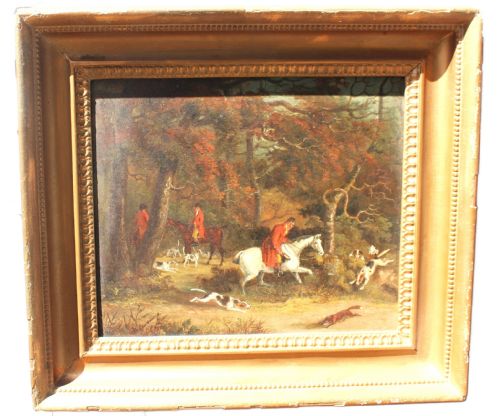


Regency Period Oil Artwork
Regency period oil artwork brings home the rich portraiture and atmospheric landscapes of the early nineteenth century.
Regency Period Oil Artwork
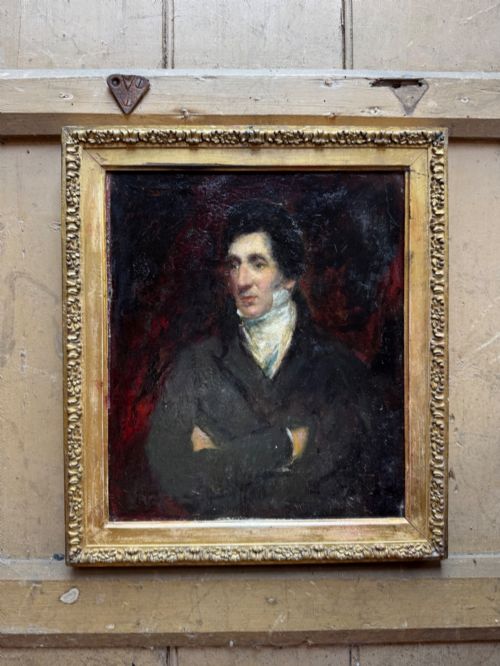
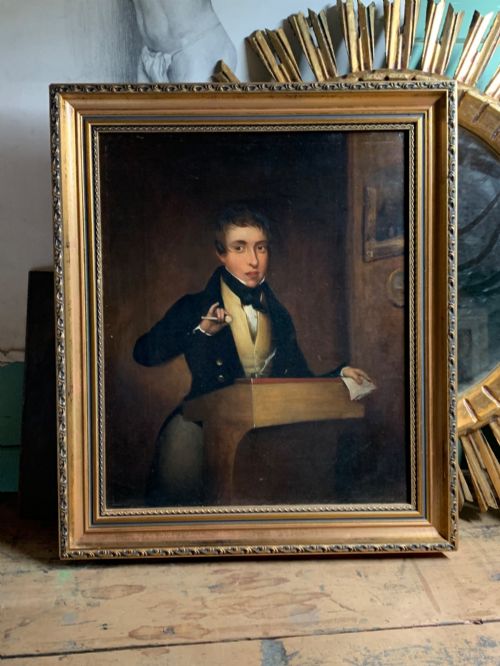
These pieces encompass oil paintings from the nineteenth century, with a strong representation of Regency and Georgian aesthetics alongside later Victorian and Edwardian works. A buyer searching for regency period oil artwork will encounter a variety of forms, primarily focused on portraiture of sitters and figures, alongside coastal and flatland landscapes.
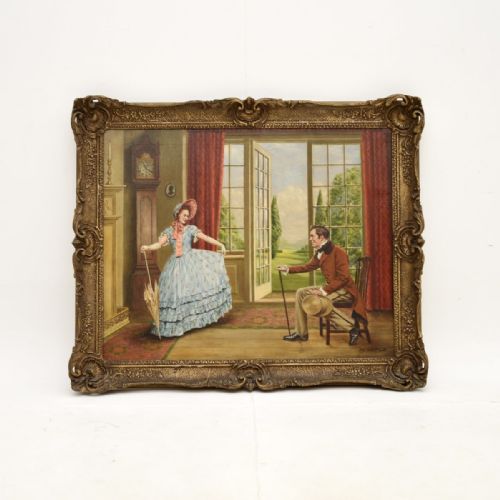
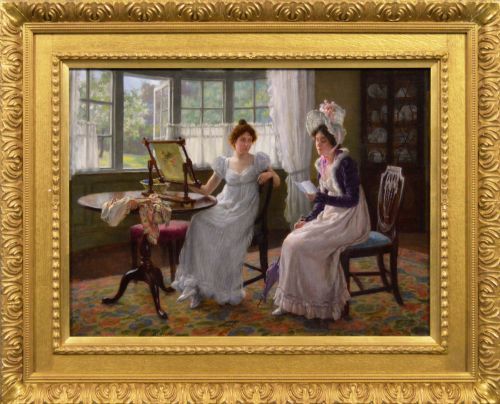
The subjects range from formal portraits of ladies, gentlemen, and historical figures to genre paintings depicting domestic interiors and outdoor scenes. Works span several decades, capturing both naive interpretations and refined studio pieces associated with recognised schools and artists.
Portraits of young girls, gentlemen, and notable historical subjects dominate the available selection, often rendered on canvas or wood panels. Buyers will find both single works and pairs that reflect the artistic output of nineteenth century Britain.
Materials and construction
The combination of oil pigments on prepared supports allowed artists to achieve detailed textures in clothing, such as silk dresses and pearls, as well as soft lighting in landscape settings.
A gentleman's shaving ritual captured on canvas is unceremoniously interrupted by his wife.
Evaluating quality
Quality in these paintings rests upon the precision of the brushwork and the psychological depth captured in portraiture, distinguishing studio output from simpler naive works. The handling of light and shadow, particularly in interior scenes and landscapes, defines the relative success of a piece.
Framing and the preservation of the original paint surface contribute significantly to the standing of an artwork, as do identifiable attributions to specific regional schools or named painters.
Alfred Lyndon Grace·Charles Haigh Wood·Rolinda Sharples·Walter Dendy Sadler·George Francis Joseph·John Russell·George Clint·Samuel Drummond
The Regency Period Oil Artwork Glossary
- Genre painting
- Depictions of aspects of everyday life by depicting ordinary people engaging in common activities. These scenes often take place in domestic interiors or rural settings.
- Giltwood
- Wood that has been covered with a thin layer of gold leaf or gold paint. It is commonly found on traditional picture frames surrounding nineteenth century canvases.
- Gesso
- A paint mixture consisting of a binder mixed with chalk, gypsum, or pigment. It was applied to wood panels or frames to prepare a smooth surface for gilding or painting.
- Norwich School
- A group of artists influenced by Dutch landscape art who painted local scenery in Norfolk. This regional movement produced notable depictions of flatland landscapes and windmills.
- Naive art
- Visual art created by a person without formal training in art schools. These works often display a charming disregard for conventional perspective and proportion.
Regency Period Oil Artwork: Frequently Asked Questions
How do I identify a Regency oil painting?
Regency paintings typically date from the early nineteenth century and reflect the clothing, hairstyles, and interior decor of the era. Soft bonnets, high-waisted dresses, and specific portrait poses offer reliable chronological indicators.
Signatures, artist attributions, and framing styles can also help establish the precise period of execution, though many works remain unsigned or attributed to broader schools.
Where should I hang an oil painting?
These artworks suit traditional living spaces, studies, and hallways where they can be displayed away from direct sunlight and damp conditions. Proper wall placement preserves the integrity of the canvas and the giltwood frame.
Pairing complementary portraits or placing a landscape above a mantelpiece creates a balanced visual arrangement within a room.
What is the difference between canvas and wood panels?
Canvas supports offered artists flexibility and texture, allowing for larger compositions and subtle blending of oil paints. Wood panels provided a rigid surface favoured by certain regional schools for smaller, highly detailed landscapes.
Both supports require stable environmental conditions to prevent warping of wood or slackening of canvas over time.