




Regency Period Bergere
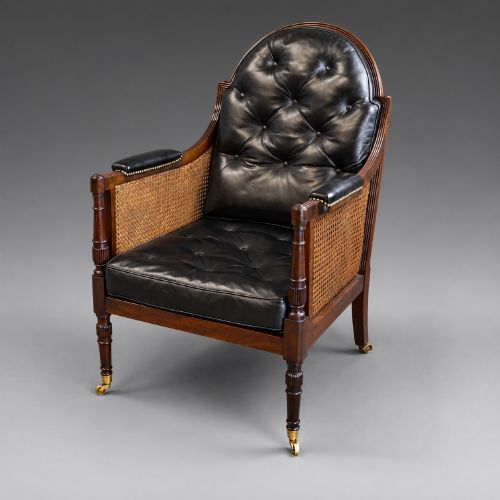
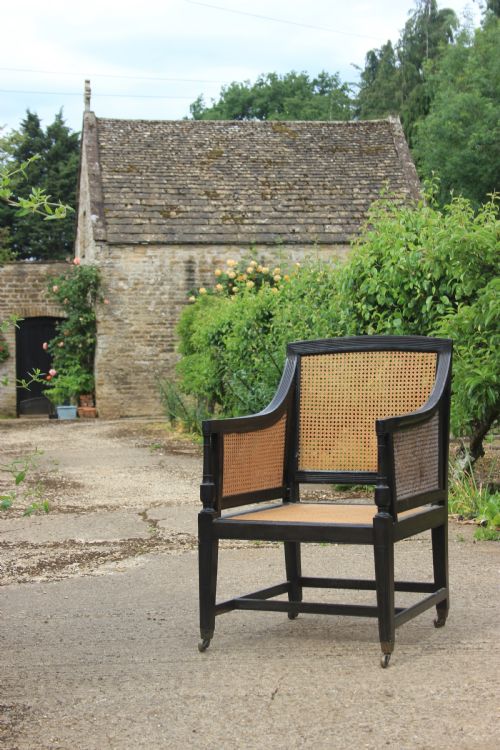
These regency period bergere armchairs combine generous proportions with woven cane panels, offering deep seating built for the nineteenth century library.
Regency Period Bergere
A regency period bergere is a deeply upholstered library armchair designed with enclosed cane work sides and back for comfort and elegance. These armchairs belong primarily to the Regency and nineteenth century eras, though occasional pieces appear from the Georgian period and nineteen ten.
Buyers meet various forms on this page, ranging from standard mahogany frames to solid ebony, ebonised wood, simulated rosewood, and simulated satinwood. Styles span traditional Regency designs alongside Anglo-Indian Regency interpretations, incorporating brass accents and painted or gilt finishes.
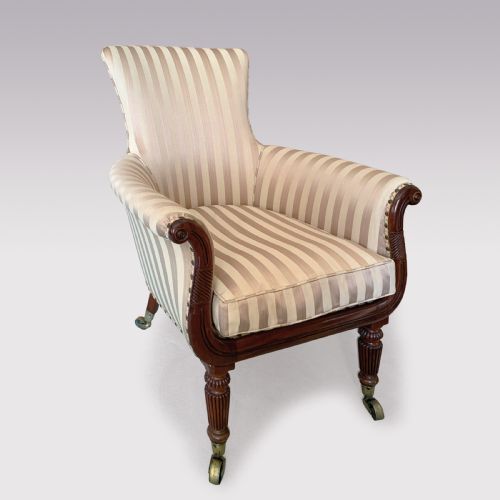
Makers and workshops of the era produced library chairs and tub chairs featuring details like lyre fronts and generous proportions. The typical piece provides a low, enclosed seat intended for reading and relaxation within period interiors.
How they were made
Frames are constructed from solid timbers including mahogany and ebony, alongside ebonised wood, simulated rosewood, and simulated satinwood. These woods provide the structural strength required for deep library armchairs.
Cane panels are woven tightly into the frames to form the distinctive enclosed back and sides of the bergere. Brass details and gilt or painted decoration finish the wood surfaces, while fabric or leather provides cushioning for the seat.
Regency Period Bergere Retail Price Guide 2026
Typical asking prices for regency period bergere among the pieces listed under this phrase on Sellingantiques today, from the lower quarter to the upper quarter. They describe what is for sale here now, not the wider market.
Some makers painted ordinary timber to look like exotic rosewood so owners could enjoy grand styles on a budget.
What varies in quality
Quality rests on the drawing of the frame and the generosity of its proportions. Well drawn library armchairs exhibit balanced lines and confident carving that distinguish standard production from finer workshop output.
The choice of primary timber and secondary finishing defines the upper tier of pieces. Solid ebony and finely executed simulated woods or gilt decorations separate exceptional library chairs from simpler mahogany examples.
Gillow
The Regency Period Bergere Glossary
- Bergere
- An enclosed upholstered armchair with cane work panels on the back and sides. This French-inspired form became a staple of Regency libraries.
- Ebonised
- Wood treated with a dark stain or finish to imitate ebony. This technique creates a dense, black surface popular on Regency seating.
- Simulated rosewood
- Wood painted or grained to resemble genuine rosewood. Cabinet makers used this method to achieve exotic grain patterns on standard timbers.
- Lyre front
- A furniture support shaped like the classical musical instrument. This carved motif appears on the front legs or supports of specific Regency armchairs.
Regency Period Bergere: Frequently Asked Questions
What is a regency period bergere?
A regency period bergere is a low, deep library armchair featuring woven cane panels along the back and sides. These seats were designed during the early nineteenth century for comfortable reading.
Frames typically employ mahogany, ebony, or ebonised wood, often enhanced with brass details and textile or leather cushions.
How were these armchairs used?
These armchairs served as comfortable seating in libraries, studies, and drawing rooms during the Regency era. Their enclosed sides and deep proportions suited relaxed reading and conversation.
Many examples were built as library chairs or tub chairs, designed to be easily moved around grand domestic spaces.
How do I identify a Regency frame?
Regency frames display classical proportions, specific wood choices like mahogany and ebonised timber, and decorative elements such as brass mounts and painted finishes. Makers also utilised simulated woods like rosewood and satinwood.
Well drawn proportions and distinctive front supports, including lyre front designs, help distinguish pieces from this specific design period.
How do I care for cane panels?
Cane panels require gentle cleaning with a soft brush and occasional light moisture to prevent the natural fibres from drying out and splitting. Keeping the chairs away from direct heat sources preserves the material.
Proper humidity levels in the room protect both the woven cane and the underlying mahogany or ebonised wood frames.