
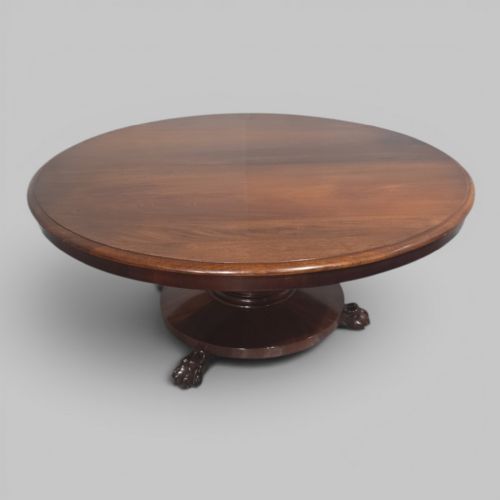


Regency Pedestal Coffee Table
These regency pedestal coffee table examples bring period timber and central pillars to a modern seating layout, offering low surfaces with traditional character.
Regency Pedestal Coffee Table
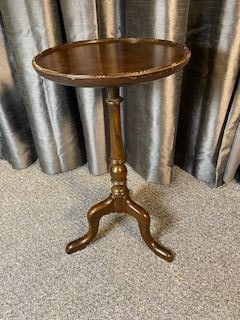
A regency pedestal coffee table adapts earlier pillar-and-claw forms for lower seating arrangements, using a central column to support a timber top. Most options seen here take the form of coffee tables, wine tables, side tables, and occasional tables.
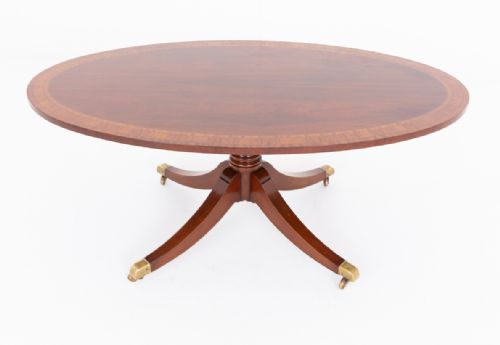
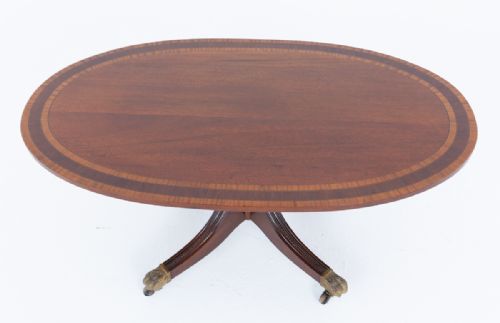
The materials and styles span the original Regency era alongside later interpretations like Regency Revival, Sheraton Revival, and Georgian, with dates stretching from the nineteenth century into the twentieth century. Mahogany dominates the selection, appearing alongside flame mahogany, rosewood, and satinwood inlay.
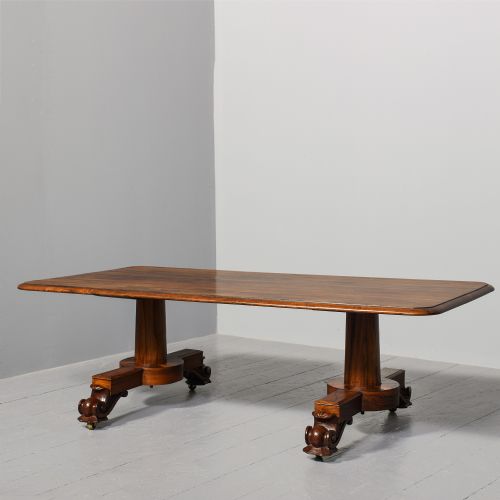
Buyers encounter rectangular, oval, and drum formats, sometimes featuring leather inserts or brass details on the timber structure. The selection ranges from nineteenth-century originals to later twentieth-century revivals built in the same classical idiom.
How they were made
Cabinet makers constructed these tables primarily from solid mahogany and rosewood, frequently selecting figured timber like flame mahogany for the main top surface. Satinwood inlay provides contrasting border details on specific examples.
Selected pieces incorporate inset leather writing surfaces on the top, while others use brass mounts and fittings to accent the woodwork. The central pillar design requires stable joining where the vertical column meets the feet and the underside of the table.
Mahogany is the dominant timber across these listings, appearing alongside rosewood, satinwood inlay, and leather inserts.
What varies in quality
Quality rests in the selection of the timber grain, where highly figured flame mahogany or rich rosewood elevates the visual weight of a piece compared to plain stock. The crispness of satinwood inlay and the integration of brass elements set finer examples apart.
Proportion dictates the success of these tables, particularly the balance between the central pillar, the supporting base, and the top surface. Original nineteenth-century pieces carry the authority of age, whereas twentieth-century revivals vary according to the fidelity of their cabinet work.
The Regency Pedestal Coffee Table Glossary
- Flame mahogany
- Timber veneer cut from the fork of the mahogany tree to create a distinctive flickering, flame-like grain pattern. This decorative figuring is prized for tabletops.
- Pedestal
- A central vertical column supporting a table top above a footed base. It removes the need for four corner legs.
- Satinwood
- A durable, yellowish tropical hardwood used for contrasting inlay and stringing lines on dark carcases. Sheraton Revival pieces make frequent use of this bright timber.
- Wine table
- A small, light occasional table originally designed for holding glasses or bottles beside seating. Many examples share the single-pillar format suited for low coffee tables.
- Drum table
- A circular table with a deep cabinet-like skirt housing drawers, often standing on a central pillar. They provide a substantial presence in a room.
Regency Pedestal Coffee Table: Frequently Asked Questions
Are these original period tables?
The inventory includes items from the original Regency and nineteenth-century periods alongside twentieth-century revivals from 1900 and 1920. Each listing states its specific period or date of manufacture.
Buyers should examine the timber patination, construction methods, and overall wear to distinguish between early nineteenth-century production and later revival work.
How do I care for timber tops?
Solid mahogany and rosewood surfaces benefit from regular dusting with a soft, dry cloth and occasional applications of traditional beeswax. Avoid placing them in direct sunlight or near heat sources to prevent the timber from splitting.
Leather-topped variants require gentle cleaning without harsh chemical solvents to preserve the surface material over time.
What is a pedestal coffee table used for?
These tables provide a low surface for holding books, drinks, and decorative objects in a living room or sitting area. The central pillar construction allows more legroom around the perimeter compared to four-legged designs.
Wine tables and occasional tables offer smaller footprints suited for placement beside armchairs.
What distinguishes Sheraton Revival pieces?
Sheraton Revival items date from the late nineteenth or early twentieth century and replicate the lighter, neoclassical furniture designs associated with Thomas Sheraton. They often feature delicate satinwood inlay and refined proportions.
These later interpretations capture eighteenth-century elegance using the manufacturing techniques of their own era.