





Regency Parlor Chairs
Regency parlor chairs bring architectural refinement and superb timber figures to a formal interior, offering both durability and timeless design.
Regency Parlor Chairs
When buyers search for regency parlor chairs, they encounter seating spanning the Regency period, the broader nineteenth century, and later revivals. These pieces encompass matching sets of dining chairs alongside single bedroom chairs, salon armchairs, and side chairs.
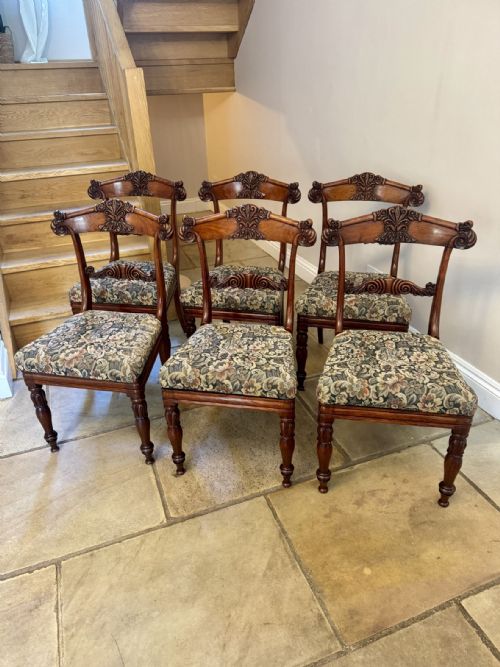
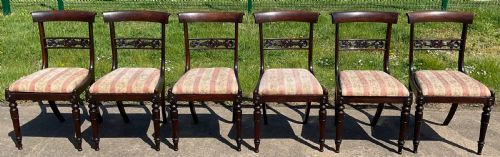
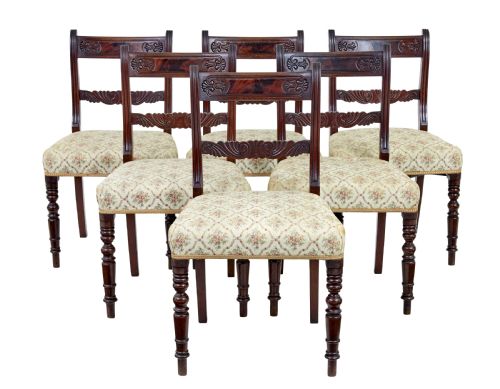
The form most frequently met on this page is the set of six dining chairs executed in mahogany or rosewood. Such pieces reflect the classical influences of the era, appearing both in austere late Georgian interpretations and grander Regency expressions.
The selection ranges from robust mahogany frames dated around eighteen hundred to delicate decorated examples and later twentieth-century iterations. Buyers also find smaller groups of four alongside matched pairs designed for intimate parlor settings.
Materials and construction
Cabinetmakers utilised dense native hardwoods, chiefly mahogany, alongside exotic timbers like rosewood to build these resilient chair frames. Workshops frequently enhanced the visual appeal of these woods through painted wood treatments and subtle applications of gold leaf.
Seating surfaces relied on supportive upholstery, often finished in rich fabrics such as silk damask to provide comfort. Alternative examples incorporated woven cane panels into the backrests or seats to introduce lighter textural elements.
Regency Parlor Chairs Retail Price Guide 2026
Typical asking prices for regency parlor chairs among the pieces listed under this phrase on Sellingantiques today, from the lower quarter to the upper quarter. They describe what is for sale here now, not the wider market.
Listings feature periods spanning from eighteen hundred through the nineteenth century, extending into nineteen hundred and nineteen twenty.
Assessing craftsmanship
Superior examples demonstrate tighter timber grain figures and more intricate decorative flourishes, such as delicate painted motifs or precise gilding. The depth of the carving and the overall rigidity of the joinery distinguish fine workshop production from standard output.
The choice of covering material elevates a piece, with heavy silk damask marking out higher-grade seating compared to basic modern fabric. Consistency across a larger set of six chairs preserves the unity demanded in formal reception rooms.
The Regency Parlor Chairs Glossary
- Regency
- The period of British design spanning the early nineteenth century, characterised by classical Greco-Roman motifs. This aesthetic often manifests in saber legs, carved back rails, and classical proportions.
- Mahogany
- A durable tropical hardwood prized for its deep reddish-brown tone and stable grain structure. It served as the primary structural material for high-end seating during the Georgian and Regency eras.
- Rosewood
- A heavily figured exotic timber featuring dark grain striations across a rich brown or purplish base. Cabinetmakers selected it for premium furniture intended to showcase natural wood patterns.
- Silk damask
- A lustrous patterned fabric woven with flat designs that catch the light from different angles. It provided a suitably luxurious upholstery finish for formal parlor and dining environments.
- Cane
- Strips of rattan woven into an open mesh pattern to form lightweight chair seats or backs. This technique allowed for flexible support while adding a distinct textural contrast to solid wood frames.
Regency Parlor Chairs: Frequently Asked Questions
What defines a regency parlor chair?
These chairs display classical architectural proportions, often featuring curved top rails and saber legs inspired by ancient design. They utilise dense timbers like mahogany and rosewood to achieve both structural strength and refined elegance.
Such seating was constructed for formal entertaining in period homes, functioning as dining chairs, salon armchairs, or decorative bedroom seating.
How were these chairs originally used?
They served primarily as formal seating around dining tables or positioned against walls in drawing rooms and parlors until needed. Sets allowed hosts to seat guests uniformly during large dinners and musical evenings.
Single chairs and pairs typically functioned as occasional seating in bedrooms or private sitting rooms rather than around a central table.
How do I care for rosewood furniture?
Keep wooden surfaces away from direct sunlight and excessive heat sources to prevent the rich timber from drying out or fading. Dust regularly with a dry, soft cloth and avoid chemical polishes that build up residue over time.
Maintain stable humidity levels in the room to protect both the solid timber frame and any delicate applied veneers or gilded details.
Are these chairs suitable for daily dining?
Many antique sets remain structurally sound and capable of handling regular daily use when placed on even flooring. Their solid hardwood construction ensures they withstand standard seating demands.
Buyers should inspect the rigidity of the joinery and the condition of the underlying upholstery webbing before committing a set to heavy everyday service.