

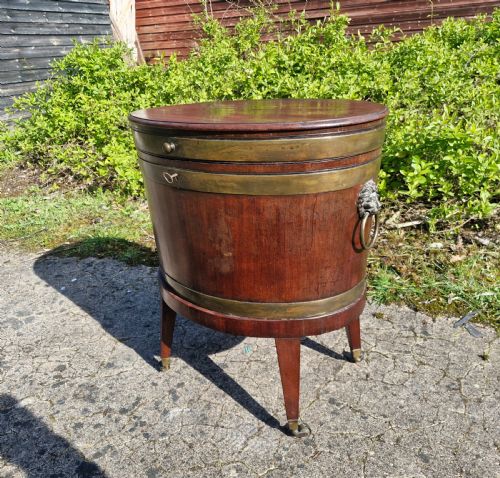
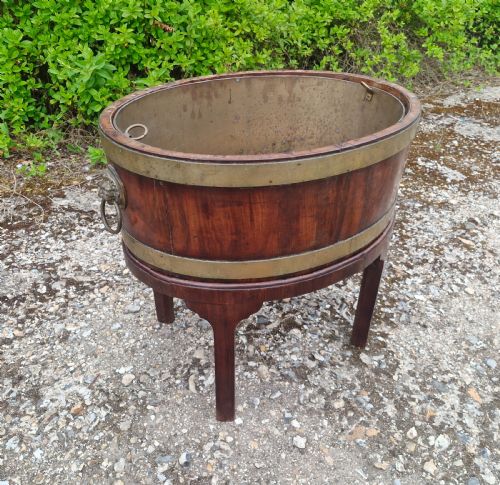


Regency Oval Wine Cooler
A regency oval wine cooler brings commanding mahogany and gleaming metalwork into a room, offering both period presence and practical service.
Regency Oval Wine Cooler
When you search for a regency oval wine cooler, you are looking at substantial entertaining vessels dating chiefly from the late eighteenth and early nineteenth centuries. These pieces were designed to chill bottles at the dining table or beside the sideboard during formal meals.
The versions you meet most frequently on this page are fashioned from rich mahogany, often bound with heavy brass hoops or fitted with bronze mounts. Their forms span classic Georgian cellarettes, elliptical buckets, and grand neoclassical cisterns that double as jardinieres.
Most examples hail from the broader Georgian and Regency periods, though occasional later revivals and twentieth-century planters also appear. They range from compact champagne buckets to grandly scaled vessels intended to anchor a large interior.
Construction and materials
Cabinetmakers built these vessels using tight-grained timbers like mahogany and figured elm, employing coopered stave construction similar to barrel-making to ensure the wood held liquid without splitting. Metal bands in brass, bronze, and gilt metal were then driven onto the exterior to secure the staves and add structural rigidity.
Interiors were typically lined with zinc or treated metal to hold melting ice and bottles securely without rotting the surrounding timber. Faux marble and painted wood finishes also occur, reflecting the classical taste for stone and patinated surfaces popular during the Regency era.
Regency Oval Wine Cooler Retail Price Guide 2026
Typical asking prices for regency oval wine cooler among the pieces listed under this phrase on Sellingantiques today, from the lower quarter to the upper quarter. They describe what is for sale here now, not the wider market.
Listings span multiple materials including mahogany, bronze, zinc, faux marble, and figured elm.
Judging quality and character
Quality rests on the depth of the timber's figure, the weight and craftsmanship of the brass banding, and the purity of the neoclassical proportions. Finer pieces display crisp joinery where the staves meet, hand-cast mounts, and original internal linings rather than later replacements.
The ambition of the design separates standard utilitarian buckets from grand reception pieces. Superior examples incorporate well-forged drop rings, finely chased bronze mounts, or sophisticated inlay that elevates them from simple containers to sculptural works of furniture art.
The Regency Oval Wine Cooler Glossary
- Cellarette
- A freestanding lockable chest or bucket designed to hold wine bottles near the dining table. They superseded earlier wine cisterns and often feature internal partitions.
- Coopered
- Constructed from vertical wooden staves joined edge-to-edge and bound with metal hoops, mimicking the traditional method of barrel making. This technique allowed containers to hold curved shapes and liquids securely.
- Jardiniere
- An ornamental stand or container, typically made of metal, ceramic, or wood, designed to hold growing plants or flowers. In larger proportions, wine coolers were frequently repurposed for this role.
- Neoclassical
- A style spanning the late eighteenth and early nineteenth centuries that drew direct inspiration from the art and architecture of classical Greece and Rome. It favoured symmetry, restraint, and classical motifs such as laurel wreaths and urns.
Regency Oval Wine Cooler: Frequently Asked Questions
What is a regency oval wine cooler used for?
These vessels were originally manufactured to chill wine and champagne bottles during extended dining courses by packing ice around the glass.
Today, they are frequently utilised as dramatic planters, umbrella stands, or decorative floor-standing jardiniere centrepieces within period interiors.
How do I tell a cellarette from a wine cooler?
The terms are often used interchangeably in the trade, though cellarettes traditionally refer to lidded chests with internal divisions designed to store bottles flat or upright.
Wine coolers and champagne buckets more commonly denote open-topped, tub-like vessels meant for immediate table service and ice-chilling.
Are these coolers waterproof?
While many retain their original zinc or metal linings, centuries of use mean that joints can dry out and older metal linings may develop micro-fractures.
It is wise to place a modern waterproof saucer inside if you intend to use them with live plants or melting ice.
How do I date a brass-bound bucket?
Dating relies on timber selection, the hand-forging techniques visible on the metal hoops, and stylistic cues such as neoclassical bronze mounts or string inlay.
Earlier eighteenth-century pieces often display richer mahogany patination, while nineteenth-century iterations lean towards heavier brass binding and occasional faux finishes.