

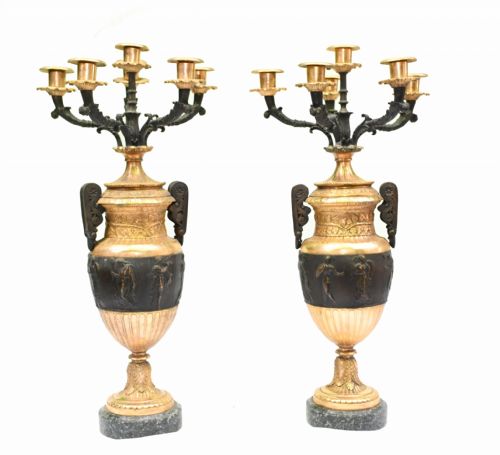


Regency Ormolu Candlesticks
Regency ormolu candlesticks combine gilded bronze with dark patination to bring striking architectural presence and neoclassical elegance to a dining table or mantelpiece.
Regency Ormolu Candlesticks
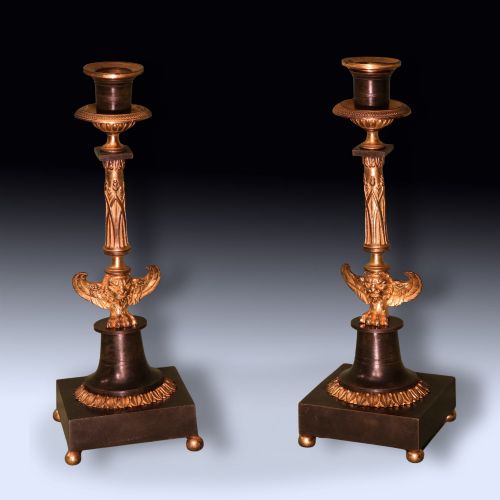
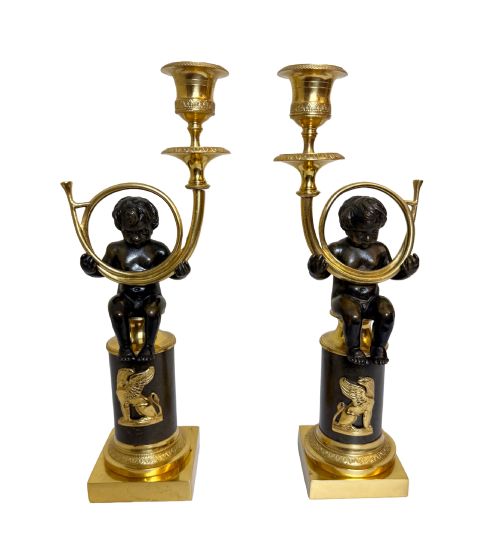
Regency ormolu candlesticks take the form of heavy metal light-holders produced during the early nineteenth century and later revival periods, frequently incorporating figural elements like cherubs, storks, dolphins, and griffins. The items on this page span the nineteenth century, including specific Regency period pieces alongside 1880, 1890, and 1900 examples.
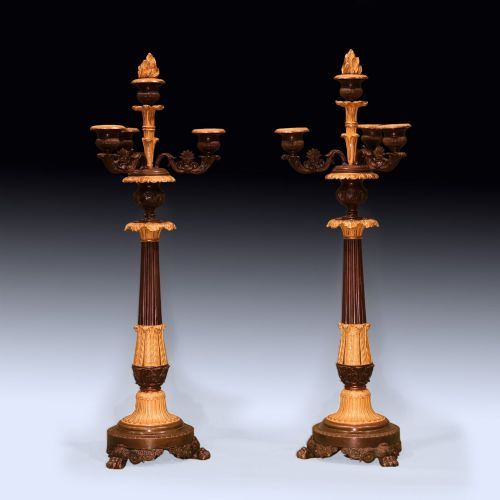
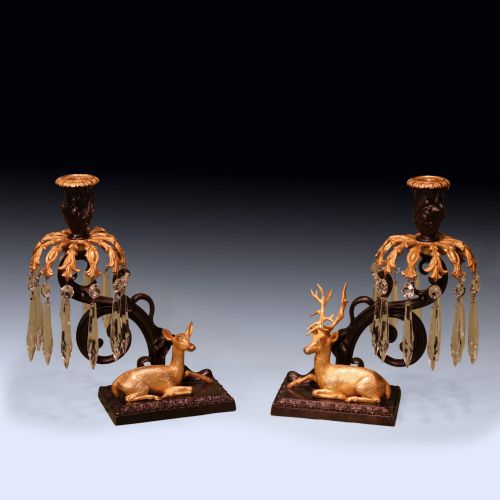
The dominant material combination pairs patinated bronze with gilded ormolu, often enriched by marble bases or cut glass lustres that catch the candlelight. Beyond standard single candlesticks, buyers encounter multi-light candelabra, adjustable arm models, and table lamps converted from the original forms.
Stylistic influences range from French Empire and Swedish Empire to William IV and Grand Tour designs, reflecting a period of intense classical revival. Pieces may appear as pairs or, in select instances, as sets of three.
Materials and construction methods
Maker workshops cast components in bronze and brass, using mercury gilding or modern electroplating methods to achieve the bright ormolu surface alongside dark patinated bronze details. Many examples integrate carved marble plinths to provide stability and visual contrast to the metallic elements.
Glass components, including hanging lustres and drop prisms, are hand-cut and suspended from metal arms with wire pins to refract the flame light. Complex multi-light candelabra and adjustable arm mechanisms require intricate assembly of separate cast nozzles, drip pans, and stem sections.
Regency Ormolu Candlesticks Retail Price Guide 2026
Typical asking prices for regency ormolu candlesticks among the pieces listed under this phrase on Sellingantiques today, from the lower quarter to the upper quarter. They describe what is for sale here now, not the wider market.
Materials recorded on this page include ormolu, bronze, gilt bronze, patinated bronze, cut glass, marble, gilt metal, and glass.
Assessing craftsmanship and execution
Structural integrity relies on the original tightness of fitted joints and the weight of the base, as lighter castings or poorly secured marble plinths introduce wobble. The inclusion of matching cut glass lustres with undamaged prisms elevates the completeness of the piece.
The Regency Ormolu Candlesticks Glossary
- Ormolu
- Gilded bronze produced by applying an amalgam of gold and mercury to a bronze base and heating it to drive off the mercury. This technique creates a durable, luminous golden finish characteristic of high-end nineteenth-century metalwork.
- Patinated Bronze
- Bronze treated with chemical solutions to produce a dark, uniform surface colour ranging from brown to near-black. It provides a striking visual contrast against bright ormolu mountings.
- Lustre
- A candlestick or candelabra fitted with a ring of cut glass pendants, known as drops, designed to reflect and multiply candlelight. These often include glass drip pans.
- Grand Tour
- A term applied to nineteenth-century decorative objects purchased by travellers visiting classical sites in Italy and France. These pieces frequently feature Egyptian revival motifs or classical figures.
- Candelabra
- A branched lighting device holding multiple candles on separate arms. Regency examples on this page range from two-light to four-light configurations.
Regency Ormolu Candlesticks: Frequently Asked Questions
How do I clean ormolu safely?
Dust surfaces gently with a soft, dry brush and avoid harsh commercial metal cleaners that strip the original gold layer. Moisture should be kept away from both the gilt finish and any attached marble or glass elements.
Professional conservators recommend simple dusting because abrasive rubbing removes the thin layer of historical gilding permanently. Warm water on a wrung-out cloth may remove surface grime if used with immediate drying.
Were these electrified later?
Many surviving examples function as candlestick lamps through historical or recent conversions where wiring runs through the central core. This adaptation allowed nineteenth-century lighting forms to serve modern domestic spaces safely.
Buyers should examine the base and candle nozzle to see if drilling or solder alteration took place during the electrification process. Unconverted pairs remain in their original configuration for standard wax candle use.
What is the difference between Empire and Regency styles?
French Empire style draws directly from Napoleonic tastes, featuring militaristic symbols, sphinxes, and heavy, symmetrical classical forms. Regency style incorporates similar Roman and Greek influences but often adds lighter, fanciful touches like dolphins, storks, and chinoiserie elements.
British Regency design evolved concurrently with French output, leading to stylistic crossover observed in pieces made across both nations. Both traditions share a reliance on contrasting bronze and ormolu textures.
Are glass lustres original to the candlesticks?
Glass drops and lustres frequently suffered breakage over decades of use, meaning replacement pendants appear on many surviving examples. Close inspection of the hanging loops and glass tint helps determine whether the lustres match the age of the main bronze body.
Matching glass quality, bubble distribution, and wear patterns on the cut facets indicate whether the drops belong to the original manufacture date. Mixed glass sets remain common due to historical replacements.