

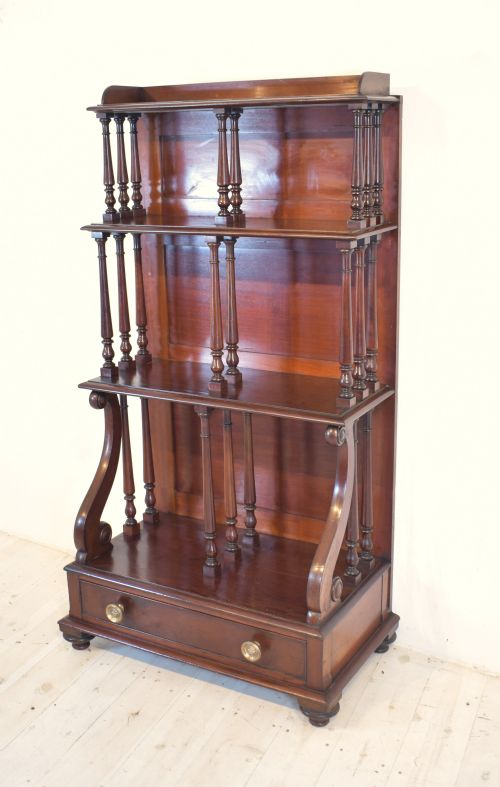


Regency Open Book Stand
A regency open book stand organises volumes with architectural clarity, offering accessible shelving in rich timbers.
Regency Open Book Stand
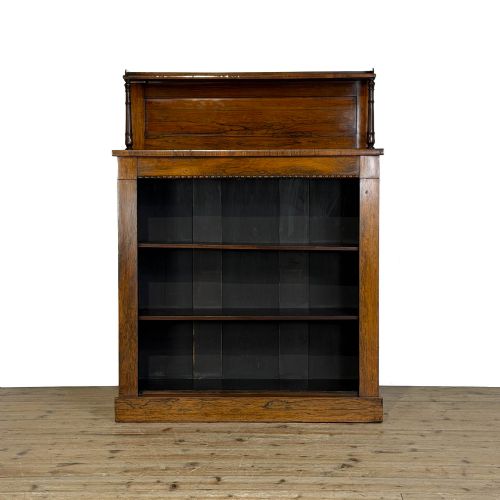
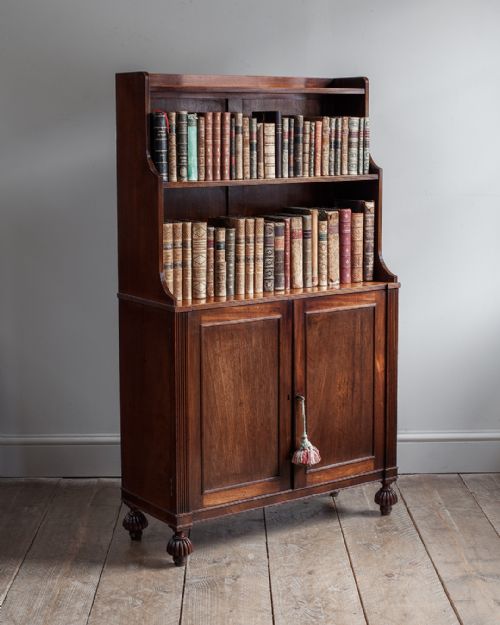
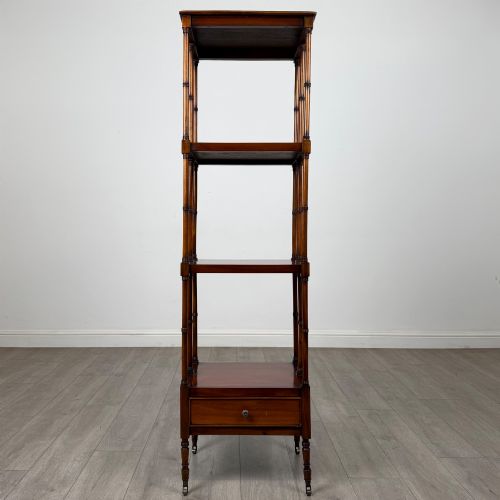
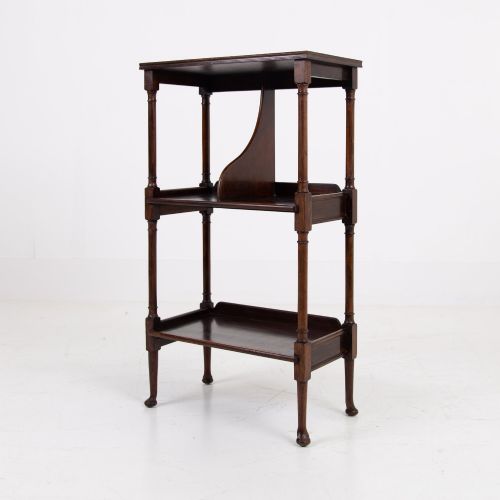
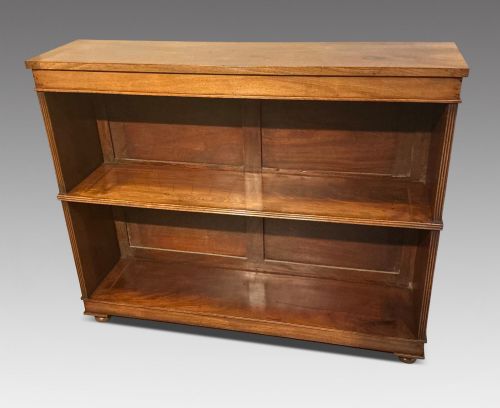
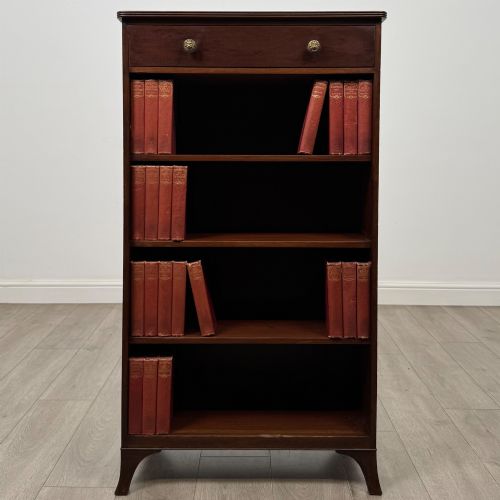
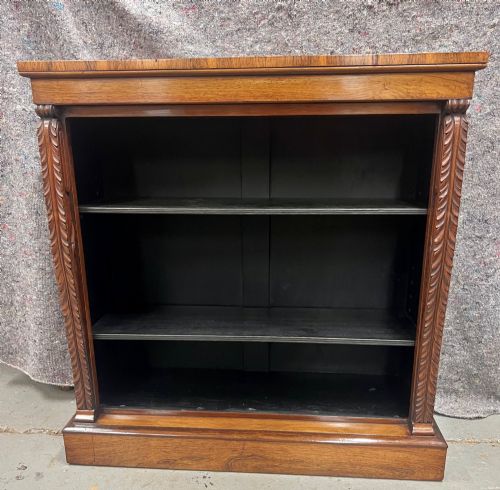
A regency open book stand appears in forms such as open bookcases, tiered whatnots, and dwarf shelving units. The pieces on this page span the Regency period itself alongside the Georgian, Victorian, and Edwardian eras, with Revival styles also represented.
Mahogany and rosewood dominate the selection, complemented by birdseye maple, oak, pine, and teak. Buyers encounter waterfall configurations alongside tiered etageres and low breakfront designs intended for standing free in a room.
Origins stretch from domestic workshops to Anglo-Indian commissions, showing both compact country house pieces and grander scaled furniture. These items serve to display collections while anchoring a room with period proportion.
What varies in quality
Quality rests on the crispness of turned supports, the choice of timber veneers, and the graduation of shelves. Superior examples demonstrate balanced proportions and careful attention to structural joints.
Finer pieces exhibit rich natural timber figures and restrained brass embellishments rather than excessive ornamentation. The integrity of the tiers and the stability of the open framework distinguish the finer items.
Materials represented in the current selection range from brass and leather to birdseye maple and teak.
Gillows
The Regency Open Book Stand Glossary
- Waterfall bookcase
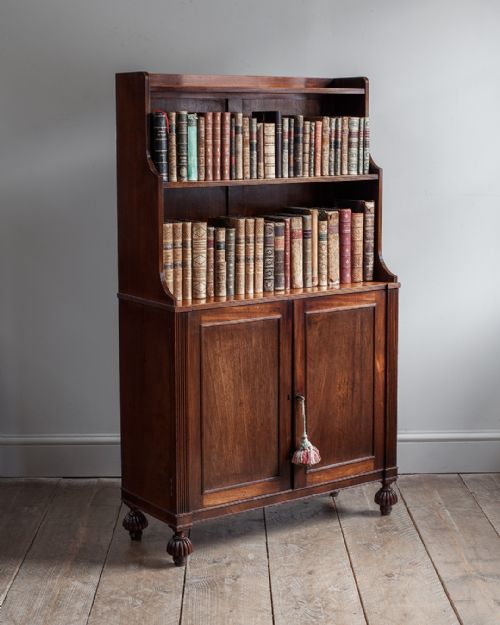
- A tiered open bookcase with shelves that step back progressively from bottom to top. This form emerged during the Regency period and remained popular through subsequent centuries.
- Whatnot
- A moveable set of open shelves used for displaying books and decorative objects. These items typically feature multiple tiers supported by slender columns.
- Dwarf bookcase
- A low open bookshelf designed to sit beneath dado height. These pieces often feature graduated shelves for smaller volumes.
- Ormolu
- Gilt bronze mounted onto furniture as decorative enrichment. This technique appears on select nineteenth-century pieces.
- Breakfront
- A piece of furniture where the central section projects forward from the flanking wings. This configuration provides architectural depth to bookcases and cabinets.
Regency Open Book Stand: Frequently Asked Questions
Where should I place a regency open book stand?
These pieces suit living spaces, libraries, or studies where open access to volumes is practical. Freestanding designs also function as room dividers or low side units.
Position the stand away from direct heat sources to protect timber surfaces and veneers. Their open form allows them to sit against panelled walls or act as low partitions.
How do I distinguish a Regency piece from a Revival piece?
Examine the timber construction methods, fixing types, and wood patination for signs of early nineteenth-century handcrafting. Revival pieces from around nineteen hundred often display uniform machine milling.
Secondary woods used in the carcase, such as pine or oak, offer further clues regarding manufacturing dates. True period examples carry wear consistent with prolonged domestic use.
Can these stands support heavy books?
Solid mahogany and rosewood tiers handle standard octavo volumes safely when the framework remains stable. Graduated shelves distribute weight by placing larger books on the deeper lower tiers.
Overloading narrow upper shelves on waterfall designs should be avoided. Check the joint connections between upright supports and shelves before loading heavy collections.
What is the difference between a whatnot and an open bookcase?
Whatnots feature multiple open display tiers supported on slender posts, intended for general display and smaller books. Open bookcases are typically wider and built specifically for housing book collections.
Some nineteenth-century hybrids combine both forms, offering stepped shelving alongside enclosed lower cabinet space. Both types rely on open access rather than glazed doors.