



Regency Office Desk
A regency office desk brings grounded, architectural dignity to a working room through rich timbers and considered proportions.
Regency Office Desk
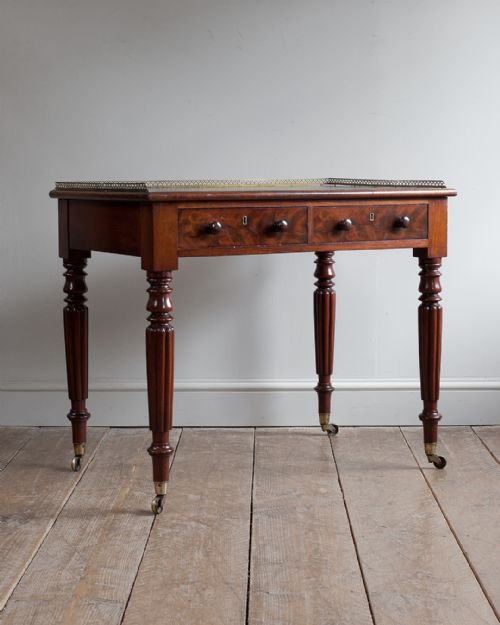
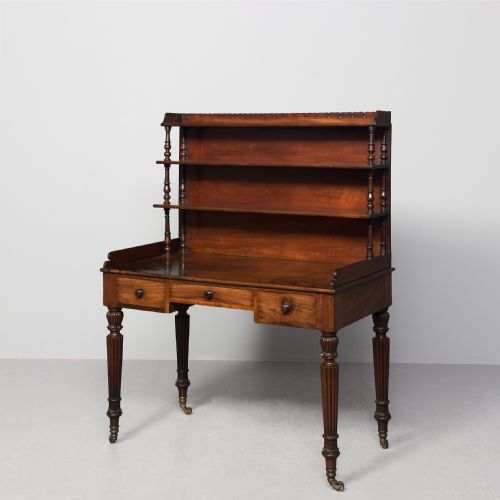
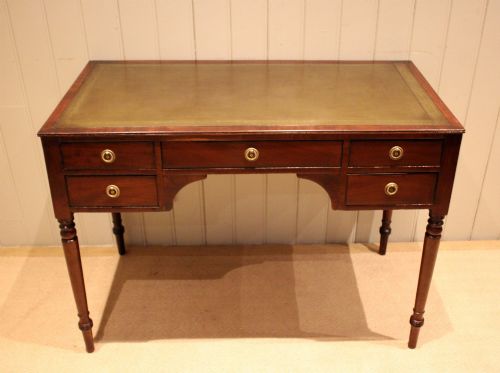
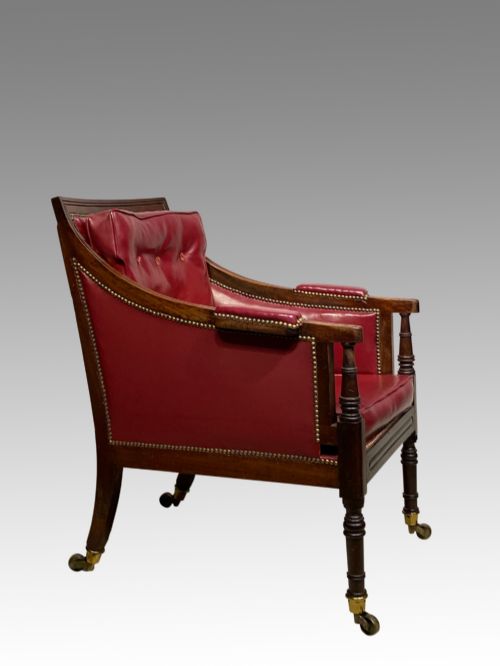
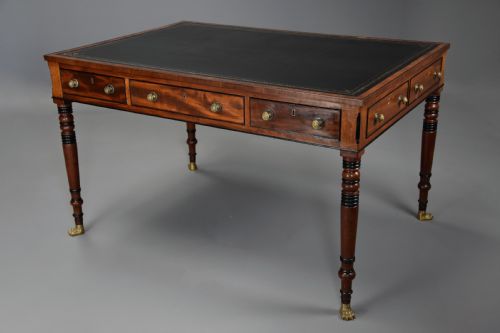
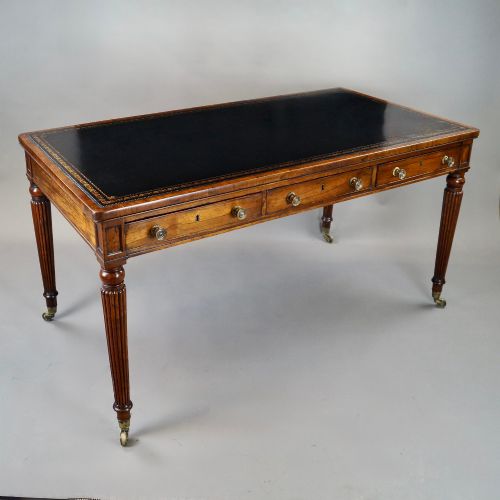
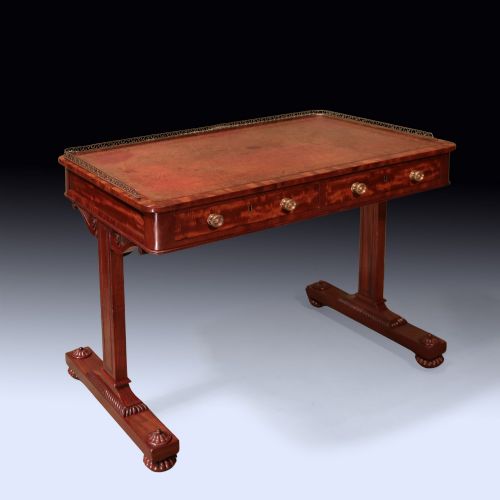
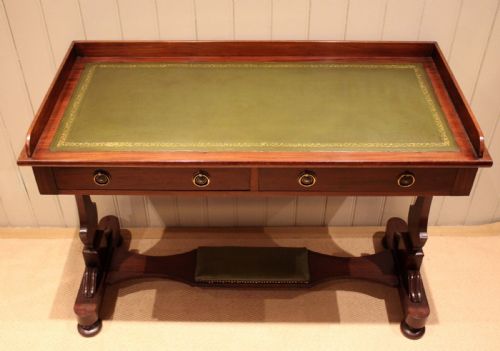
A regency office desk encompasses freestanding writing tables, library tables, pedestal desks, and associated seating designed for professional correspondence and study. These pieces combine practical storage with formal elegance, originating primarily from the Georgian, Regency, and William IV periods.
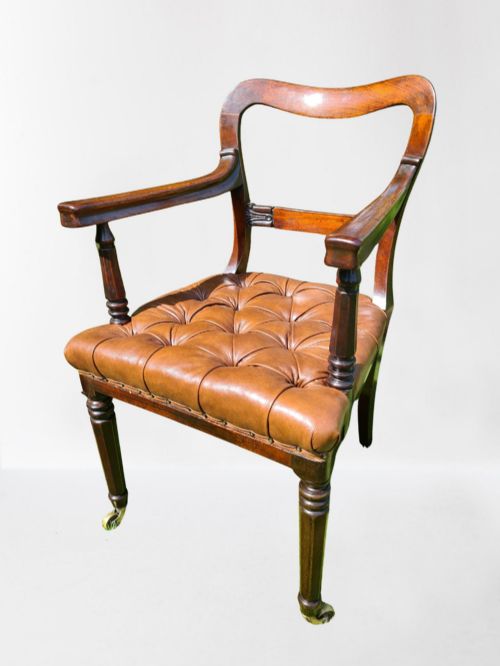
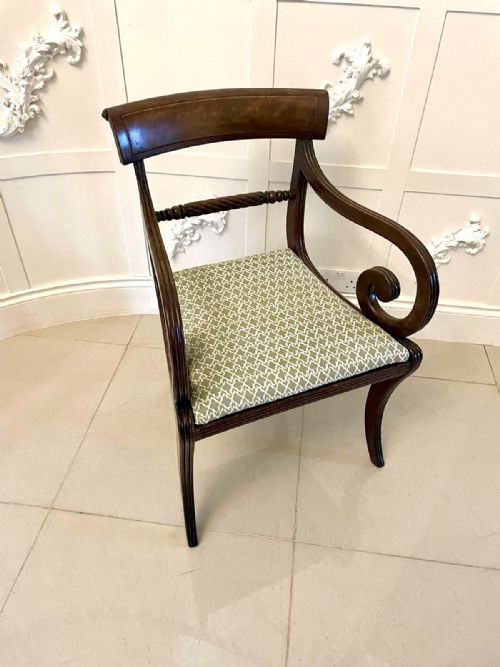
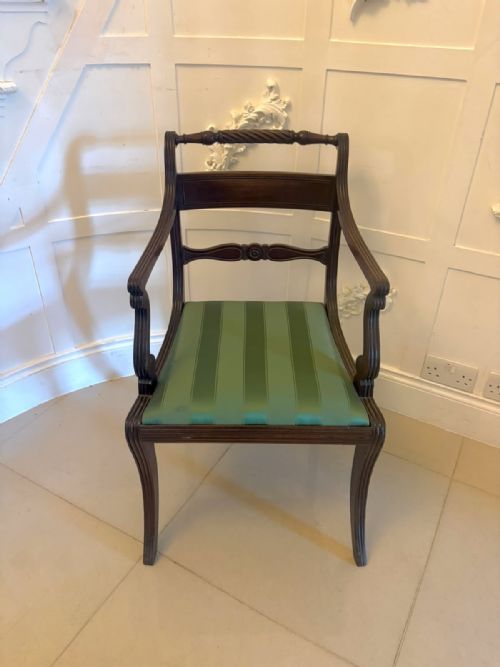
The selections available here rely heavily on mahogany and rosewood constructions, frequently paired with leather writing inserts or caned seats. Buyers will frequently encounter freestanding writing tables and specialised desk chairs featuring sabre legs or scroll arms.
Form follows function across these examples, ranging from compact kneehole configurations to substantial partners desks built for archival storage. Each variant reflects the domestic architecture and professional requirements of the early nineteenth century.
Assessing Quality and Execution
Distinctions in quality often rest upon the selection of timber grain, such as the use of figured rosewood or flame mahogany, and the precision of cabinet joinery. Superior examples demonstrate continuous grain matching across drawers and sophisticated internal framing.
The refinement of carved elements, from scroll arms on desk chairs to brass inlay on writing tables, separates standard workshop production from notable cabinetmakers like Gillows. Original surfaces with faded patination hold greater integrity than heavily stripped or over-restored timber.
The archive includes freestanding library tables, compact Davenport writing desks, and open armchair desk chairs with sabre legs.
James Mein of Kelso·Gillows·Gillingtons of Dublin·Moses Brent London
The Regency Office Desk Glossary
- Partners desk
- A large double-sided desk designed to accommodate two people working opposite one another, featuring matching banks of drawers on both long sides.
- Davenport
- A compact writing desk featuring a sloping, hinged top above a pedestal of side drawers, originating in the late eighteenth century.
- Sabre leg
- A concave, outwardly curving furniture leg of uniform or tapering section, characteristic of Regency seating and small tables.
- Library table
- A large freestanding table finished on all sides, historically placed in the centre of a room rather than pushed against a wall.
- Kneehole desk
- A bureau or pedestal desk featuring a central recess for the user's legs, flanked by vertical stacks of drawers.
Regency Office Desk: Frequently Asked Questions
How do I distinguish a genuine period desk?
Examine the drawer construction for hand-cut dovetails and inspect the secondary timbers used inside the framing, which should match the expected period methods. Original hardware, period-appropriate timber shrinkage, and natural patination also indicate age.
Compare the overall proportions and decorative vocabulary, such as brass inlay or leg profiles, against documented examples from the early nineteenth century. Consistency in wear patterns across the writing surface and primary touchpoints further supports authenticity.
Were these desks used for writing or storage?
Most forms combined both functions by integrating writing surfaces with banks of drawers, pigeonholes, or cupboards. Writing tables prioritized top surface area, whereas pedestal desks and partners desks emphasised internal document storage.
Specialised variants like the Davenport offered sloped writing surfaces with hidden compartments, balancing compact daily correspondence with secure paperwork storage.
How should I care for leather desk inserts?
Protect antique leather surfaces by avoiding direct sunlight and excessive heat, which cause the material to dry out and crack over time. Dust gently with a dry, soft cloth and consult a professional conservator before applying any leather dressings.
Use blotters and writing pads when using fountain pens or working daily to prevent ink stains and mechanical wear on the historic hide.
Can I use a library table as an office desk?
Library tables function effectively as modern desks because they are finished on all sides and provide generous surface areas for paperwork and technology. Their freestanding design allows them to sit centrally within a room rather than requiring wall placement.
Consider the height and knee clearance before daily use, as some older tables were built lower than standard modern office seating requirements.