



Regency Neoclassical Console Table
A regency neoclassical console table brings architectural symmetry and classical restraint to a room, offering a slender surface designed to stand flat against a wall.
Regency Neoclassical Console Table
When you search for a regency neoclassical console table, you encounter forms that span the nineteenth century alongside later revivals from the early twentieth century. These pieces function primarily as console tables, serving tables, and side tables, sometimes accompanied by matching pier mirrors.
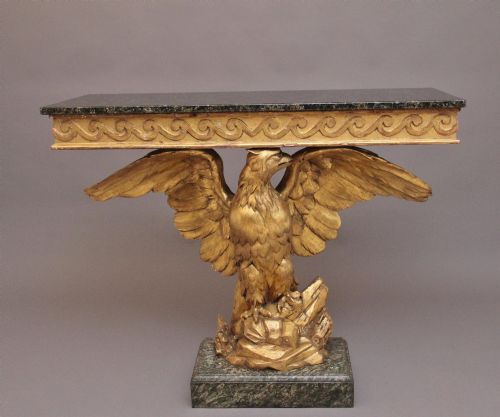
The aesthetic draws heavily on classical antiquity, emerging through forms attributed to workshops such as Gillows, George Oakley, and Marsh and Tatham. You will find examples ranging from grand giltwood designs to painted beech and mahogany constructions.
While authentic Regency pieces date to the early nineteenth century, the listings also include Neoclassical Revival and French Empire styles produced up to 1920. Each variation maintains the characteristic linear discipline and decorative restraint associated with the neoclassical vocabulary.
Materials and construction
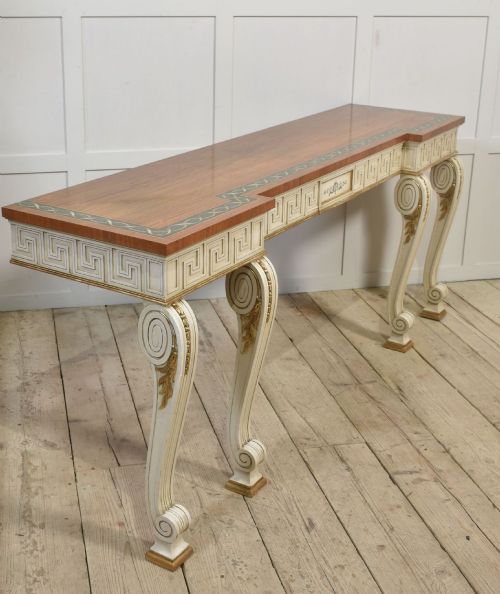
Cabinet makers utilised a combination of hardwoods and softwoods, principally employing mahogany, beech, and rosewood for the structural carcasses. Surfaces frequently received painted decoration, gold leaf, or applied brass mounts to heighten the classical effect.
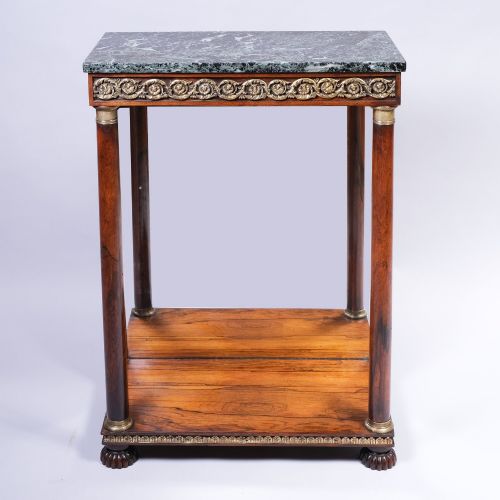
Heavy marble tops provide the characteristic stone surface on many examples, supported by gesso mouldings and carved giltwood frames. Detail work incorporates ebony inlay and applied Wedgwood plaques on select writing desks and serving tables.
Listings feature mahogany, painted wood, and giltwood pieces spanning from 1800 to 1920.
Distinguishing quality
Quality rests in the crispness of the carved giltwood and the integrity of the original painted decoration rather than mere age. Pieces showing attribution to established makers like Gillows or George Oakley demonstrate superior joinery and refined proportions.
The presence of untouched marble tops and original brass mounts elevates a piece above later replacements. Finer examples exhibit meticulous attention to detail in the execution of neoclassical motifs and classical friezes.
Gillows·George Oakley·Marsh and Tatham
The Regency Neoclassical Console Table Glossary
- Console table
- A wall-mounted or freestanding table designed to stand flat against a vertical surface, often supported by two front legs. These tables frequently feature decorative marble tops.
- Neoclassical
- A style inspired by the classical art and architecture of ancient Greece and Rome. It emphasises straight lines, symmetry, and classical motifs.
- Giltwood
- Timber coated with gold leaf or a gold-coloured metallic finish. It provides a reflective, ornamental surface common on nineteenth-century frames.
- Pier mirror
- A large vertical mirror designed to hang on the pier wall between two windows, frequently positioned directly above a console table.
- Gesso
- A plaster-like material applied to wood surfaces as a base for gilding or painting. It allows craftsmen to carve sharp, intricate details before finishing.
Regency Neoclassical Console Table: Frequently Asked Questions
Where should I place a console table?
These tables suit hallways, drawing rooms, or dining spaces where a shallow surface is required against a wall. Their formal symmetry makes them ideal for positioning beneath a large mirror or painting.
Because they traditionally stood against piers or empty wall spaces, they anchor a room visually without protruding far into the floor plan.
How do I identify the Regency period?
Regency pieces date from the early nineteenth century and typically display restrained classical lines influenced by Greek and Roman archaeology. Look for mahogany and rosewood timbers paired with brass mounts and giltwood.
Later pieces from the twentieth century are catalogued as revivals, reflecting the enduring popularity of these classical forms.
What is a serving table?
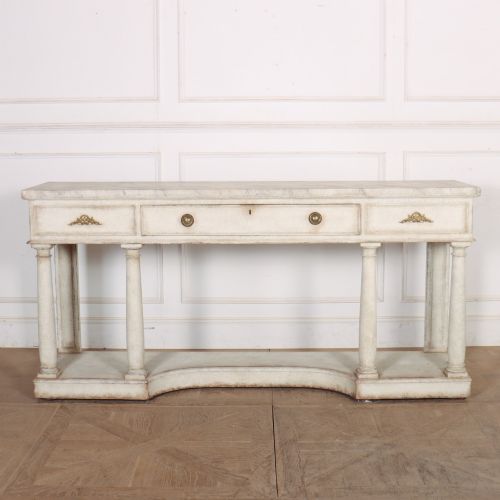
Serving tables share the long, rectangular proportions of console tables but were traditionally used in dining rooms for presenting food and drink. They often feature robust mahogany construction and heavy marble tops.
Many examples double functionally as side tables or writing desks depending on their height and drawer configuration.
Are marble tops original?
Original marble tops fit snugly within the wooden or gilded rebate of the table frame, showing appropriate age-related wear underneath. The stone type and thickness usually correspond to the manufacturing period of the base.
Replacement marble is often thicker or lacks the characteristic patination accumulated over a century or more.