





Regency Music Seat
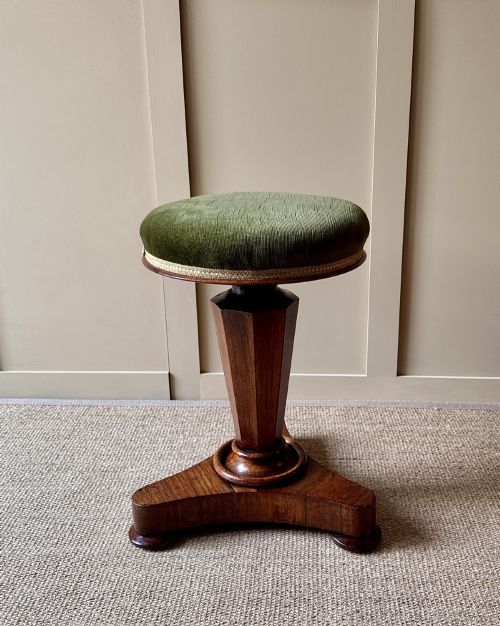
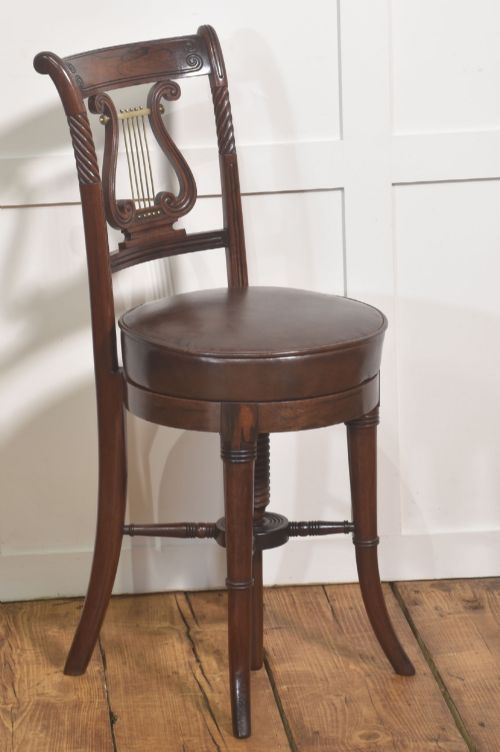
A regency music seat offers the precise mechanical adjustment and elegant timber forms needed by nineteenth-century musicians at the keyboard or harp.
Regency Music Seat
When you search for a regency music seat, you encounter purpose-built furniture designed for the piano, harpsichord, or harp. These seating pieces appear primarily as piano stools, music chairs, and dressing chairs originating from the Georgian, Regency, and William IV periods, alongside later Edwardian revivals and nineteenth-century interpretations.
Stylistic influences span from strict Regency and Grand Regency to Empire, William IV, and Sheraton Revival aesthetics. Makers utilised diverse seating heights and screw-top mechanisms to accommodate the posture required for instrumental performance.
Materials and construction methods
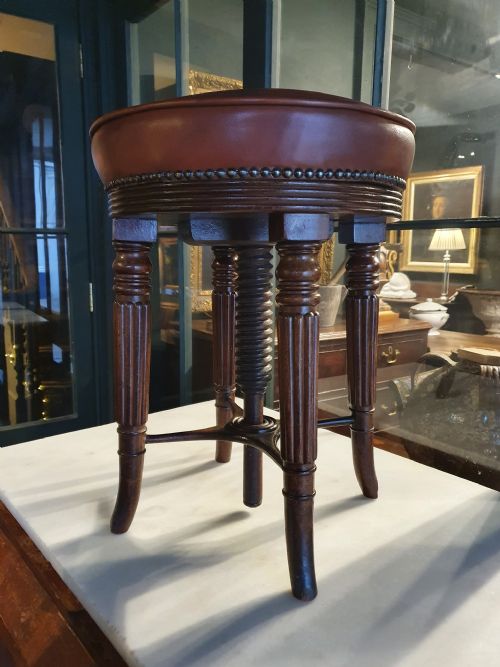
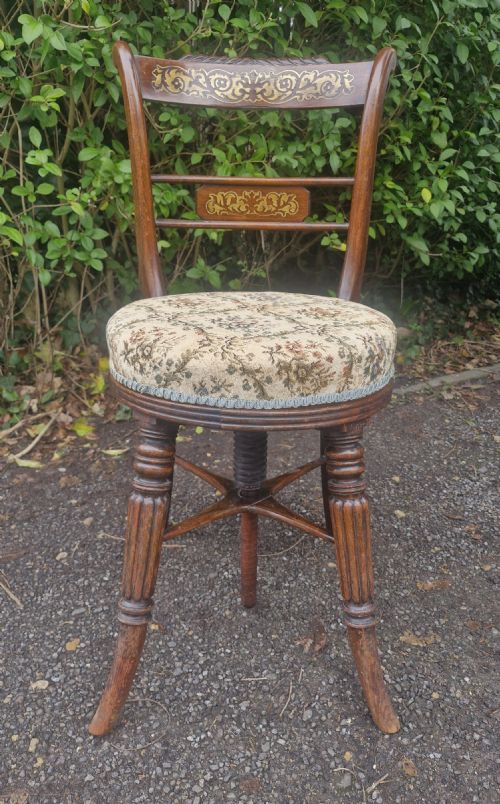
Cabinetmakers constructed these music seats using dense tropical and domestic timbers such as mahogany, rosewood, and satinwood, often enhanced with contrasting brass inlay. These dense woods provided the structural rigidity necessary to house internal screw mechanisms and revolving pivots.
Upholstery played an integral role in finishing each piece, utilising traditional materials like velvet, leather, and woven fabric over padded seats. Decorative detailing extended to gilt paint finishes and simulated rosewood graining to achieve fashionable interior looks.
Regency Music Seat Retail Price Guide 2026
Typical asking prices for regency music seat among the pieces listed under this phrase on Sellingantiques today, from the lower quarter to the upper quarter. They describe what is for sale here now, not the wider market.
Musicians relied on hidden wooden screws to elevate themselves just high enough to conquer difficult passages without losing their balance.
Differentiating quality across pieces
The standard of a regency music seat rests on the precision of its mechanical action, whether a smooth screw-top height adjustment or a reliable revolving pivot. Finer examples exhibit meticulous craftsmanship in the joinery of X-frames and the crispness of brass inlay work.
Timber selection and surface finish define the visual upper tier, where figured mahogany or rich rosewood displays depth and careful patination. Lesser examples rely on simpler secondary woods or plain painted surfaces without the intricate detailing found in work attributed to established workshops like Gillows.
Gillows
The Regency Music Seat Glossary
- Revolving piano stool
- A seat featuring a central screw mechanism that allows the top to spin and adjust in height. This enables the player to find a comfortable position relative to the keyboard.
- X-framed stool
- A seating form characterised by intersecting diagonal stretcher legs shaped like the letter X. This design provides robust structural support and a distinct classical silhouette.
- Harpist chair
- A specialised music seat designed without arms or with a low back to accommodate the musician playing the harp. It ensures the player's arms remain unobstructed during performance.
- Screw-top adjustment
- A mechanical system utilising a threaded wooden or metal shaft operated by turning the seat top. It represents the primary method for altering seating height in nineteenth-century examples.
- Brass inlay
- The technique of embedding thin strips or shaped pieces of brass flush into the wooden surface of the furniture. It creates geometric or floral patterns popular during the Regency period.
Regency Music Seat: Frequently Asked Questions
What is a regency music seat?
A regency music seat is a specialised nineteenth-century stool or chair designed specifically for keyboard and harp players. These pieces incorporate mechanical height adjustment to suit the musician.
They appear in various styles from the Georgian through William IV periods, constructed in timbers like mahogany and rosewood with upholstered seats.
How do adjustable piano stools work?
Adjustable piano stools typically utilise a central wooden or metal screw mechanism hidden beneath the upholstery. Turning the seat top raises or lowers the height.
This functional innovation allowed players to customize their seating position for proper posture during extended practice and performance.
Where were music chairs used?
These chairs were used in domestic drawing rooms, music rooms, and parlors alongside pianos, harps, and dressing tables. Their compact footprints suited fashionable interior spaces.
The inclusion of revolving mechanisms and specialised backs accommodated the physical demands of playing musical instruments.