
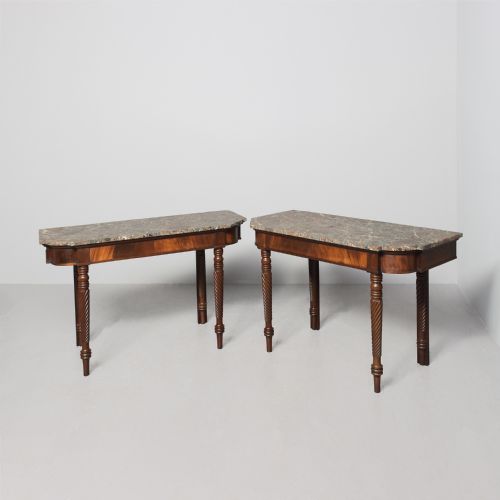
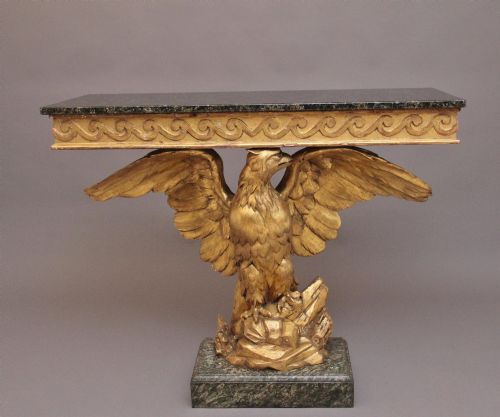
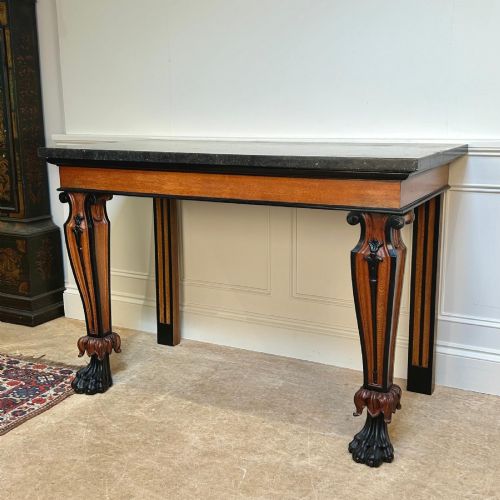
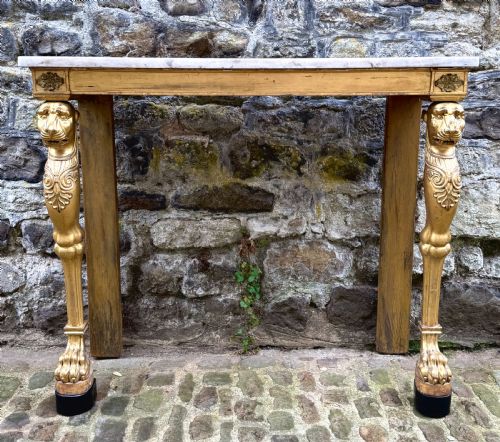
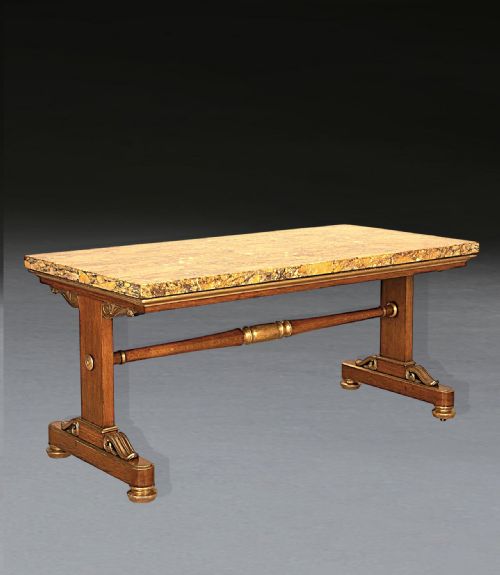

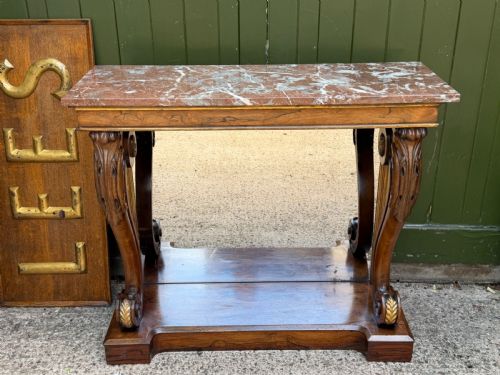
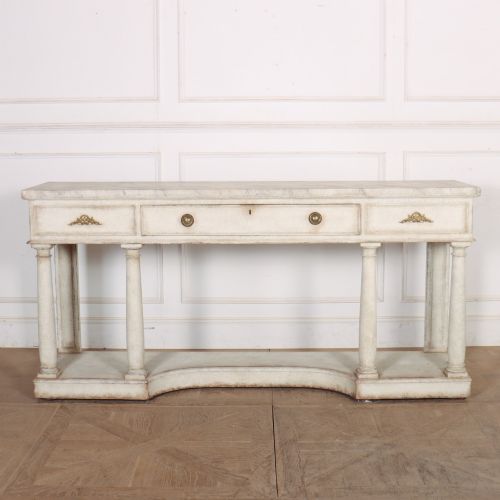


Regency Marble Console
A regency marble console brings architectural weight and refined surface texture to an interior, combining polished stone with rich timber or gilt framing.
Regency Marble Console
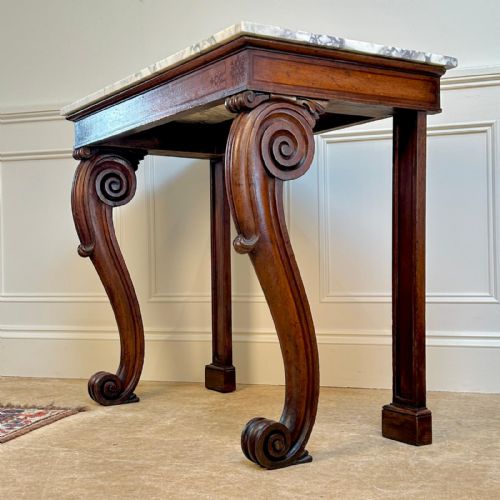
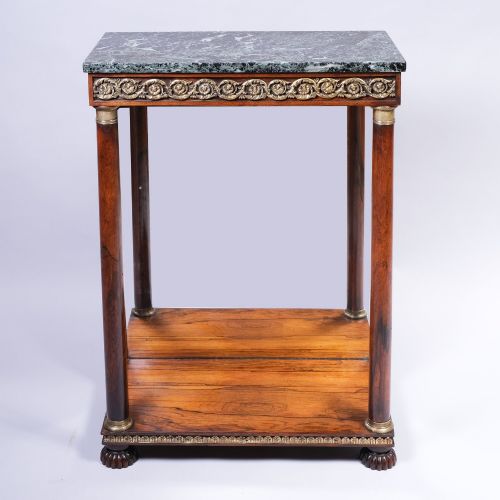
When you search for a regency marble console, you are looking at substantial wall-fixing or freestanding tables designed for principal rooms, most frequently encountered in mahogany, rosewood, or giltwood.
The pieces on this page span the Regency period proper alongside William IV iterations and later revivals from the nineteenth and early twentieth centuries.
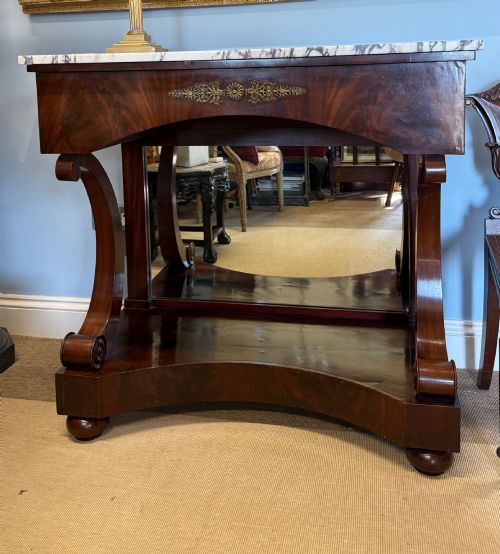
Forms include breakfront side tables, mirror-backed console piers, and occasional demi-lune shapes fitted with heavy slabs of white, figured, or Siena marble.
Materials and construction
Cabinetmakers utilised dense tropical hardwoods such as rosewood and flame mahogany, often laying veneers over solid carcases of oak or pine.
Structural enrichment relied upon carved gesso, parcel-gilding, or cast brass and ormolu mounts fixed to support the heavy stone tops.
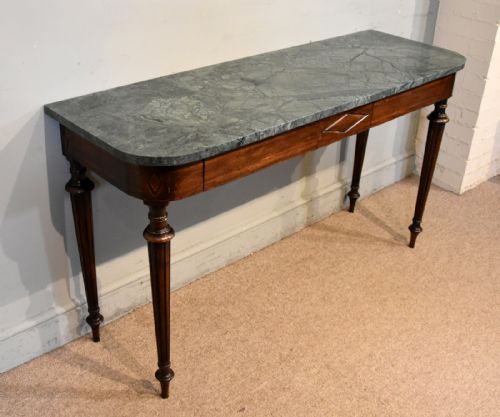
Marble slabs, selected for their colour and veining, were cut and polished to fit precise surface profiles, sometimes resting directly upon shaped friezes.
Periods represented span the early nineteenth century through to early twentieth-century revival pieces.
Distinctions in quality
The standard of a regency marble console rests upon the depth and crispness of its carved ornament and the natural figuring of the timber veneers.
Superior examples demonstrate careful selection of marble with harmonious veining, fitted flush to heavy structural framing without awkward gaps.
The Regency Marble Console Glossary
- Console table
- A table designed to stand against a wall, traditionally supported by front legs or wall brackets. They often feature decorative friezes beneath the stone top.
- Giltwood
- Timber that has been coated with fine gold leaf over a prepared gesso ground. This technique gives furniture a brilliant metallic lustre.
- Ormolu
- Gilded bronze mounts applied to furniture for decorative contrast. The technique involves mercury gilding on cast bronze components.
- Breakfront
- A piece of furniture where the central section projects forward from the flanking wings. This creates architectural depth and dynamic shadow lines.
Regency Marble Console: Frequently Asked Questions
Where should I place a console table?
These pieces suit entrance halls, drawing rooms, or dining spaces where they sit flush against a wall beneath a mirror or painting.
Because many historical examples were designed to be secured to the wall for stability, checking the balance of the piece is essential for freestanding placement.
How do I care for the marble top?
Marble requires gentle cleaning with warm water and a soft cloth to avoid scratching the polished surface or dulling the natural stone.
Acidic liquids can etch the stone, so coasters should be used to protect the vintage surface from spills.
Are these tables freestanding?
Many examples are designed to stand independently on four legs, while others rely on wall brackets for total stability.
Mirror-backed variations particularly benefit from being anchored securely to prevent tipping due to the weight of the stone.
How do I spot a later revival piece?
Later nineteenth and twentieth-century revivals often display machine-sawn timber framing and standardised brass fixings rather than hand-forged joinery.
Comparing the timber patina and the weight of the marble helps differentiate original nineteenth-century production from later interpretations.