
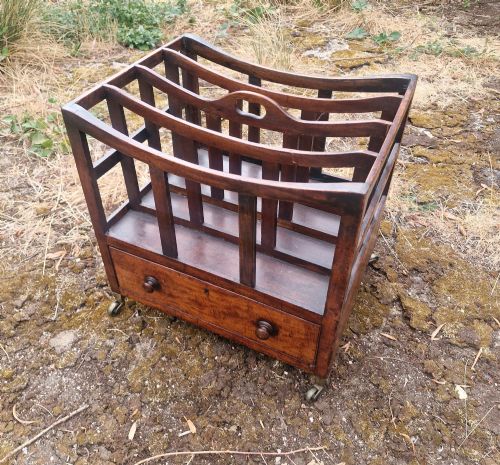
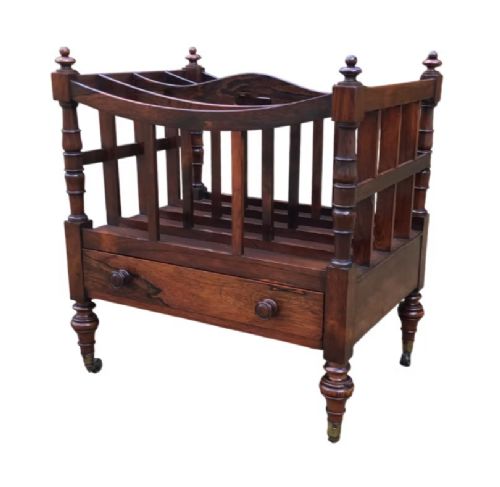
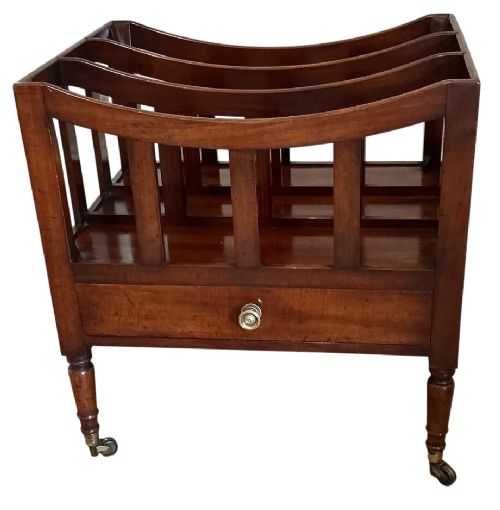
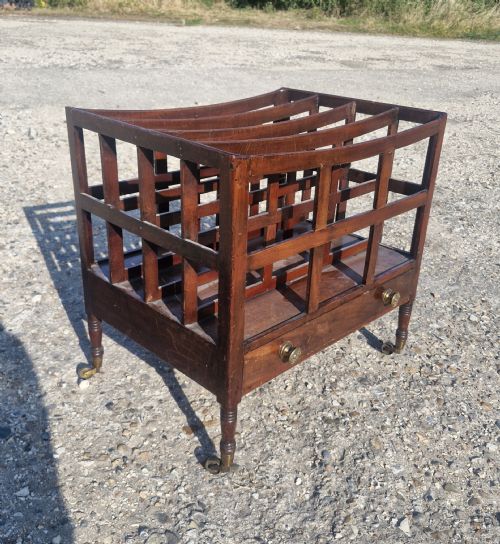


Regency Mahogany Music Rack
A regency mahogany music rack organises folios and newspapers with architectural grace, holding sheet music close at hand.
Regency Mahogany Music Rack
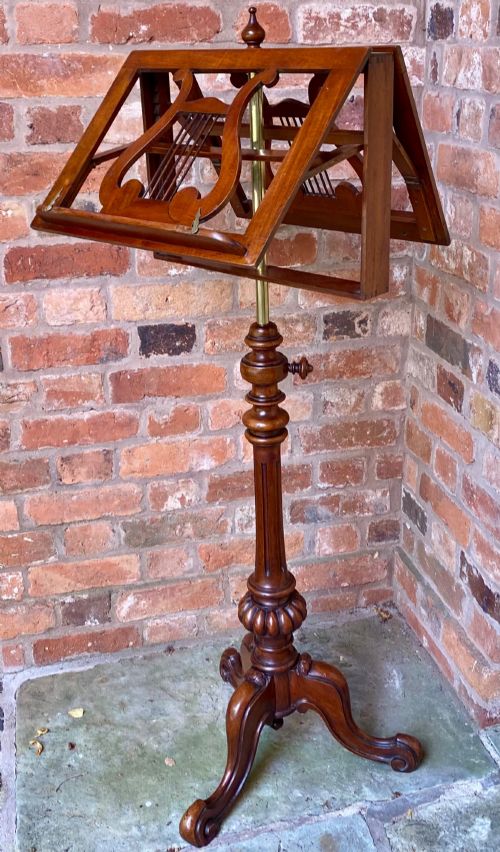
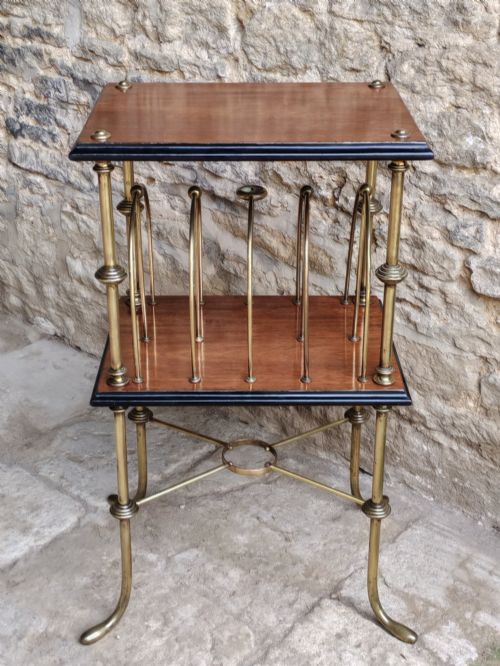
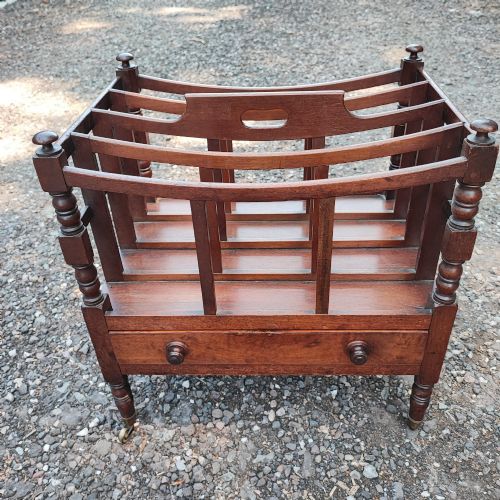
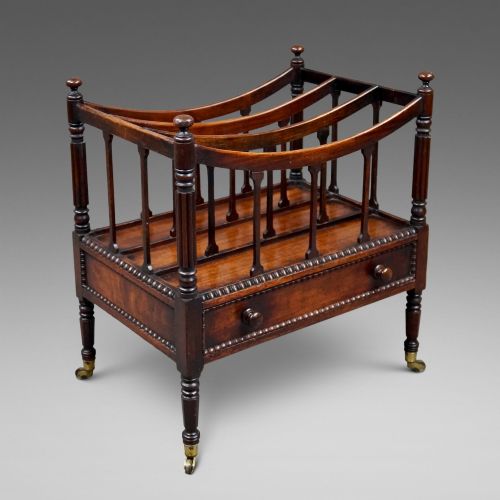
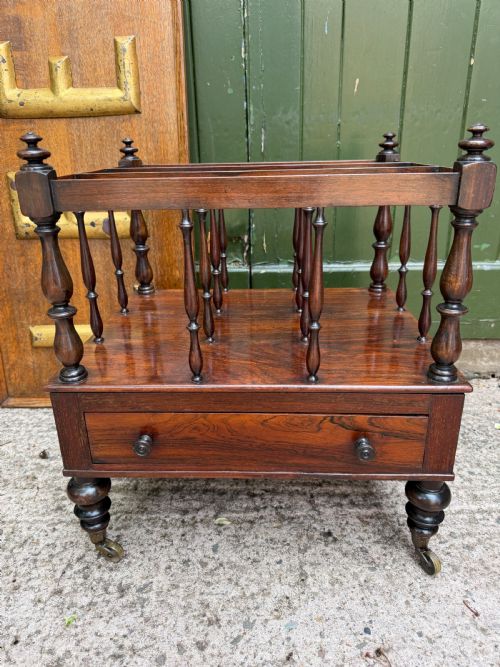
These pieces encompass canterburys, music stands, and magazine tidies designed to hold folios, papers, and part-songs in domestic parlours. The listings show a predominance of Regency and George III examples, alongside William IV and Victorian adaptations.
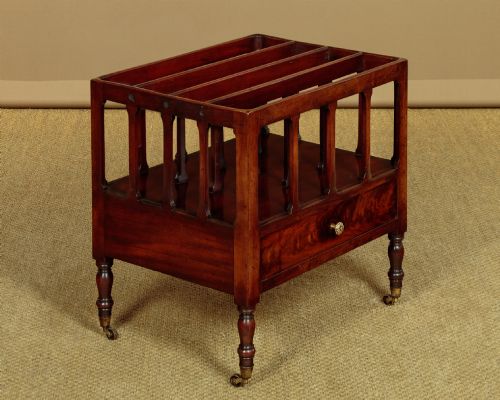
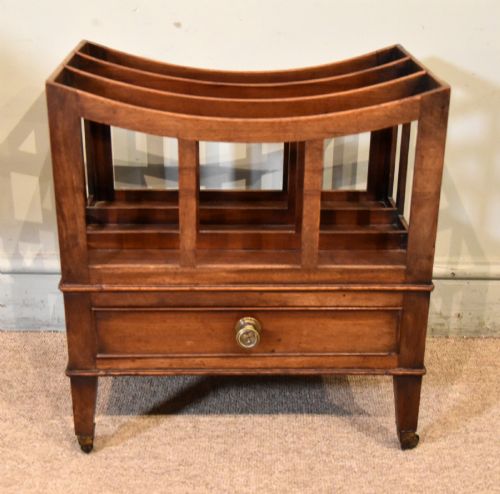
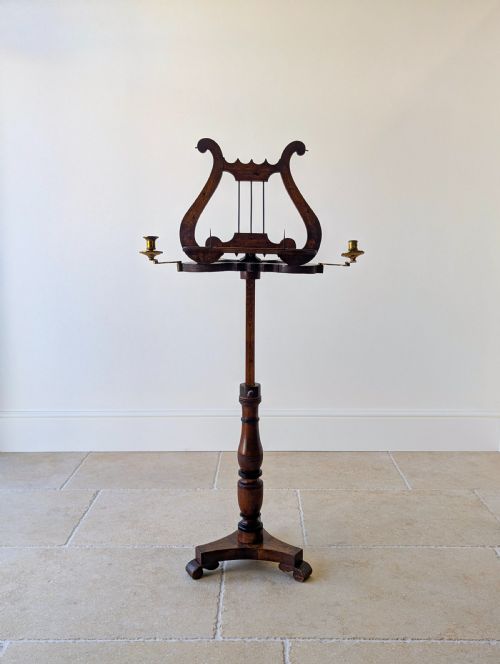
A buyer examining this page encounters boat-shaped bodies, lyre-form stands, and multi-division frames with lower drawers. Most pieces function as movable stands or low tables fitted with castors for easy placement beside a pianoforte.
Origins stretch from country house workshops to urban cabinet makers, using dense timbers suited to daily handling. The enduring form remains a low, compartmentalised rack that keeps scores upright and accessible.
Materials and construction methods
Cabinet makers built these pieces primarily from solid mahogany and figured Cuban mahogany, occasionally selecting rosewood for later variants. Secondary details relied on contrasting stringing and banding in ebony, boxwood, and satinwood.
Structural hardware featured cast brass fittings, including hinges, knobs, and castors that enabled smooth movement across carpets. Upright supports often took the carved form of lyres or slender turned legs, joined securely to slatted or panelled troughs.
Archbishop Manners-Sutton reportedly requested the first stand with partitions for his supper music, giving the furniture type its ecclesiastical name.
Judging execution and refinement
Quality rests upon the selection of timber grain, particularly where figured Cuban mahogany displays deep chatoyancy across flat panels and turned members. Finer examples integrate precise stringing and delicate inlay rather than relying on heavy mouldings alone.
Proportion and stability separate standard utility pieces from masterworks of the period. A superior stand maintains rigid joinery in the divider slats and operates adjustable mechanisms smoothly without wobble.
The Regency Mahogany Music Rack Glossary
- Canterbury
- A low stand with partitions for holding sheet music, folios, or newspapers, often mounted on castors. Originating in the late eighteenth century, the form quickly became a staple of the music room.
- Lyre-form
- A decorative motif shaped like an ancient stringed instrument, frequently utilised for the central upright supports of music stands. This classical shape reflects the Regency taste for Hellenistic design.
- Boat-shaped
- A hull-like curvature applied to the trough of certain canterburys, tapering gracefully towards the ends. This silhouette enhances the visual lightness of the mahogany frame.
- Stringing
- Thin inlaid lines of contrasting timber, such as boxwood or ebony, set flush into the mahogany surface. It defines the edges and panels with crisp geometric precision.
- Duet stand
- An adjustable music stand designed to hold scores for two performers sharing a single instrument. These pieces often incorporate pivoting desks and height-regulation screws.
Regency Mahogany Music Rack: Frequently Asked Questions
What is the difference between a canterbury and a music stand?
A canterbury is a low, compartmentalised floor rack built primarily to store folded sheets and bound volumes beneath a handle. Music stands feature vertical shafts and adjustable desks designed to hold scores at eye level during performance.
While both served musical households, canterburys functioned as storage furniture beside seating, whereas stands acted as active reading apparatuses for instrumentalists.
How do I identify a Regency period piece?
Regency pieces typically display classical restraint, clean lines, and architectural motifs inspired by Greek and Roman antiquities. Look for materials like figured mahogany accented with subtle ebony stringing and turned legs fitted with brass castors.
Proportions remain balanced and elegant, avoiding the heavier carvings associated with later Victorian revivals or the simpler vernacular lines of early Georgian production.
Were these pieces used only for music?
Although originally commissioned to hold manuscript scores and published sheet music, contemporary households utilised them for daily newspapers and correspondence. The slatted divisions kept unbound folios flat and sorted.
As domestic habits shifted through the nineteenth century, makers adapted the compartments to accommodate emerging formats of weekly periodicals and magazines.
How do I care for mahogany furniture?
Keep mahogany pieces away from direct sunlight and strong heat sources to prevent the timber from drying and the polish from fading. Dust regularly with a dry, soft cloth and apply quality beeswax sparingly when the surface appears dull.
Avoid silicone-based sprays, as they build up over time and attract dust, dulling the natural chatoyancy of the wood grain.