
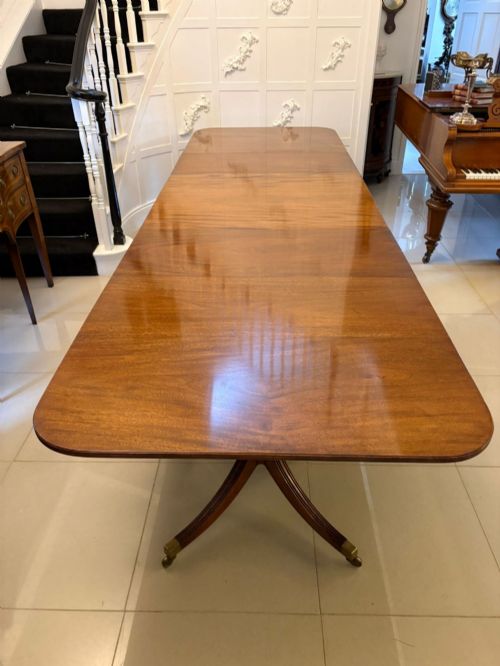
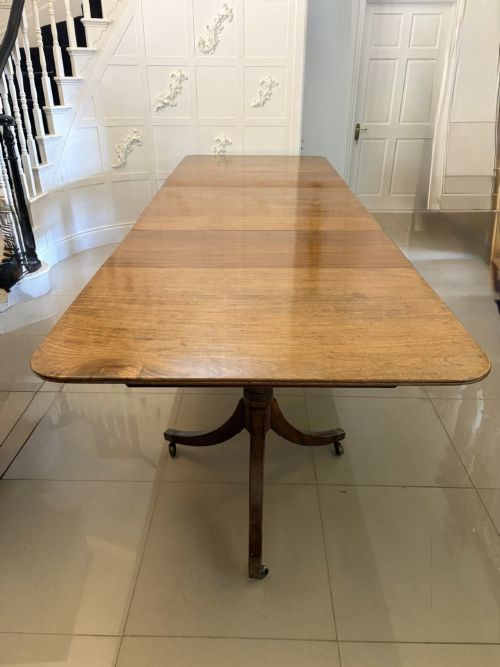

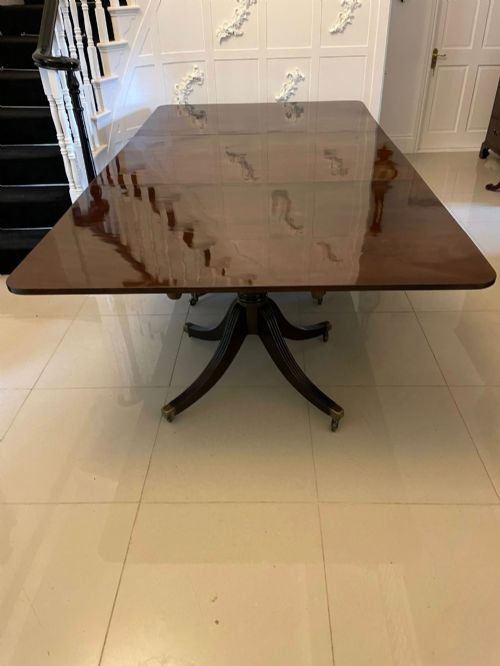
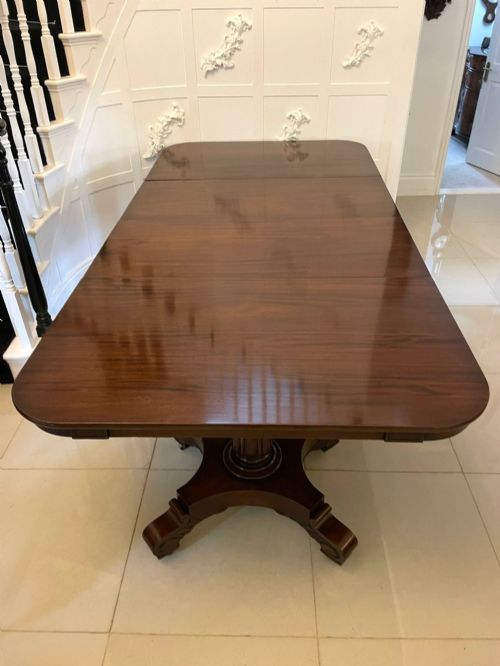
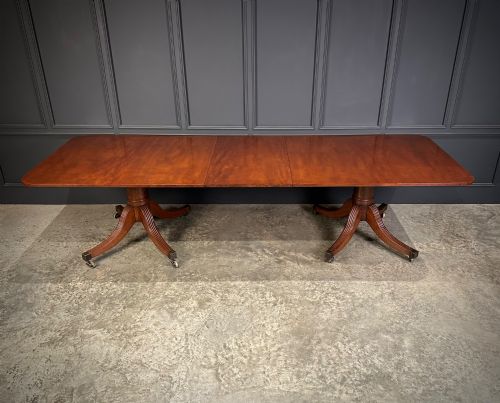
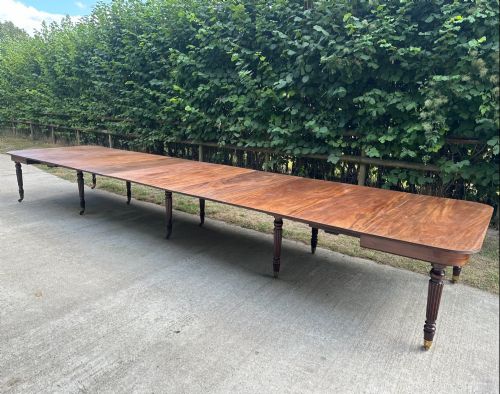
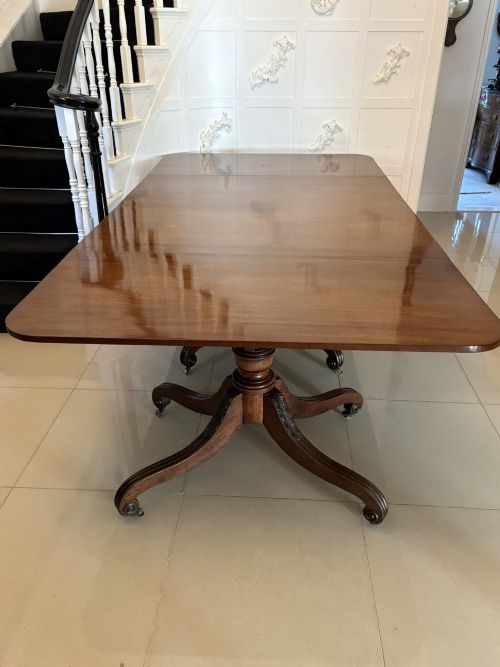
Regency Mahogany Conference Table
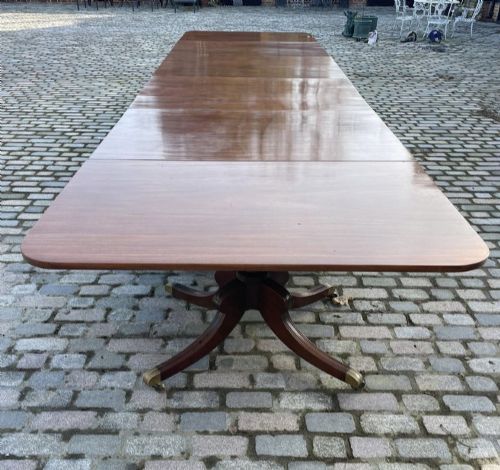
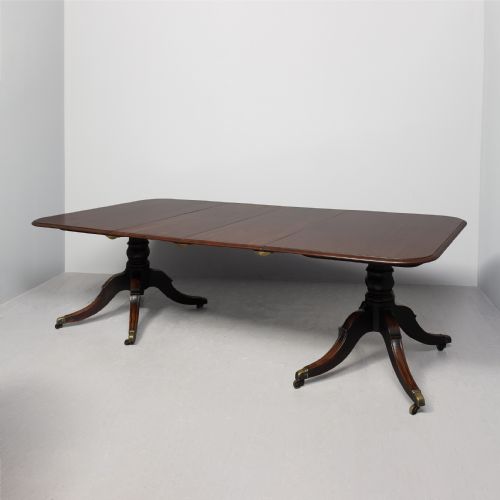
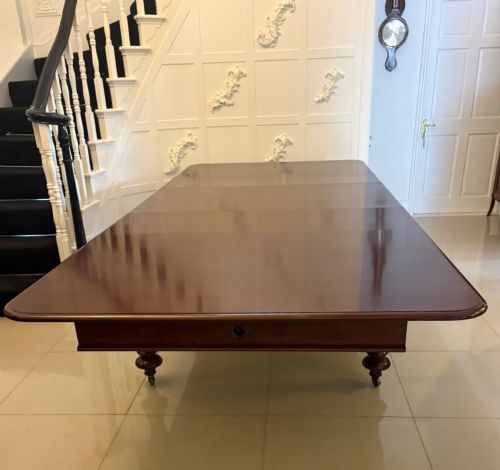
A regency mahogany conference table offers monumental scale and architectural balance, designed to anchor a serious boardroom with timber and brass.
Regency Mahogany Conference Table
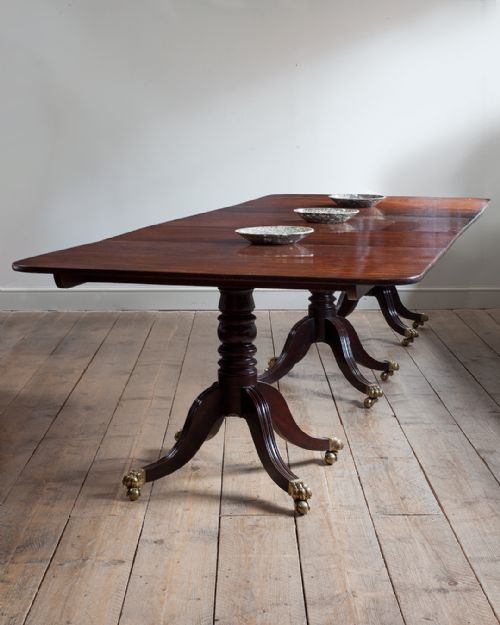
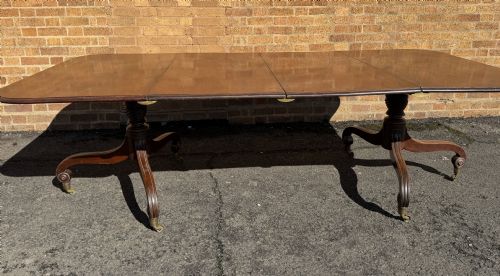
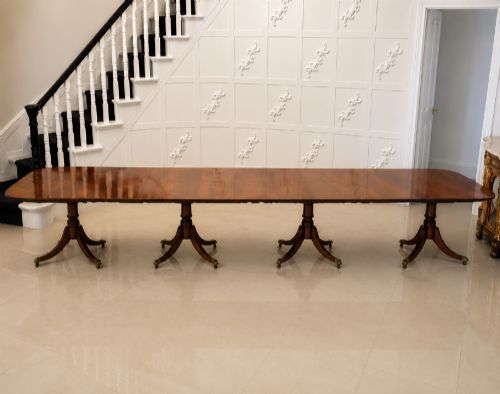
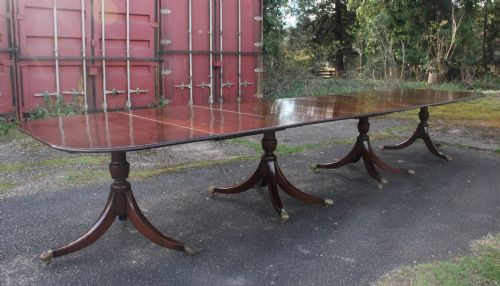
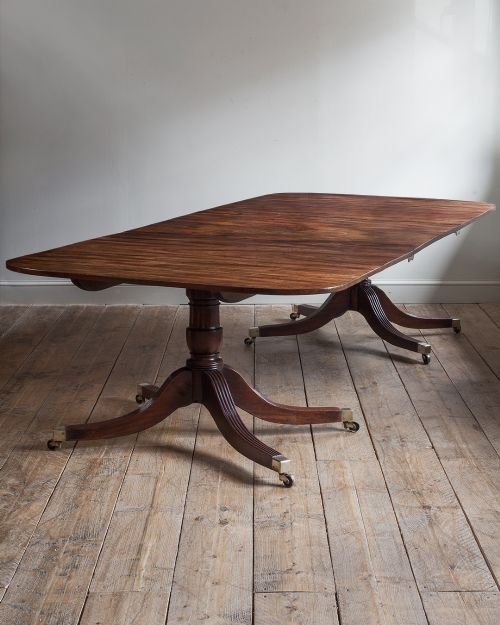
A regency mahogany conference table represents the grander end of period dining and boardroom furniture, often stretching across multiple pedestals to accommodate large assemblies. You will encounter twin-pillar, triple-pillar, and four-pillar formats designed with removable leaves for flexible length.
The pieces listed here span the actual Regency and Georgian eras as well as later revivals from the twentieth century. Forms range from compact twin-pedestal layouts seating ten people up to massive imperial boards reaching over twenty seats.
How they were made
Makers utilised dense mahogany and Cuban mahogany timber selected for deep figure, laid over sturdy internal framing and supported on turned pedestals. Brass castors typically terminate the reeded or sabre legs to allow movement across heavy carpets.
Extending mechanisms rely on solid timber runners and brass clips or brass sockets that secure extra leaves in place. Surface finishing involved hand-polishing to bring out the natural warmth of the grain.
Listings feature mahogany, Cuban mahogany, brass, and fabric materials across nineteenth-century and twentieth-century revival periods.
What varies in quality
The distinction between ordinary and superior examples lies in the selection of figured mahogany timber and the crispness of the pedestal carving. Finer tables display deeply swirled grain patterns across the top boards and precise turning on the pillar supports.
Proportion and engineering also divide the range, as heavier tables require robust pillar construction and smooth extension actions to remain stable at full length. The quality of the brass fittings and the integration of extra leaves further elevate the standard.
Gillows·Whytock & Reid
The Regency Mahogany Conference Table Glossary
- Pedestal
- A central timber support resting on splayed legs, usually numbering two, three, or four beneath a large top. These columns carry the structural weight of long extending boards.
- D-End
- A table end shaped in a semi-circle resembling the letter D, often used as a standalone console or joined to a central section. These ends detach when removing leaves to shorten the surface.
- Reeded
- A decorative moulding formed of parallel convex strips carved directly into timber legs or rails. This textural detail is characteristic of the Regency style.
- Leaf
- A removable section of timber inserted into the centre of an extending table to increase its overall length. Leaves are secured with brass clips and supported by extending wooden runners.
- Cuban Mahogany
- A dense, dark variety of timber prized for rich figuring and deep patination, frequently utilised in high-status furniture of the Georgian and Regency periods.
Regency Mahogany Conference Table: Frequently Asked Questions
How do I seat twenty people?
Tables of this scale utilise four pedestals and multiple removable leaves to stretch across vast lengths. You must check the clearance of the pedestals to ensure chairs fit comfortably along the entire perimeter.
Adding or removing leaves adjusts the capacity down from a banquet scale to a manageable boardroom format. The placement of the pillars under the top determines how many diners sit along the sides without hitting a leg.
Are these tables original or revival?
The listings include authentic examples from the Georgian and Regency periods alongside later revival pieces built in the twentieth century. Construction details, timber density, and secondary woods help clarify the exact age of each piece.
Revival pieces often match the grand scale and architectural presence of the original designs while offering sturdy structures for modern use. Examining the joinery and extension mechanism reveals whether a table dates to the early nineteenth century or a later workshop.
How do extension leaves work?
Extending mechanisms rely on wooden runners that slide apart from the central pedestals to create a gap for extra boards. Brass pins or clips lock the loose leaves securely into the main frame.
When not in use, the leaves detach entirely so the pedestals can be pushed back together. This modular design allows the footprint of the furniture to shrink or expand according to the room.
What is Cuban mahogany?
Cuban mahogany is a dense, slow-growth timber imported during the eighteenth and nineteenth centuries, valued for stability and deep colour. It takes a high polish and shows dramatic figuring across large table tops.
Strict trade restrictions later limited its use, making tables built from this specific timber particularly sought after by collectors. The weight and dark, lustrous grain distinguish it from later or alternative mahogany species.