



Regency Mahogany Clothes Press
A regency mahogany clothes press offers deep architectural presence and practical storage, combining grand timber figuring with generous upper linen cupboards and lower drawer banks.
Regency Mahogany Clothes Press
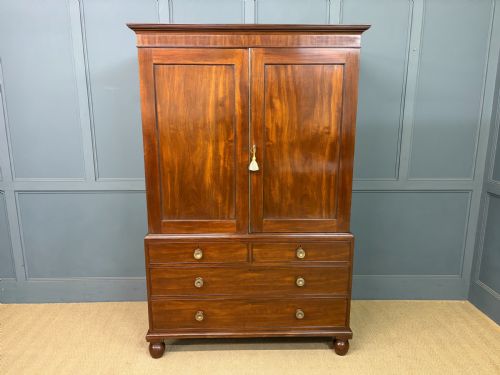
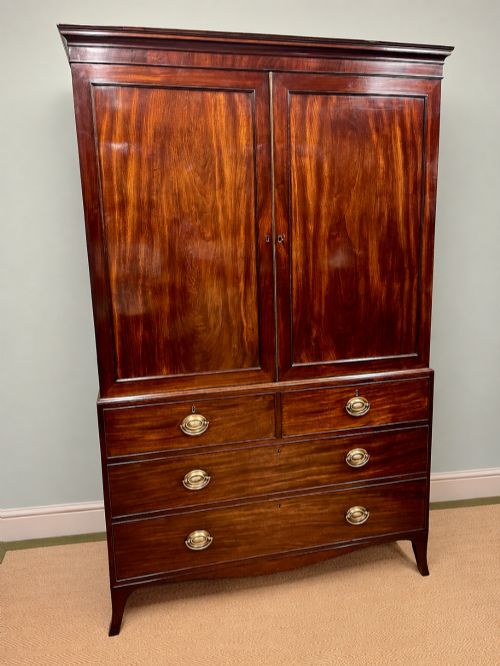
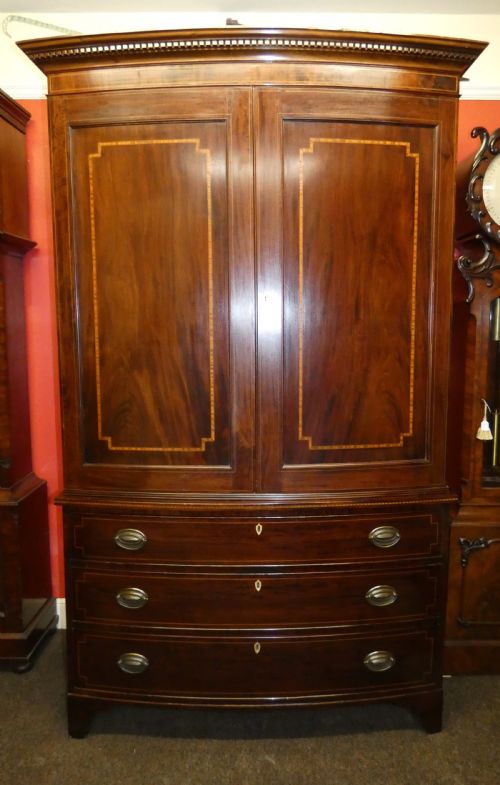
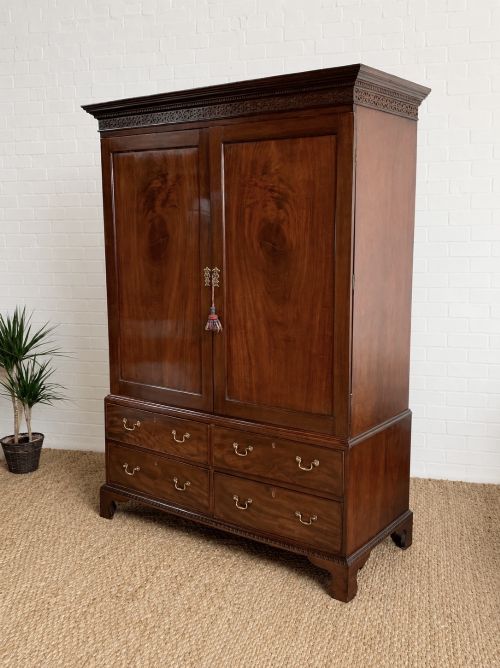
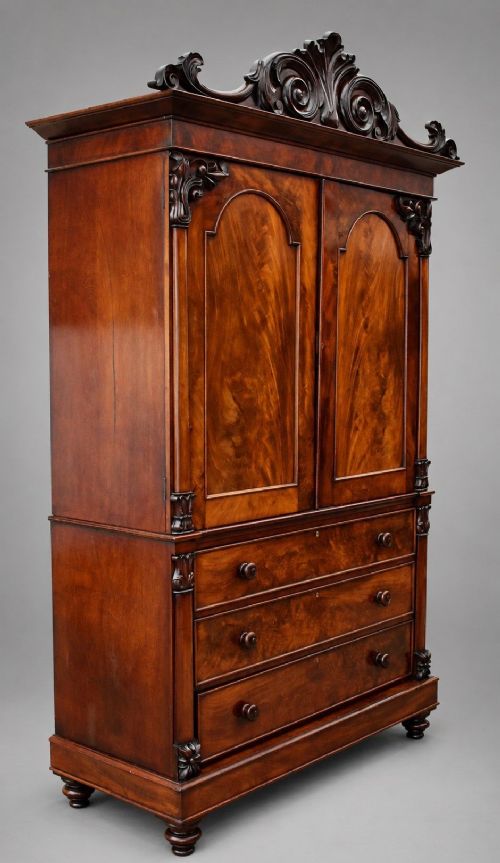
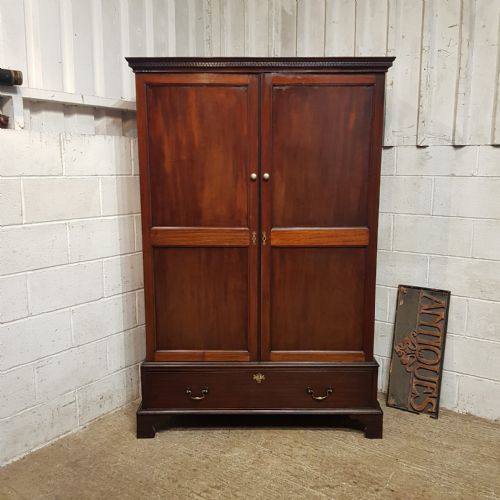
A regency mahogany clothes press is a substantial storage furniture form traditionally configured with a pair of upper panelled doors enclosing sliding trays, sitting above a chest of base drawers. These pieces bridge the transition between Georgian formality and the heavier proportions of William IV design.
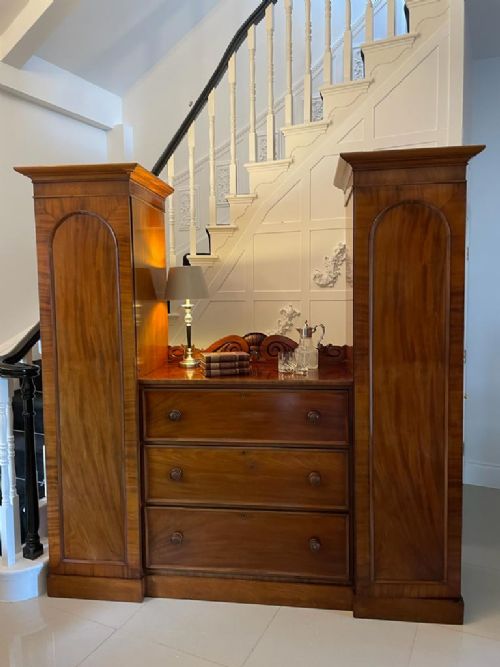
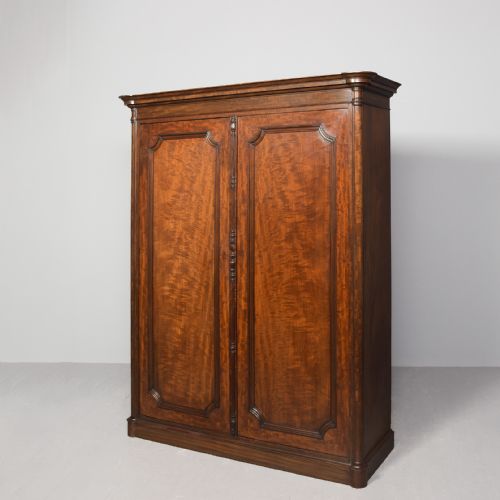
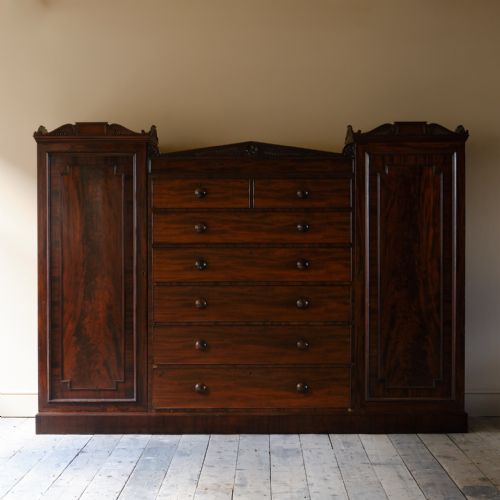
The versions most frequently encountered on this page date from the early nineteenth century, featuring linear upright carcases and balanced door arrangements. Many examples incorporate bow fronts or breakfront profiles, while others display compact or low dwarf proportions suited to lower ceiling heights.
Makers and regional workshops constructed these presses to serve bedrooms and dressing rooms for storing folded linens and garments before dedicated wardrobes became universal. Surviving pieces often retain internal slides, though some have sustained conversion to hanging space over decades of domestic use.
Materials and construction methods
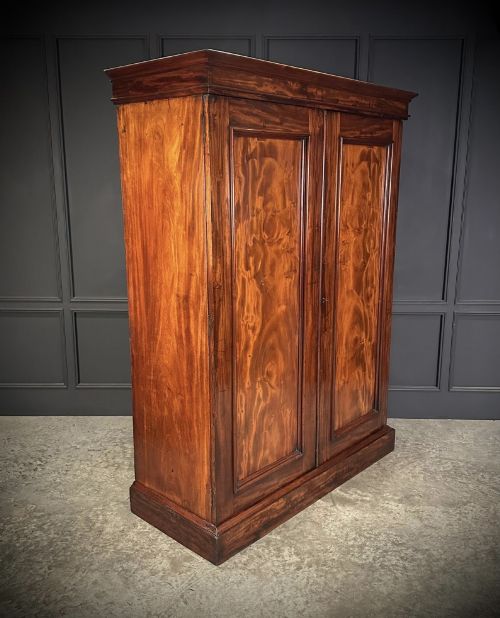
Cabinetmakers built the carcases using solid pine or secondary woods as a stable structural foundation, then faced primary surfaces with premium mahogany timber. Selected cuts of flame mahogany and curl mahogany veneer provided striking grain patterns across the primary doors and drawer fronts.
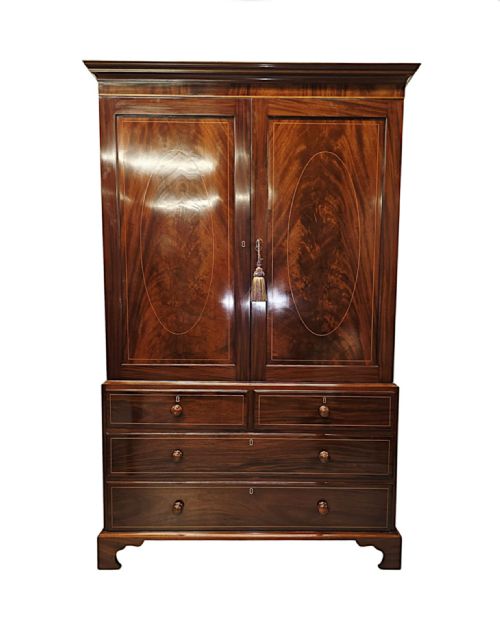
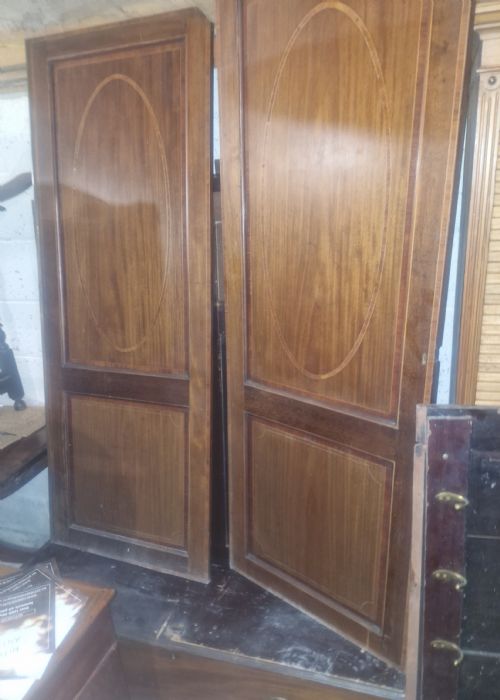
Detailed decoration relied on contrasting stringing and banding using satinwood and boxwood inlay, alongside carved elements like blind fretwork cornices. Brass hardware, including drop handles, escutcheons and door fittings, secured the heavy timber panels and added metallic contrast to the dark polished wood.
Frame and panel construction accommodated the natural seasonal movement of timber, preventing major splits across large expanses of door and side panels. Dovetail joinery locked the internal sliding trays and structural drawer boxes together with enduring mechanical strength.
Regency Mahogany Clothes Press Retail Price Guide 2026
Typical asking prices for regency mahogany clothes press among the pieces listed under this phrase on Sellingantiques today, from the lower quarter to the upper quarter. They describe what is for sale here now, not the wider market.
The inventory records regional cabinet work alongside London pieces, including Irish and Channel Island workshops.
Assessing quality and craftsmanship
The selection of timber grain defines visual hierarchy, separating standard stock from pieces featuring symmetrical flame mahogany veneer matched across wide door panels. Superior examples exhibit continuous grain flow down the entire front elevation rather than mismatched timber segments.
Refinement in secondary details elevates a piece, such as crisp boxwood and satinwood stringing, precisely cut fretwork cornices, and well-proportioned ogee bracket feet or plinth bases. Heavier carcases demand robust internal framing to support sliding trays without sagging under weight.
Originality of internal components dictates desirability, particularly the survival of untouched sliding trays and operational brass locks with matching keys. Alterations converting internal tray sections into hanging wardrobes impact the historical integrity of the piece.
S and H Jewell·Gillows
The Regency Mahogany Clothes Press Glossary
- Clothes Press
- A large cabinet designed for storing garments and household linen, typically featuring upper doors with internal trays above a base chest of drawers.
- Flame Mahogany
- A figured timber veneer cut from timber fork junctions, creating a distinctive flickering flame pattern across wide surfaces.
- Compactum
- A multi-functional wardrobe or press combining hanging space, sliding trays, and drawers within a single unified carcase.
- Breakfront
- A cabinet front where the central section projects forward from the flanking outer sections, adding architectural depth.
- Stringing
- Thin inlaid lines of contrasting light wood, such as boxwood or satinwood, set flush into darker mahogany surfaces to create decorative borders.
Regency Mahogany Clothes Press: Frequently Asked Questions
What is the difference between a clothes press and a wardrobe?
A traditional clothes press contains shallow pull-out trays behind its upper doors, originally designed for flat-folded linen and garments before modern clothes hangers were common. A wardrobe focuses primarily on vertical hanging space for full-length garments.
Many surviving pieces have undergone internal conversion where wooden trays were removed to insert hanging rails, adapting antique proportions to contemporary wardrobes.
How do I date a Regency clothes press?
Dating relies on architectural proportions, secondary woods, and decorative motifs that shifted from Georgian restraint towards bolder Victorian mass. Pieces from the Regency period typically show clean architectural lines, flame mahogany veneers, and subtle stringing inlay.
Later nineteenth-century examples often incorporate heavier mouldings, breakfront configurations, or broader plinth bases reflecting changing domestic tastes.
Will a clothes press fit in a modern bedroom?
These pieces possess substantial dimensions, requiring careful measurement of ceiling height, floor space, and stairwells for delivery access. Many models split into upper and lower sections, separating the heavy wardrobe carcase from the base chest of drawers to ease transport.
Low dwarf and compactum variations offer reduced heights and narrower widths for rooms with restricted vertical clearance.
How should I care for antique mahogany furniture?
Maintain stable indoor humidity levels and keep wooden surfaces away from direct heat sources and strong sunlight to prevent veneer lifting or timber splitting. Regular dusting with a soft, dry cloth protects the polished finish without requiring heavy chemical polishes.
Feed dry timber occasionally with traditional beeswax formulations to preserve the rich lustre of the mahogany grain.