
Regency Mahogany Bookshelf
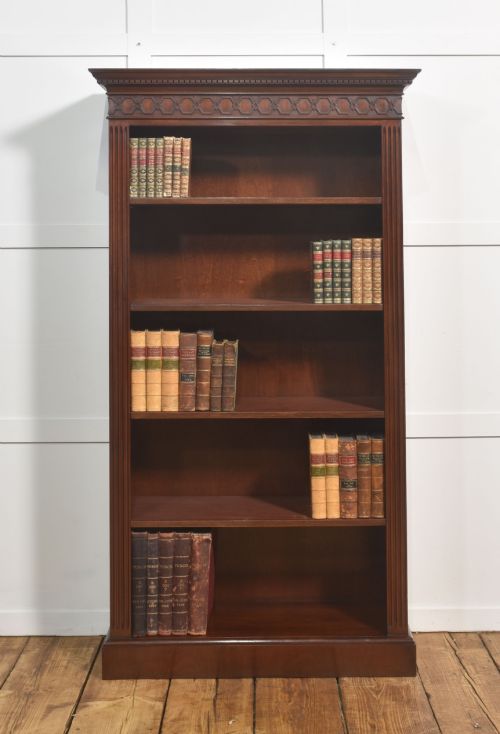
A regency mahogany bookshelf brings architectural discipline and warm timber tones to a room, offering open display space for a growing collection of volumes.
Regency Mahogany Bookshelf
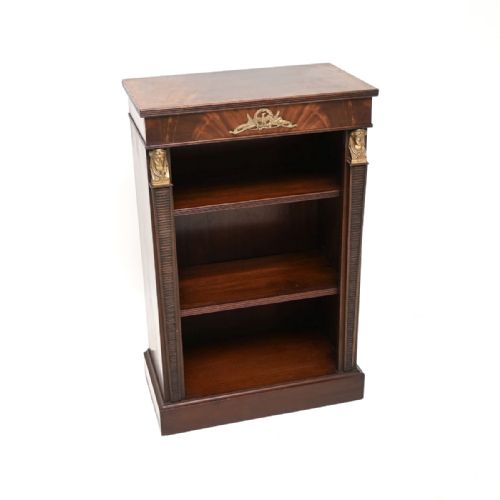
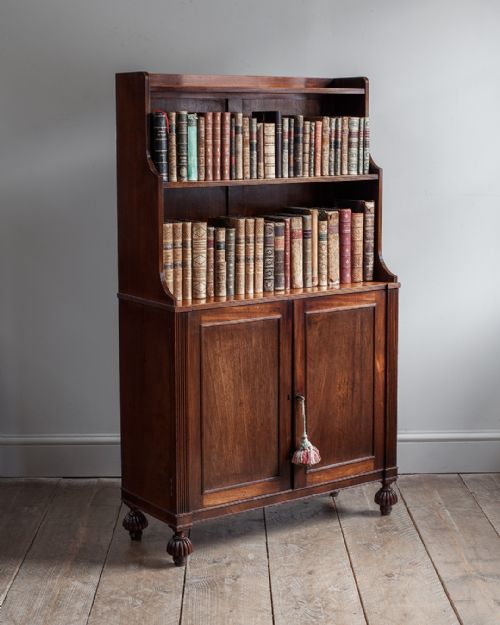
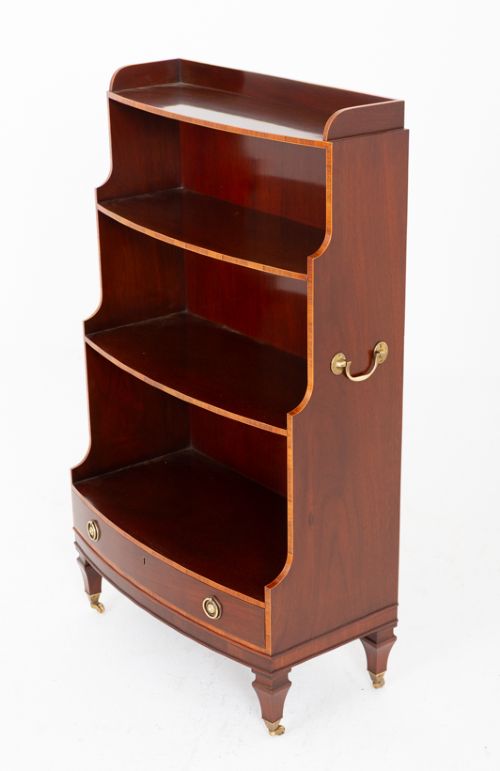
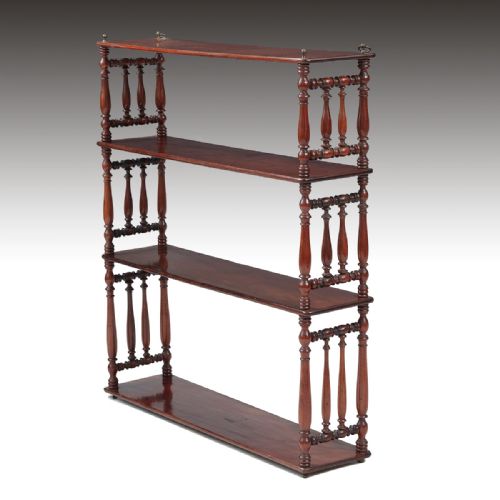
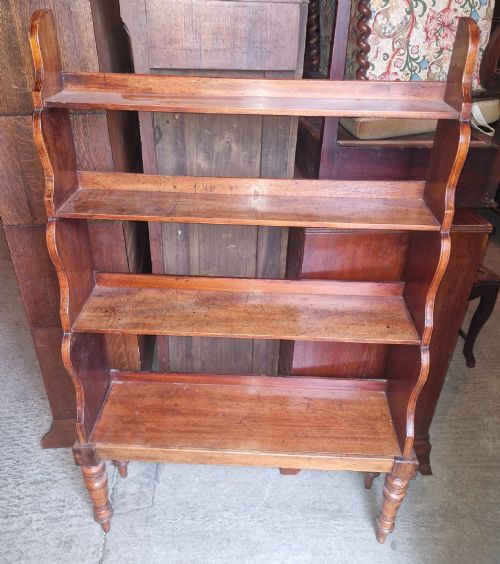
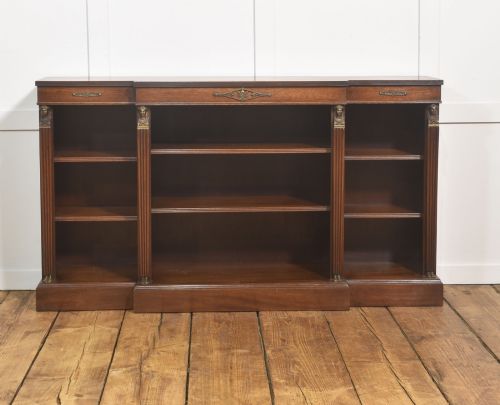
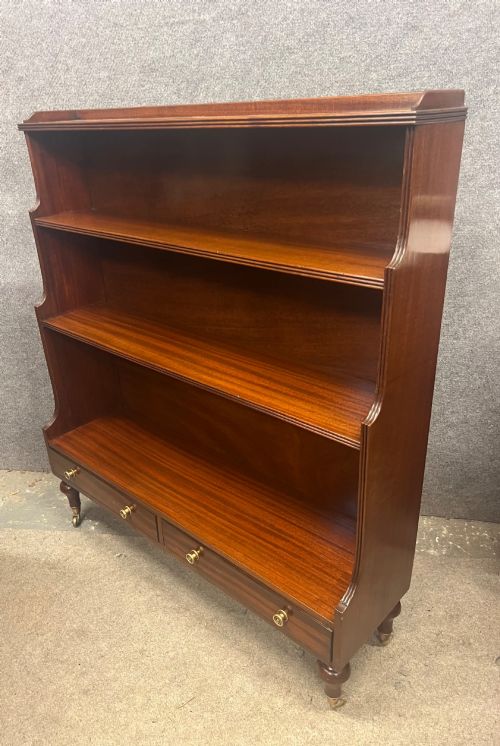
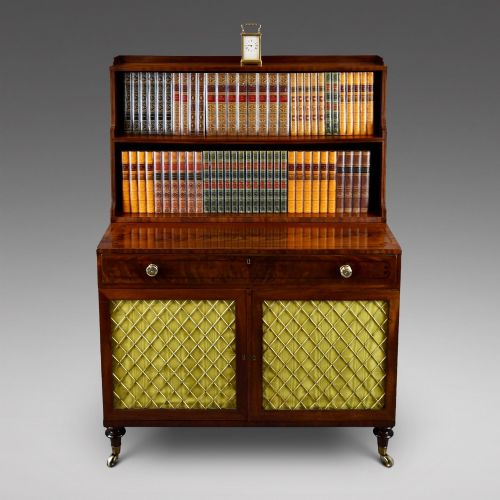
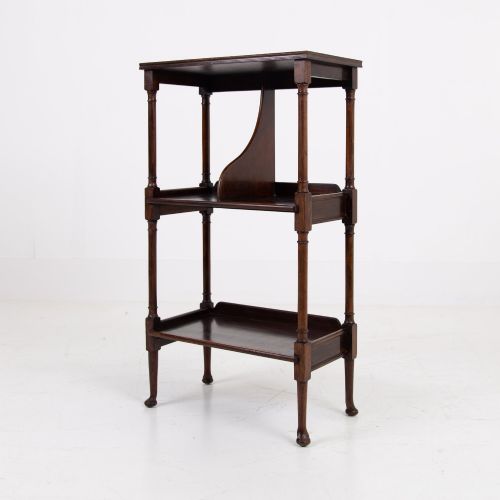
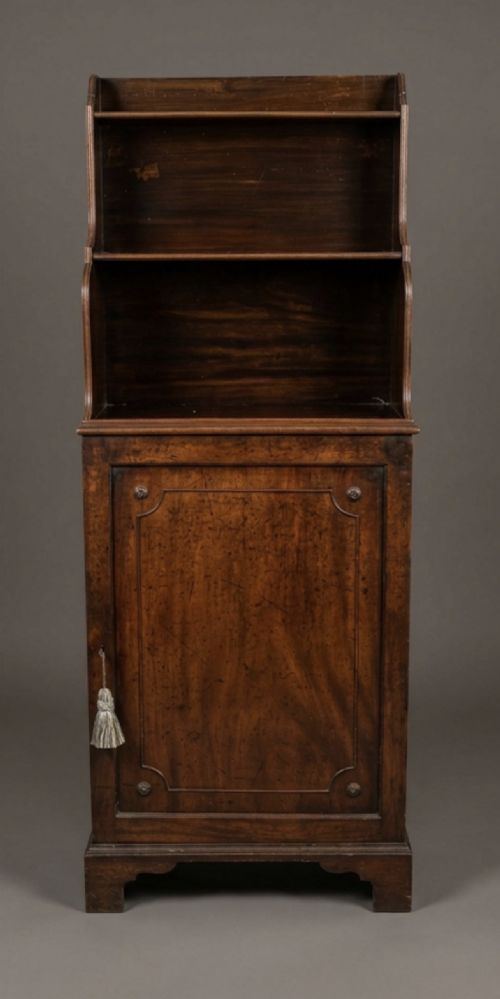
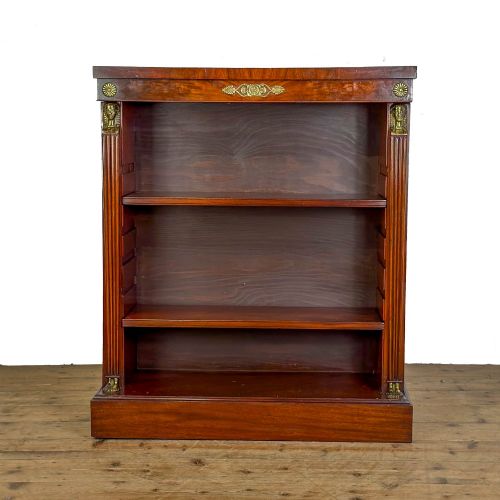
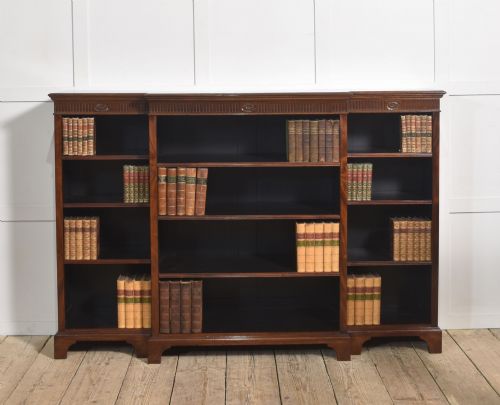
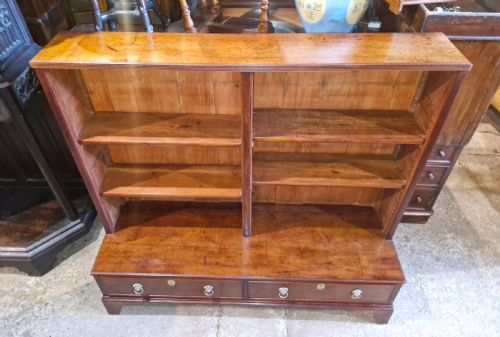
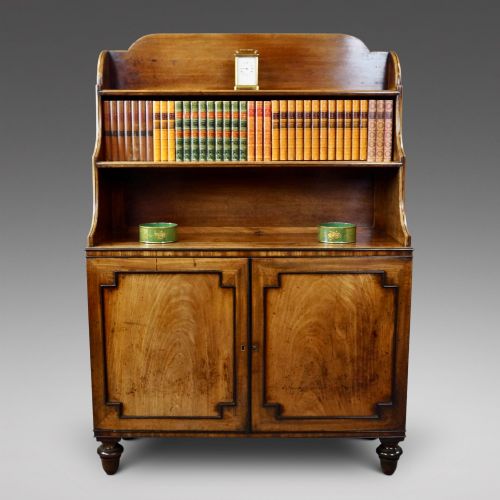
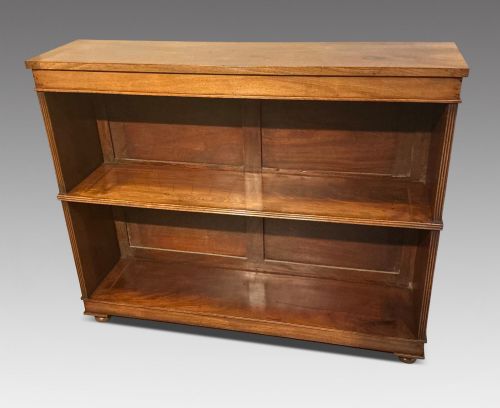
A regency mahogany bookshelf encompasses practical library furniture ranging from freestanding open dwarf bookcases to tiered waterfall designs and wall-mounted hanging shelves. The inventory demonstrates a strong representation of open bookcase formats alongside freestanding whatnots and breakfront library pieces.
Most examples originate from the nineteenth century or the subsequent revival periods spanning the Edwardian era into the nineteen-thirties. Buyers frequently encounter low dwarf profiles and multi-tiered graduating shelves intended for domestic studies and parlours.
Materials and construction
Cabinet makers utilised solid mahogany and flame mahogany veneers, often enhanced with contrast cross banding and boxwood stringing to articulate the vertical and horizontal planes. Secondary structural elements rely on timber stability while primary visible surfaces display rich grain patterns.
Metal detailing appears through brass mounts and ormolu highlights, while certain configurations incorporate adjustable shelves and integrated cupboards beneath the open display tiers to balance utility with formal elegance.
Listings feature pieces spanning the nineteenth century, Edwardian era, and early twentieth century up to nineteen-thirty.
Evaluating the standard
The distinction between standard domestic pieces and superior examples rests upon the selection of timber veneers and the crispness of applied decorative stringing. Finer construction exhibits thoughtful grain alignment across drawer fronts or cupboard doors and precise joinery in the tier supports.
Proportion and scale dictate the visual success of each unit, where restrained neoclassical lines or balanced waterfall gradations separate master-carved library furniture from mass-produced revival iterations.
The Regency Mahogany Bookshelf Glossary
- Waterfall bookcase
- A tiered shelving unit where each successive shelf steps back from the one below it, creating a cascading profile.
- Breakfront
- A cabinet or bookcase whose central section projects forward from the flanking wings, adding architectural depth.
- Dwarf bookcase
- A low-standing open bookcase designed to sit beneath dado height, keeping books within easy reach.
- Whatnot
- A multi-tiered open piece of furniture used for displaying books, ornaments, or small decorative objects.
- Ormolu
- Gilt-bronze ornamentation applied to furniture surfaces to provide metallic contrast and decorative enrichment.
Regency Mahogany Bookshelf: Frequently Asked Questions
How do I style a regency mahogany bookshelf?
Position the piece against a flat wall in a study or drawing room, allowing the rich mahogany tones to anchor the surrounding interior colour palette.
Arrange leather-bound volumes and select decorative objects across the shelves, balancing heavier folios at the base with lighter items higher up.
Were these bookcases always open?
Many period examples feature open fronts designed for immediate access to working libraries rather than enclosed book storage.
Some configurations combine open upper waterfall tiers with lower cupboard doors to secure items away from dust and light.
What is a waterfall bookcase?
A waterfall bookcase utilises graduating tiers that step back progressively from bottom to top, creating a distinct cascading silhouette.
This form gained particular popularity during the nineteenth century and subsequent revival periods for displaying smaller collections.
How do I distinguish revival periods?
Nineteenth-century originals display hand-cut joinery, patinated timber surfaces, and construction methods characteristic of early cabinet making workshops.
Revival pieces from the Edwardian era and nineteen-thirties often exhibit machine-prepared timber and standardised hardware fittings.
Can these shelves hold heavy books?
Sturdy mahogany construction and fixed or adjustable wooden supports provide robust foundations for standard library volumes and reference books.
Distributed weight across deeper lower shelves ensures structural stability for larger collections over time.