
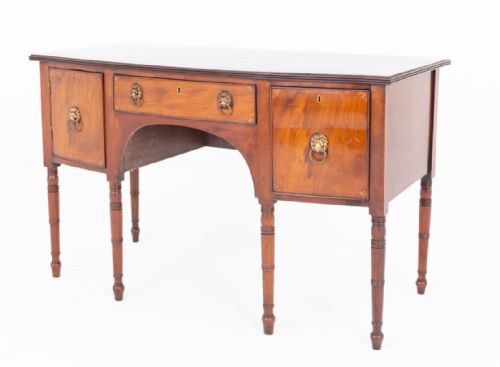


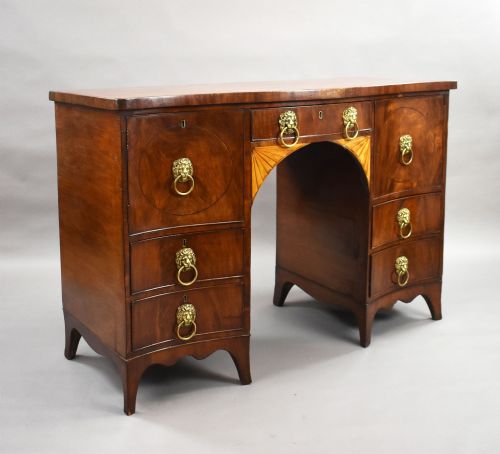
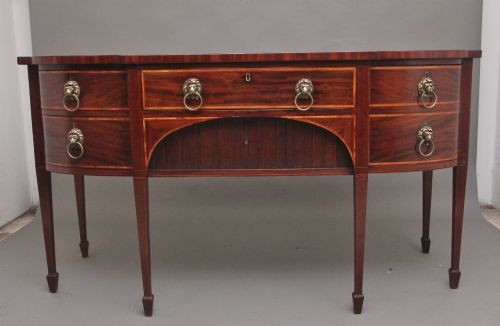


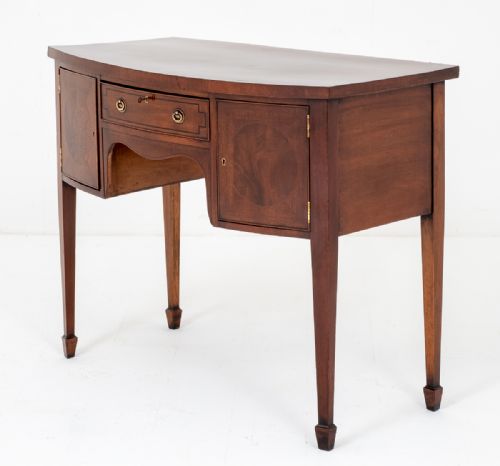


Regency Inlaid Server Table
These regency inlaid server table pieces offer enduring British craftsmanship and timber character for any dining space.
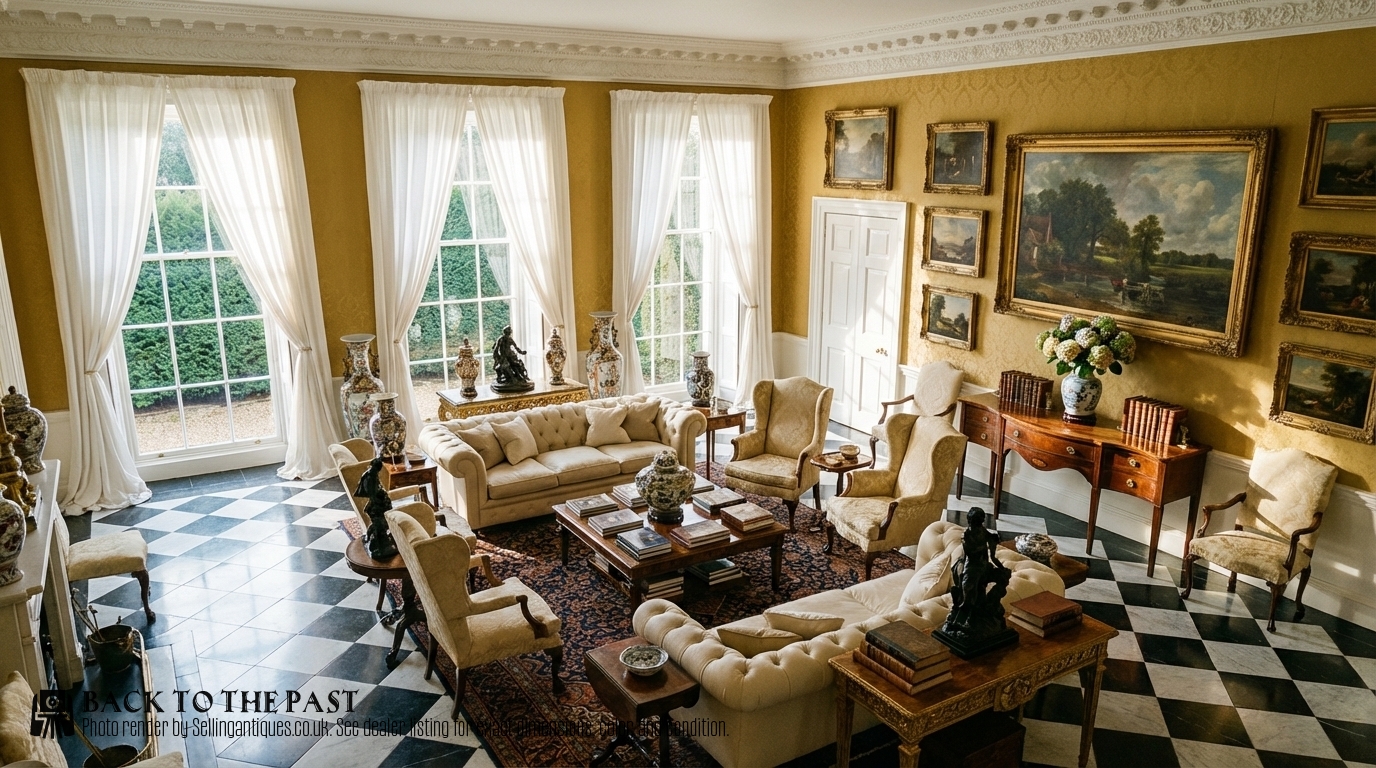
Regency Inlaid Server Table
A regency inlaid server table search brings together formal dining room furniture designed for serving food and storing silver. These items largely emerge from the Regency period and the wider nineteenth century, capturing a specific era of domestic British design.
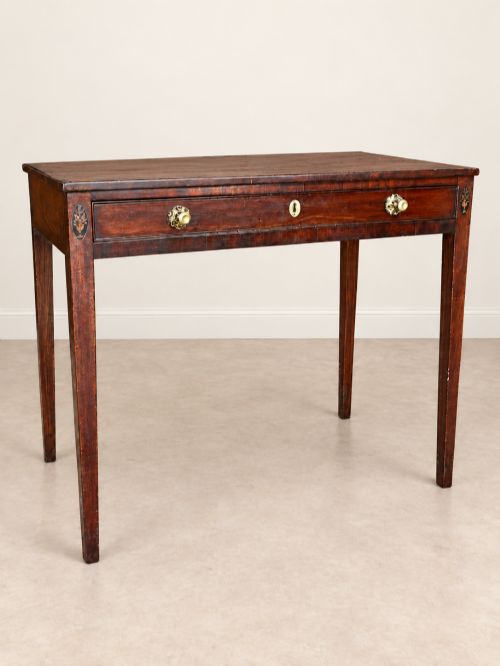
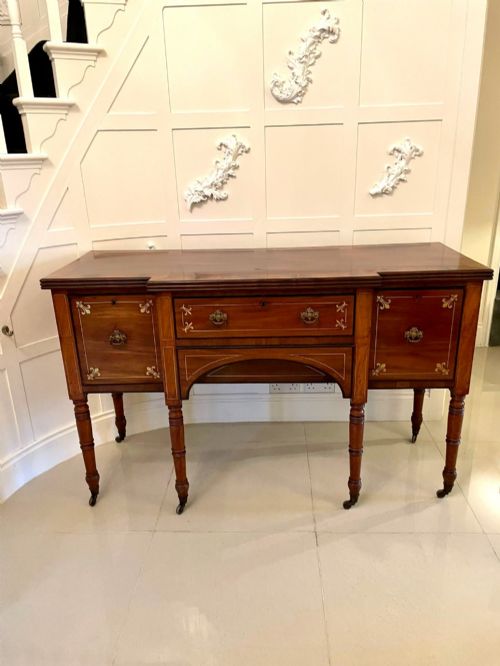
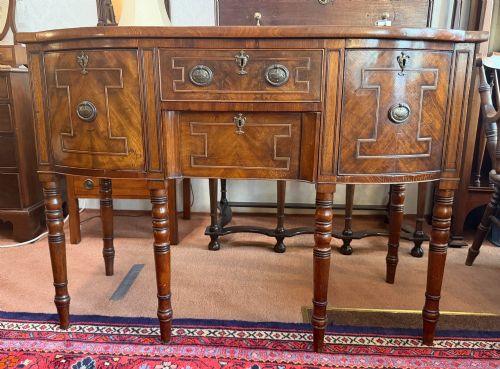
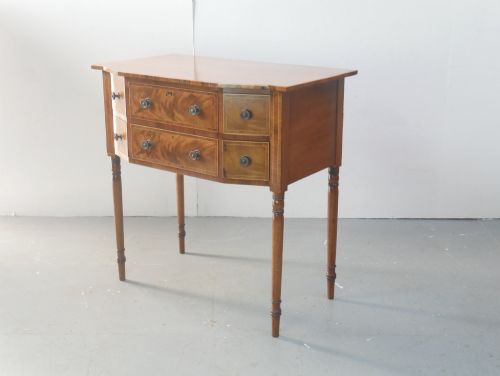
The pieces appearing on this page take various forms, including bow-front sideboards, console tables, and pedestal sideboards. Mahogany dominates the structural timber, often shaped with curved fronts and fitted with delicate boxwood, ebony, and brass stringing.
Buyers will encounter genuine early nineteenth-century examples alongside later revival pieces from the Victorian era and nineteen-twentieth century. The predominant formats combine storage drawers with long serving surfaces intended to stand against dining room walls.
Materials and construction
Makers built these pieces primarily using solid mahogany and figured mahogany wood veneers applied over secondary timbers such as oak. This heavy timber framework provided the stability needed for large sideboards and console tables.
Surface decoration relied on fine contrasting stringing and banding using boxwood and ebony. Craftspeople also incorporated cast brass mounts and fine inlay work to accentuate the architectural lines of the bow-front and breakfront shapes.
Listings feature pieces spanning the Regency period, Georgian era, and Victorian revivals up to nineteen-twenty.
Distinctions in quality
Quality rests upon the choice of timber figure and the precision of the contrasting inlay work. Superior examples display carefully matched mahogany grains across the drawer fronts and crisp execution of boxwood and ebony stringing.
Structural integrity and original internal drawer linings, such as oak, separate better pieces from standard alternatives. The refinement of the brass mounts and the sharpness of the carved or shaped edges further define the tier of craftsmanship.
The Regency Inlaid Server Table Glossary
- Bow-front
- A convex curved cabinet front popular during the Regency period. This shape softens the room and adds visual depth to sideboards.
- Stringing
- Thin lines of contrasting wood inlay used to outline drawers and borders. Boxwood and ebony provide the typical light and dark contrast.
- Pedestal sideboard
- A form featuring distinct flanking cabinet pedestals united by a central serving section. These massive pieces suit larger dining rooms.
- Breakfront
- A piece of furniture whose central section projects forward from the flanking sides. This layout creates a strong shadow line and architectural presence.
- Veneer
- A thin layer of figured mahogany applied over a sound secondary wood base. This technique allowed cabinetmakers to display striking grain patterns.
Regency Inlaid Server Table: Frequently Asked Questions
Where should I place a server table?
These pieces fit naturally against dining room walls to serve food or display silver during meals. They also work well in wide hallways as serving consoles.
Ensure you measure the floor space and clearance for drawers before positioning the piece against a wall.
How do I clean the wood surface?
Dust the mahogany and inlay regularly with a soft, dry cloth to prevent dirt accumulation. Avoid using modern silicone sprays or harsh chemical polishes that can damage old finishes.
Apply a traditional beeswax occasionally to nourish the dry timber and maintain a gentle sheen.
Are these tables sturdy enough for daily use?
Solid mahogany construction and oak drawer linings make these historic tables robust for everyday domestic tasks. They were originally built to hold heavy ceramic platters and silver.
Take care not to overload fragile antique drawers and avoid placing them near direct heat sources.
How can I tell a Regency piece from a revival?
Examine the secondary woods inside the drawers, construction joints, and the degree of wear on the timber. Georgian and Regency pieces show hand-cut joinery and period-specific timber ageing.
Revival pieces from the late nineteenth or early twentieth century often display machine-made elements and different internal construction methods.