


Regency Inlaid Card Table
When you search for a regency inlaid card table, you are looking at fold-over tables designed for card playing and elegant entertaining.
Regency Inlaid Card Table
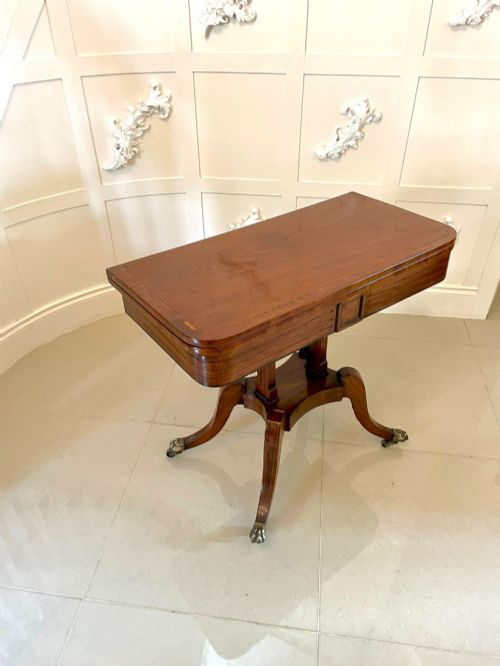
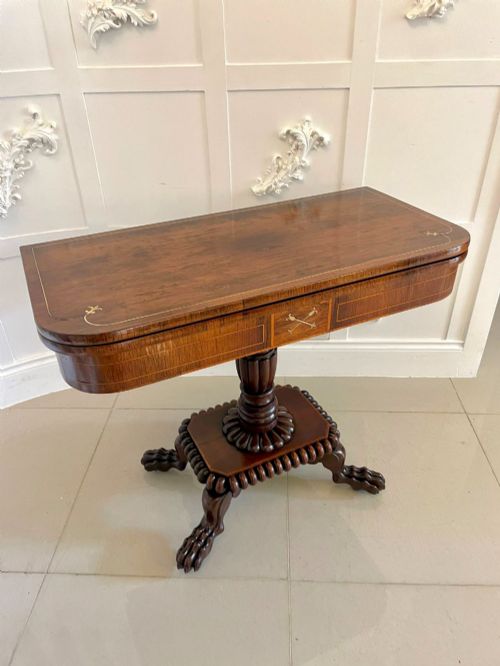
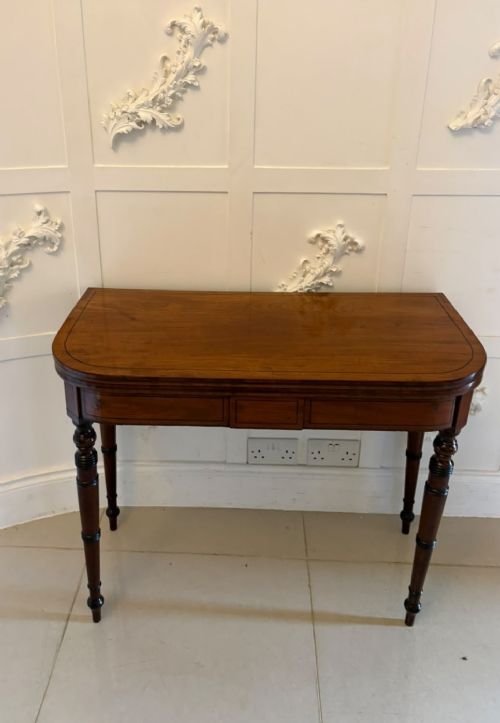
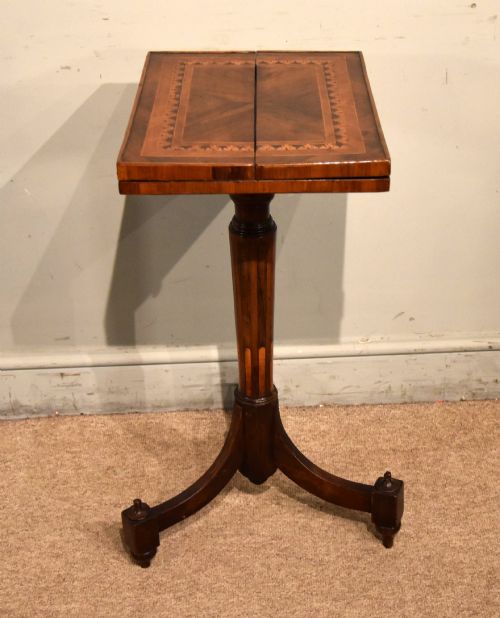
A regency inlaid card table is a multi-functional piece built to serve as a console or side table when closed and a gaming surface when opened. The listings on this page show these versatile items appearing primarily in mahogany and rosewood.
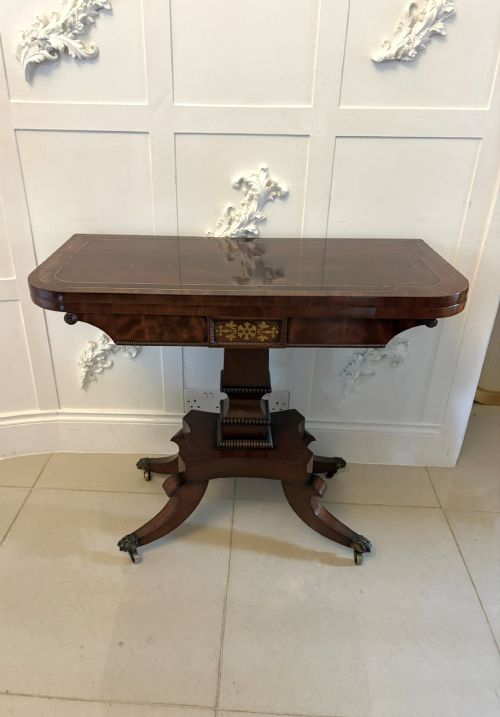
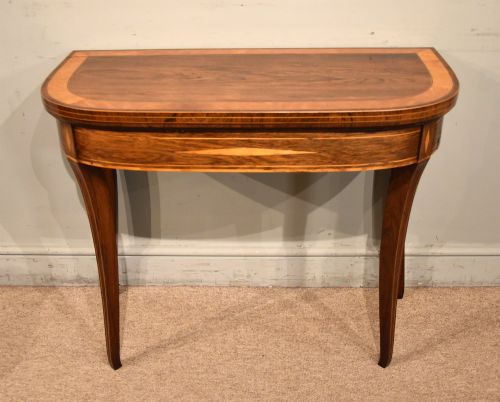
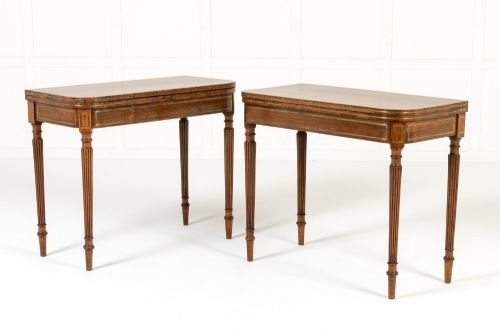
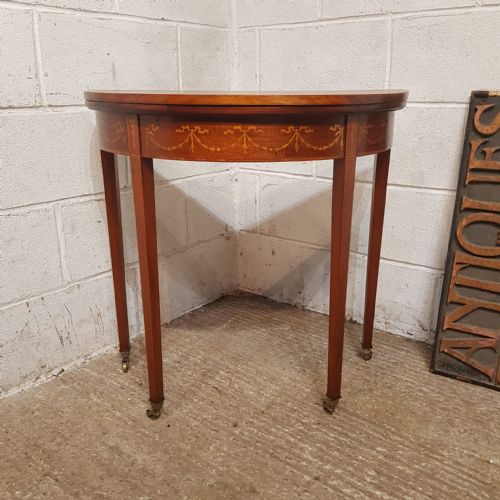
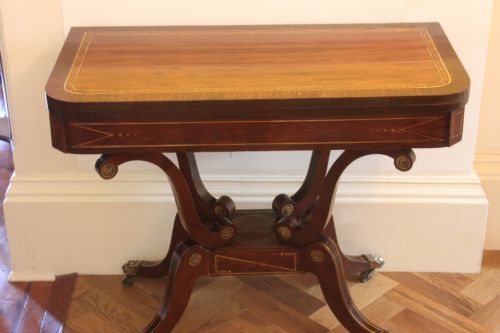
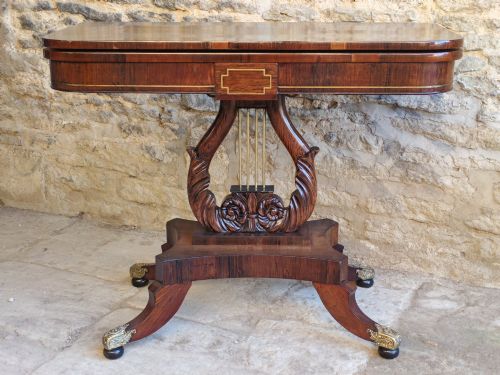
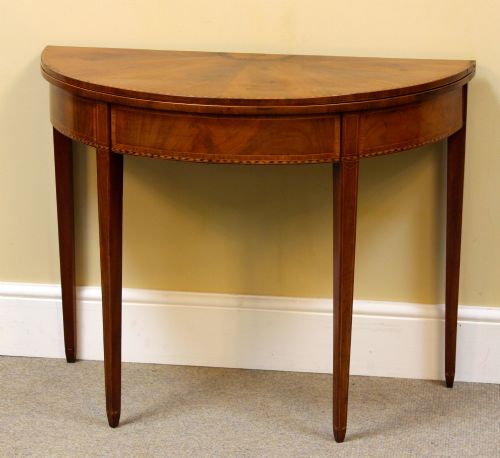
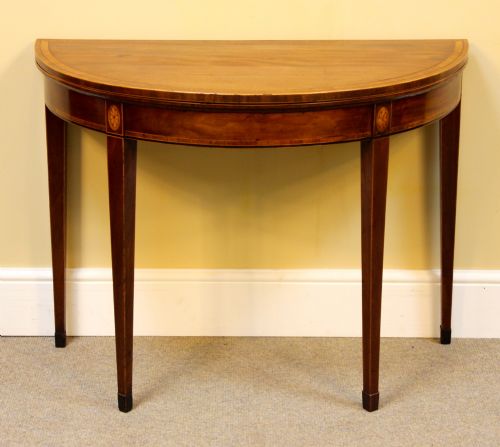
The standard form encountered here is the fold-over top, often supported by a central pedestal base or delicate legs. Many examples utilise a D-shaped or demi-lune profile to fit compactly against a drawing room wall.
While the predominant style is Regency, the selection also includes related Georgian, William IV, and nineteenth-century interpretations. These tables frequently combine secondary timbers like satinwood and fruitwood to create contrasting borders.
Materials and Construction
Cabinet makers constructed these tables using dense primary timbers such as rich mahogany and figured rosewood veneers applied over sturdy carcase woods. Finer details relied on contrasting exotic and native timbers like satinwood, ebony, and boxwood for decorative stringing and banded borders.
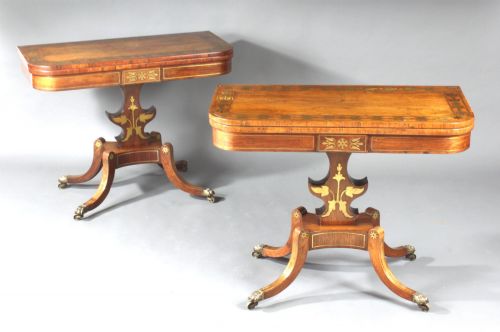
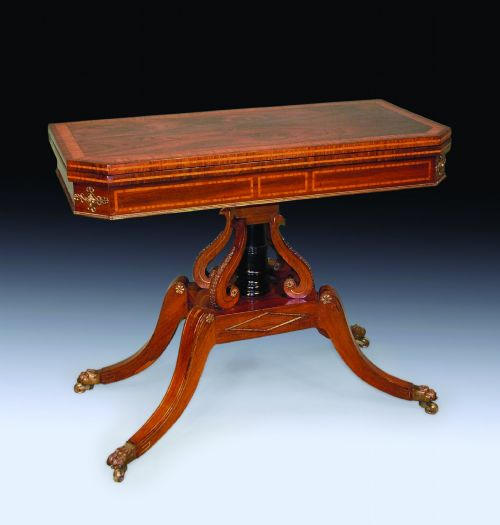
Brass inlay and brass mounts form a defining decorative technique across many pieces, often integrated into complex foliate patterns or geometric Greek key motifs. Artisans also utilised cast bronze sabots and small brass castors to protect the feet and allow smooth movement across carpets.
Cypriot craftsmen occasionally contributed exotic specimen wood tables to the trade during the height of the Regency period.
Assessing Quality and Execution
The distinction between standard workshop production and superior cabinet work lies in the precision of the timber matching and the intricacy of the brass or wood inlay. Master makers ensured that contrasting stringing remained crisp and uniform along every curve.
Structural integrity of the pivoting or folding mechanism determines everyday usability, as finer examples operate smoothly without sagging at the hinges. The depth of grain figure in the rosewood or mahogany veneers further indicates the status of the original commission.
George Bullock·Gillows
The Regency Inlaid Card Table Glossary
- Demi-lune
- A half-moon shape used for table tops and sideboards, allowing the piece to sit flush against a wall.
- Fold-over top
- A hinged table surface that opens to double its area, revealing a baize-lined interior for card games.
- Stringing
- Thin lines of contrasting wood inlay used to outline the edges of table tops, drawers, and legs.
- Sabot
- A decorative metal sleeve or shoe fitted over the foot of a table leg, usually cast in brass.
- Pedestal base
- A central column support resting on a platform with splayed legs, typical of later Regency design.
Regency Inlaid Card Table: Frequently Asked Questions
What were regency inlaid card tables used for?
These tables served primarily as social furniture for card games, hosting activities like whist or commerce in the evening. During the day, they stood closed against the drawing room wall to display decorative items or lamps.
When guests arrived, the hinged top folded open to reveal a baize-lined playing surface, combining utility with formal display.
How do I identify a genuine period piece?
Examine the timber species, construction joints, and the method of inlay integration to assess age and authenticity. Genuine pieces from the period utilise hand-cut veneers and traditional joinery rather than modern fasteners.
The presence of period brass castors and natural wear patterns on the internal hinges also helps confirm nineteenth-century origin.
Do all card tables have storage for cards?
Most standard examples do not include built-in wells or compartments, functioning strictly as solid folding tables. The internal space beneath the folded top remained shallow, designed only to accommodate the folded leaves.
Some specialised games tables incorporate small compartments, but the majority prioritize a clean profile when closed.
How should I care for a rosewood surface?
Maintain the finish by keeping the timber away from direct sunlight and fluctuating radiator heat to prevent veneer splitting. Regular dusting with a soft, dry cloth preserves the natural lustre of the polished wood.
Avoid liquid polishes and use beeswax sparingly only when the surface requires nourishment.