





Regency Glass Candlestick
These regency glass candlestick pieces combine clear cut crystal with gilt bronze, bringing period light and sparkle to a room.
Regency Glass Candlestick
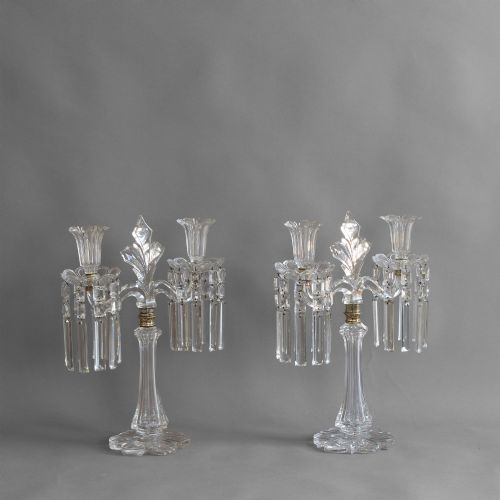
When you search for a regency glass candlestick, you encounter table lustres, candelabras, and hollow stem glass candle sticks from the Regency period and the wider nineteenth century. Most examples appear as matched pairs, frequently incorporating glass drop prisms suspended around the candle nozzle.
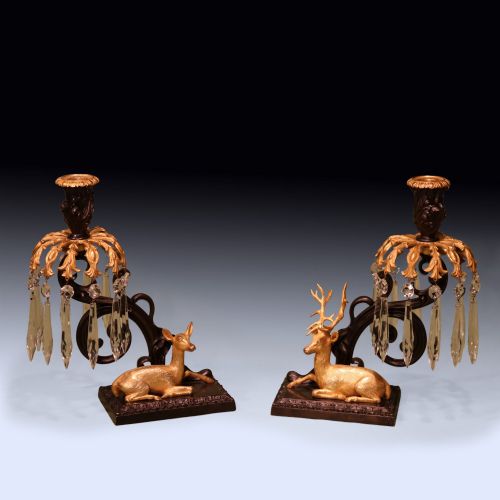
The material vocabulary of these items extends beyond plain glass to include cut crystal, Nailsea glass, and clear cut-glass alongside bronze and ormolu mounts. Forms range from simple hollow stems to complex stag and doe figural supports framed by gilded metals.
Materials and construction
Maker techniques rely heavily on the combination of hand-cut glass components with cast metal elements such as ormolu, gilt bronze, and patinated bronze. Glass parts are faceted or blown to catch the candlelight, whilst metal bases and drip pans provide structural weight and decorative contrast.
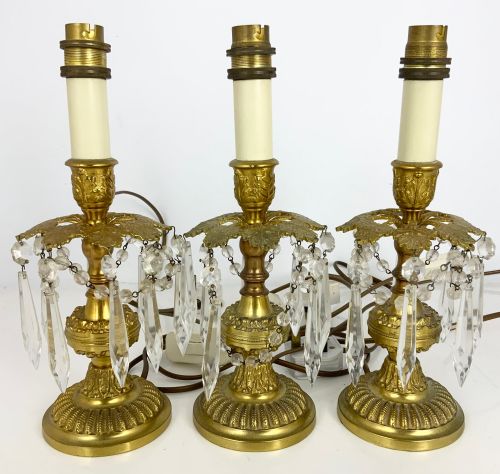
Hanging glass lustres and drops are attached to metal rings or glass bodies using wire or pins, allowing movement and extra refraction. Metal components utilise casting and gilding methods typical of French Empire and Regency workshops.
Regency Glass Candlestick Retail Price Guide 2026
Typical asking prices for regency glass candlestick among the pieces listed under this phrase on Sellingantiques today, from the lower quarter to the upper quarter. They describe what is for sale here now, not the wider market.
Current listings feature items from the Regency, Victorian, and William IV periods, alongside pieces dated to 1800, 1880, and 1900.
Assessing quality
Quality rests on the crispness of the glass cutting and the weight of the metal mounts, where deep facets create sharper light refraction. The integration between glass bodies and bronze or ormolu framing dictates the overall balance of the piece.
The completeness and matching nature of the suspended glass drops influence the standard of a pair. Finer examples display meticulous chasing on the gilt bronze elements and clear, uniform glass without heavy clouding.
The Regency Glass Candlestick Glossary
- Lustre
- A glass candlestick or candelabrum fitted with hanging glass prisms or pendants designed to reflect candlelight. These pendants catch and scatter the light across the room.
- Ormolu
- Gilded bronze used for mounts and decorative figures on lighting pieces. This technique involves applying finely ground gold to a bronze base.
- Nailsea glass
- Glassware produced in Somerset known for distinctive looped or feathered patterns within the metal. Pieces from this tradition often feature hollow stems.
- Cut-glass
- Glassware decorated by grinding facets or patterns into the surface using a wheel. This process enhances the sparkle of the material under artificial light.
- Candelabra
- A branched candlestick holding multiple lights. These often incorporate glass drops and gilt metal stands.
Regency Glass Candlestick: Frequently Asked Questions
What is a regency glass candlestick?
A regency glass candlestick is a lighting device made primarily during the early nineteenth century, combining cut glass components with metal mounts.
Many examples include hanging crystal drops known as lustres that enhance the reflection of the flame.
How were these candlesticks used?
These pieces sat on dining tables, mantelpieces, and sideboards to provide illumination during evening hours before the advent of electricity.
The reflective glass drops multiplied the light from candles to brighten dark rooms.
How do I clean a glass lustre?
Cleaning requires gentle dusting with a soft cloth and occasional washing of removable glass drops in warm soapy water.
Harsh chemical cleaners should be avoided to protect the gilt bronze and ormolu surfaces.
Are these pieces usually found in pairs?
Most listings show these lighting items in matched pairs intended for symmetrical placement on a mantel or sideboard.
Single items and larger sets do occasionally appear in various nineteenth-century styles.
What materials make up these candlesticks?
The construction combines clear cut-glass, crystal, and Nailsea glass with metal frames of gilt bronze, ormolu, and brass.
Some designs incorporate patinated bronze figures like stags and does supporting the candle sockets.