



19th Century Glass Candlesticks
These 19th century glass candlesticks bring heavy lead-cut brilliance and soft opaline colour to a table, combining candle-light with worked crystal.
19th Century Glass Candlesticks
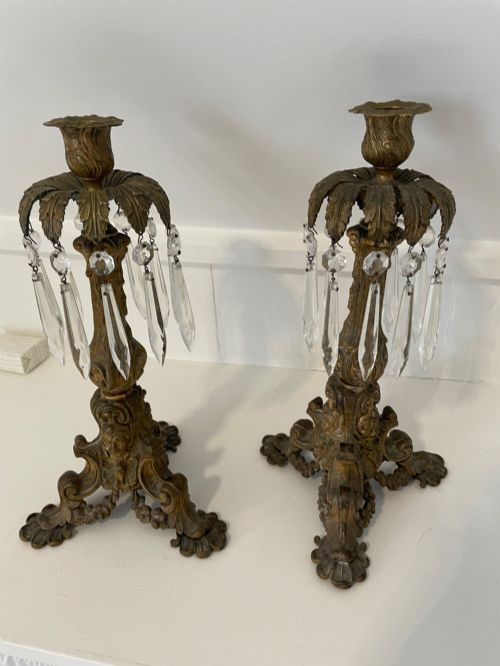
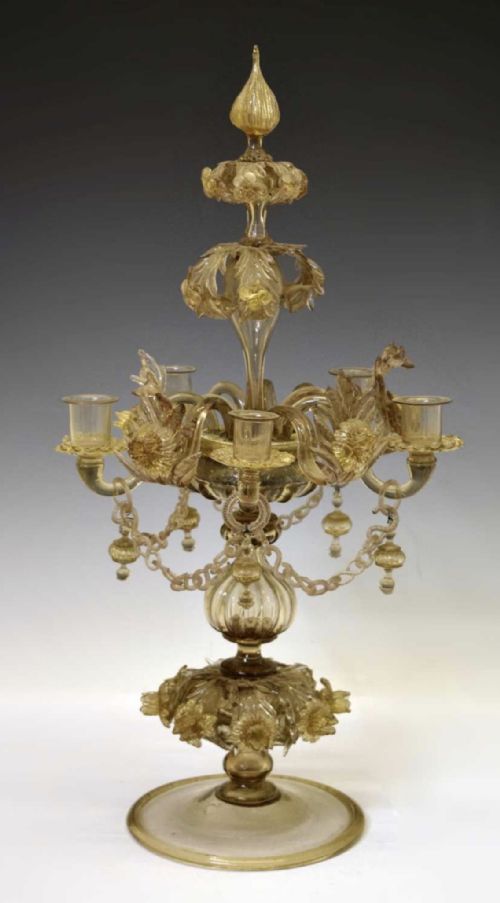
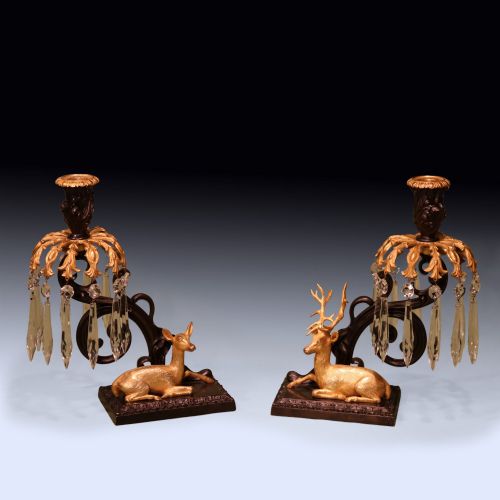
When you search for 19th century glass candlesticks, you are looking at functional lighting pieces that span the Victorian and Regency eras, alongside French and Venetian examples. These items include simple hollow-stem sticks, elaborate table lustres hung with glass drops, and heavier combinations of glass set into brass or ormolu mounts.
The most frequent examples you will meet on this page are pairs of cut glass candlesticks or coloured glass lustres from the latter half of the 19th century. Ruby red, satin glass, opaline, and blue glass frequently appear, often enhanced with brass or silver-plated fittings and hanging prisms.
Beyond standard candlesticks, the evidence shows related forms such as peg oil lamps and multi-branch candelabras. These shared forms demonstrate how glass worked alongside metalwork to catch and reflect light in period interiors.
How they were made
Makers shaped these pieces through hot glass blowing and subsequent wheel-cutting to create facets that catch the flame. Cut glass elements require deep geometric grinding, while opaline and satin glass rely on chemical additions to achieve their dense, opaque appearance.
Many of the finest examples combine glass stems and fonts with cast bronze, brass, or ormolu mounts. Workers joined these disparate materials using threaded rods, pins, or secure collars to unite the heavy metal bases with delicate crystal components.
19th Century Glass Candlesticks Retail Price Guide 2026
Typical asking prices for 19th century glass candlesticks among the pieces listed under this phrase on Sellingantiques today, from the lower quarter to the upper quarter. They describe what is for sale here now, not the wider market.
The evidence records French Empire, Rococo Revival, and Victorian styles among the available candlesticks and lustres.
What varies in quality
Quality rests primarily on the depth and crispness of the facet cutting, the weight of the glass, and the integration of metal mounts. Superior pieces display sharp, clean geometric edges and heavy, clear metal bases that anchor the top-heavy glass weight.
The integrity of the hanging elements and the richness of the coloured glass distinguish finer examples from standard production. Uniformity in matching pairs, precise turning of brass components, and complex multi-branch construction elevate certain candlesticks above simpler single-stem forms.
The 19th Century Glass Candlesticks Glossary
- Lustre
- A decorative mantel or table ornament fitted with hanging glass prisms or drops designed to reflect candle-light. These pieces often incorporate a central candle socket or serve purely as decorative glassware.
- Opaline glass
- An opaque, pale glass developed to imitate porcelain, frequently tinted in soft pastel shades or vivid blues. It was widely used for French table lustres and decorative stems.
- Cut glass
- Glass decorated by grinding facets or patterns into the surface using rotating wheels. This technique maximises the refractive quality of heavy lead crystal.
- Peg lamp
- A small oil lamp featuring a tapered lower peg designed to drop directly into an existing candlestick socket. This allowed standard candlesticks to be converted for burning oil.
- Ormolu
- Gilt bronze produced by applying a finely ground gold-mercury amalgam to cast bronze. It provides a rich golden finish that frames the glass components in Regency and Victorian lighting.
19th Century Glass Candlesticks: Frequently Asked Questions
Are these glass candlesticks safe to use?
Most of these pieces are designed for standard taper candles and remain entirely functional for domestic use. Their heavy glass bases provide stability when placed on firm dining tables or mantelpieces.
However, delicate examples with hanging drops or older glued mounts require careful handling during placement and cleaning. Many collectors prefer to use them as decorative mantel ornaments rather than daily lighting.
How do I tell Victorian from Regency glass?
Regency pieces often display heavier architectural lines, frequently pairing dark bronze or ormolu mounts with deep-cut crystal. They lean towards neoclassical or early Gothic revival proportions.
Victorian examples span a wider variety of colours and techniques, including satin glass, opaline, and multi-branch Venetian work. They tend towards bolder ornamentation and diverse hues.
What is a table lustre?
A table lustre is a decorative glass ornament featuring a central stem and bowl hung with cut glass prisms. They were designed to sit on dining tables or mantelpieces to multiply the flicker of candlelight.
Unlike standard candlesticks, many lustres are decorative showpieces rather than functional holders for everyday tapers.
How should I clean antique glass candlesticks?
Gentle washing in warm soapy water using a soft cloth is usually sufficient for solid glass components. Avoid harsh chemical cleaners that can damage vintage finishes.
Keep moisture away from any metal mounts, brass fittings, or glued joins to prevent tarnishing or weakening the structural bonds.