


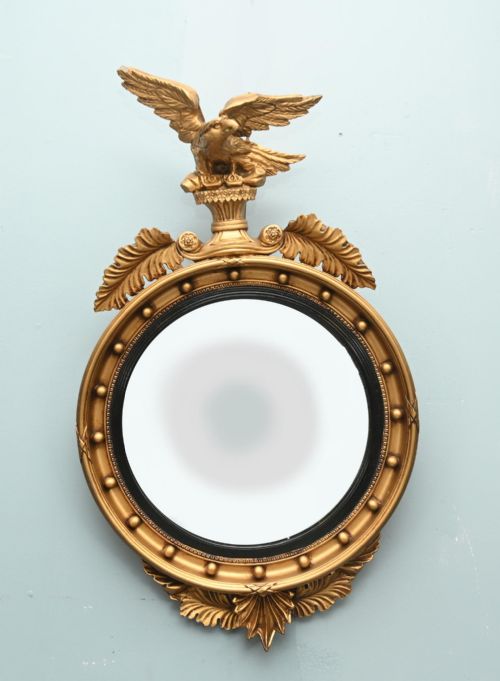


Regency Girandole
Regency girandole mirrors are round convex looking glasses framed in gilded wood that project candlelight across a room.
Regency Girandole
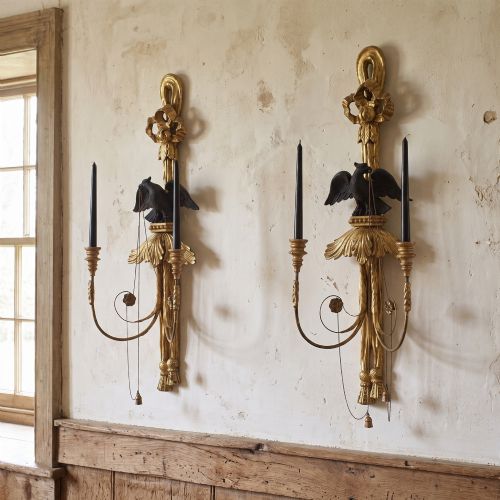
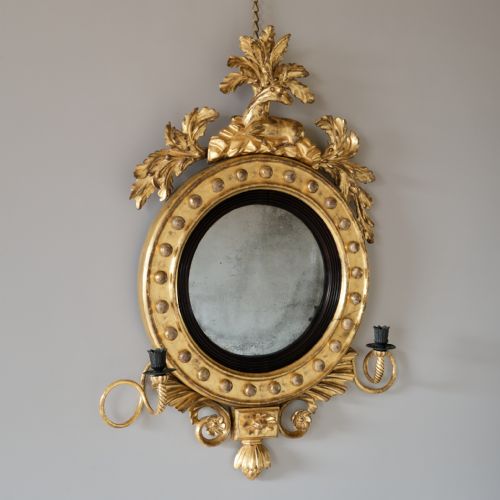
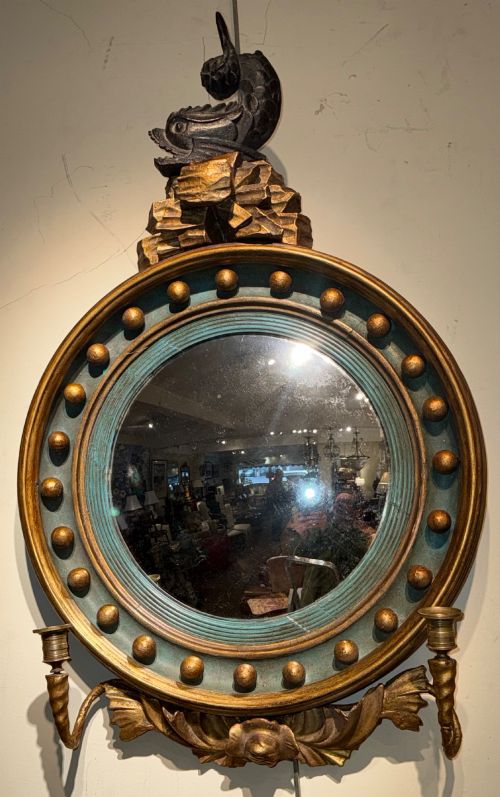
A regency girandole search brings up round convex wall mirrors and matched pairs of wall sconces from the Regency period, the nineteenth century, and later revivals. These circular glasses expand the view of an interior while candle arms mounted to the frame cast flickering light.
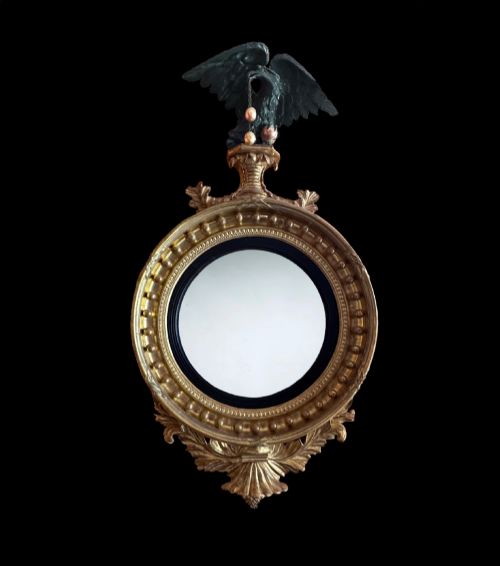
The most common form on this page is the giltwood convex mirror, often surmounted by a carved eagle or decorated with rope twist moulding. These pieces range in scale from compact wall fixtures to large focal mirrors spanning significant wall space.
How they were made
Makers carved timber bases from softer woods before applying layers of gesso to build up intricate surface ornament, including acanthus leaves and reeded details. Artisans then applied thin gold leaf over the prepared gesso surfaces to achieve the characteristic metallic lustre.
Curved mirror glass was blown or cast to create the distinctive convex surface that distorts and broadens reflections. Frames frequently incorporated ebonised wood elements alongside gilded sections to create sharp visual contrast.
Regency Girandole Retail Price Guide 2026
Typical asking prices for regency girandole among the pieces listed under this phrase on Sellingantiques today, from the lower quarter to the upper quarter. They describe what is for sale here now, not the wider market.
Listings combine eighteenth-century George III styles with nineteenth-century Regency pieces, Victorian examples, and later twentieth-century revivals.
What varies in quality
Quality rests in the depth and sharpness of the hand-carved gesso ornament applied to the wooden frames. Superior examples display crisp details on figures such as eagles and foliage rather than softened profiles.
The Regency Girandole Glossary
- Girandole
- A branched wall candlestick holder often combined with a mirror so the reflective glass multiplies the candlelight. These fixtures were designed to illuminate principal reception rooms.
- Convex mirror
- A round looking glass with an outward-curving surface that captures a wide-angle reflection of the entire interior. They are frequently called butler's mirrors.
- Giltwood
- Timber coated with a thin layer of gold leaf applied over gesso. This finish provided a durable and brilliant metallic surface.
- Gesso
- A plaster mixture applied to wood frames to create a smooth base for carving and gilding. Artisans modelled intricate relief ornamentation directly into this material.
- Ebonised wood
- Timber treated with stain or finish to imitate expensive ebony. This dark treatment was often paired with bright gilding.
Regency Girandole: Frequently Asked Questions
Where should I hang a convex mirror?
These mirrors work best on principal walls in dining rooms, halls, or sitting rooms where they can capture light from windows and opposite interior spaces. Their wide-angle reflection draws the eye and opens up tighter spatial dimensions.
Position the glass at eye level to make full use of the distorted panoramic view while maintaining correct visual balance with surrounding furniture.
How do I clean gilded frames?
Dust gilded wood surfaces gently with a soft, dry brush to prevent damage to the delicate gold leaf layer. Avoid liquid cleaners and chemical sprays which can strip the historic finish.
Keep glass clean using a microfibre cloth lightly dampened with distilled water, taking care not to let moisture seep behind the mirror plate.
Are pairs of girandoles common?
Matched pairs of wall sconces and girandole mirrors appear frequently in nineteenth-century designs intended for placement on either side of a fireplace or architectural feature. These balanced groupings provided symmetrical illumination in formal entertaining spaces.
Finding a surviving pair ensures consistent scale, gilding wear, and decorative motifs across both matching fixtures.
How do I identify a Regency period piece?
Authentic Regency mirrors typically exhibit construction methods, timber types, and neoclassical motifs consistent with the early nineteenth century. Look for period-appropriate backing boards and hand-applied gesso work.
Later nineteenth-century and twentieth-century revivals replicate these forms closely, so examining the materials and wear patterns helps determine the exact manufacturing era.