

Regency Games Table Brass
A regency games table brass combines refined social pursuits with precise metal inlay.
Regency Games Table Brass
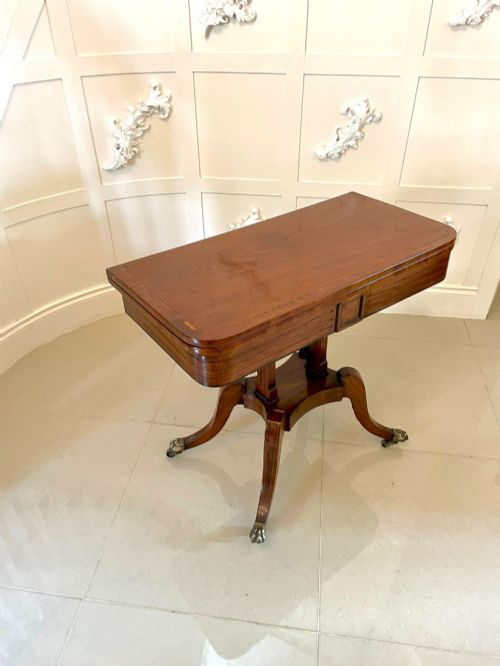
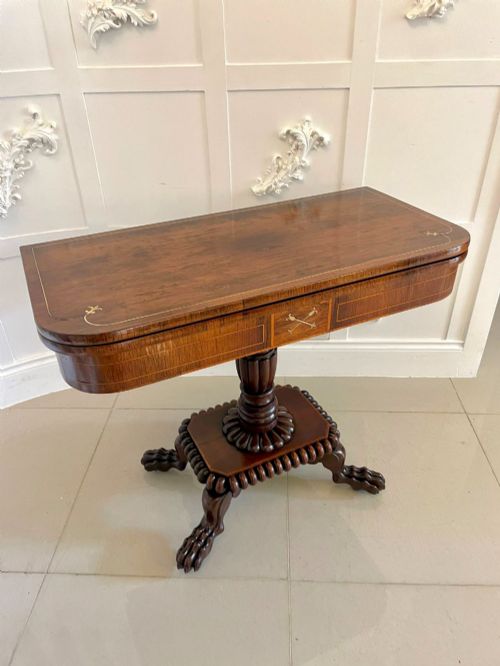
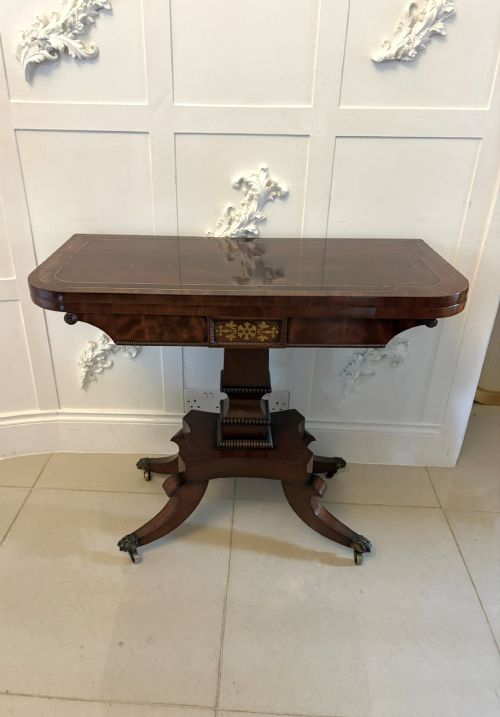
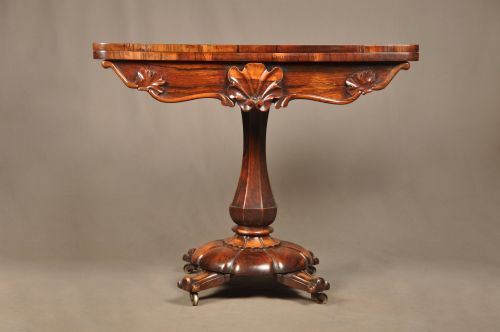
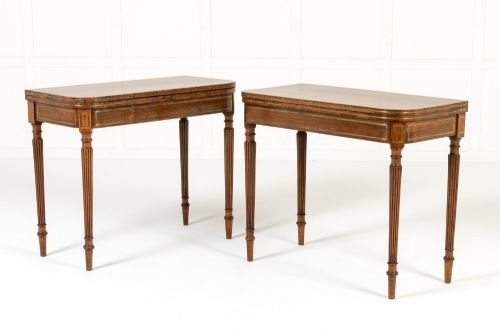
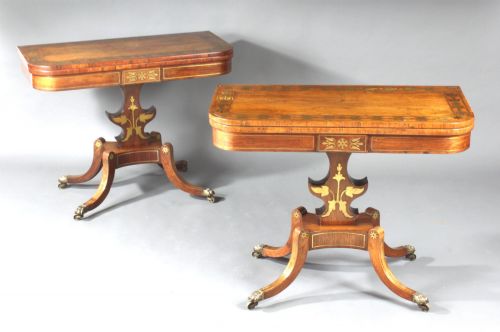
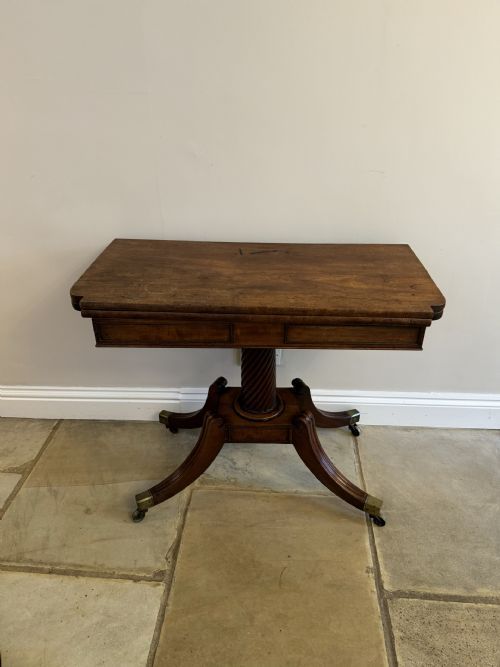
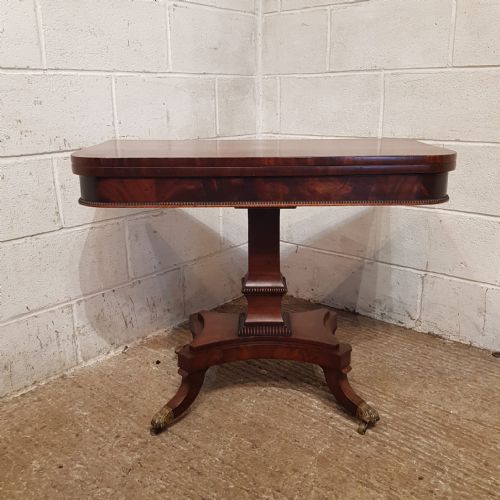
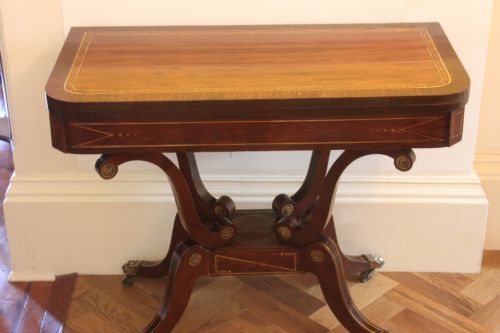
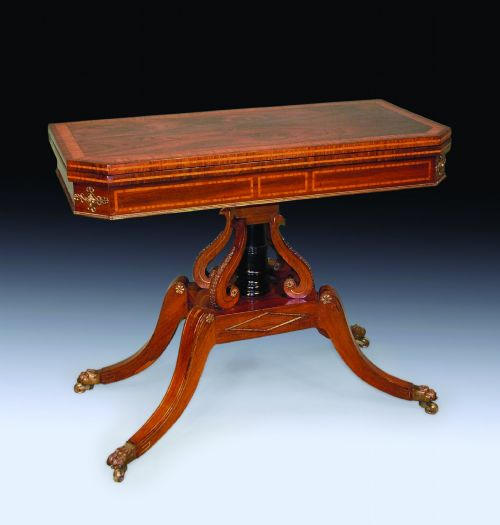
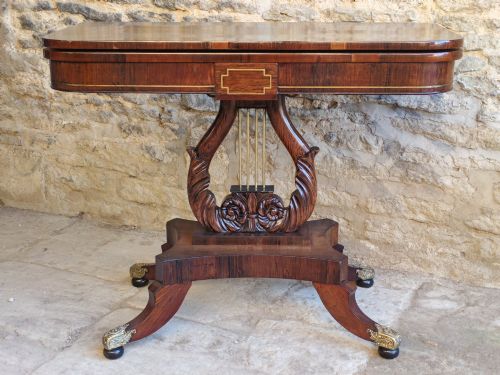
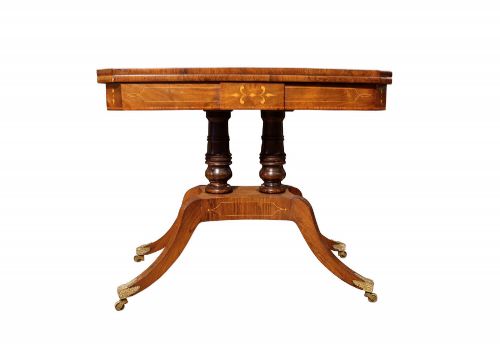
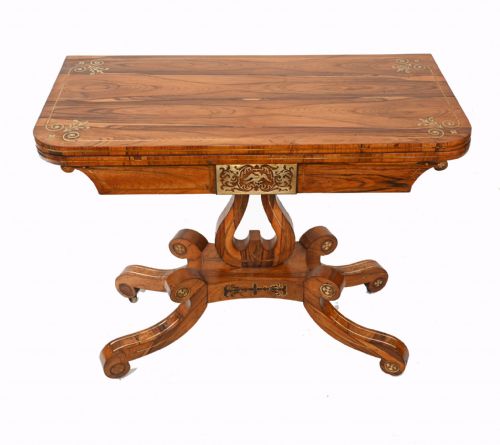
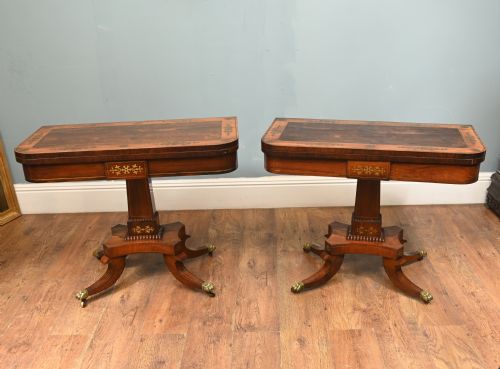
When you search for a regency games table brass, you encounter folding top card tables and multi-functional gaming pieces designed for formal entertaining. The most common form on this page is the fold-over card table in rosewood or mahogany, frequently accented with fine brass stringing or marquetry.
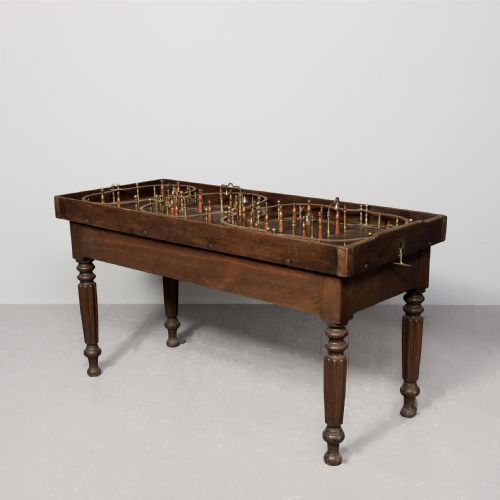
These tables date principally from the Regency and George IV periods, spanning the early nineteenth century with occasional Georgian and later revival examples. Alongside standard card tables, the selection includes tea tables, console tables, and specialised pieces incorporating chess boards or work compartments.
Makers and workshops of the era utilised clever mechanical pivoting tops and folding mechanisms to transform a slender console into a stable playing surface lined with baize or felt. Free-standing pedestal bases, pillar supports, and scroll feet dominate the structural layout of these items.
Materials and Technique
Cabinet makers relied heavily upon dense exotic timbers such as rosewood and figured mahogany, often contrasted with lighter secondary woods including satinwood, boxwood, and ebony for stringing and floral motifs. Solid mahogany and oak appear in structural framework and simpler tea tables.
Brass inlay forms the defining visual element, embedded precisely into the timber surface to create geometric banding, classical scrolls, and foliate scrolls. Additional metalwork components include cast brass sabots, castors, and gilded brass mounts that protect and embellish the pedestal bases.
Object types span card tables, tea tables, console tables, and occasional games tables from the nineteenth century.
Evaluating Quality
The degree of refinement in the brass inlay dictates the upper tier of these pieces, distinguishing crisp, flush hand-cut brass channels from simpler surface applications. Timber selection also separates standard items from exceptional ones, particularly figured rosewood with deep natural grain and contrasting specimen woods.
Carving execution on the pedestals, paw feet, and lyre supports reveals the competence of the workshop. Superior examples maintain tight joints in their folding mechanisms and retain original castors, brass mounts, and internal structural integrity.
George Bullock·Gillows
The Regency Games Table Brass Glossary
- Brass inlay
- Technique where thin strips of brass are set flush into channels carved into the wooden surface. This method creates geometric and floral patterns popular during the Regency period.
- Fold-over top
- Hinged tabletop design that opens to double its surface area for card playing or dining. It pivots on a frieze or pedestal base.
- Sabot
- Metal sleeve or socket fitted to the foot of a table leg. They often incorporate brass to prevent wear and match other metal mounts.
- Baize
- Woven woollen fabric used to line the interior playing surface of card and games tables. It provides a soft, durable surface for handling cards.
Regency Games Table Brass: Frequently Asked Questions
What games were played on these tables?
These tables accommodated card games such as whist and ombre, alongside chess and checkers on specialised marble or inlaid tops.
The fold-over design kept the playing surface concealed when not in use, maintaining a neat appearance in the drawing room.
How do I care for the brass inlay?
Dust the surface regularly with a soft, dry cloth and avoid harsh chemical polishes that can loosen the brass from its wooden channel.
Maintain stable humidity levels in the room to prevent the timber from shrinking and lifting the metal strips.
Are these tables suitable for daily use?
Most antique card tables function well as side tables or console tables against a wall in daily life.
Opening the heavy fold-over top requires care to protect the original hinges and pivoting wooden mechanisms from undue strain.
How can I distinguish Regency from William IV pieces?
Regency pieces typically display lighter, more restrained classical proportions with delicate brass inlay and slender pedestal supports.
William IV examples often feature heavier, bolder mahogany construction with more robust scroll feet and larger pedestal bases.