




Regency Gallery Top Desk
A regency gallery top desk brings refined writing spaces into the room, combining functional surfaces with delicate raised surrounds.
Regency Gallery Top Desk
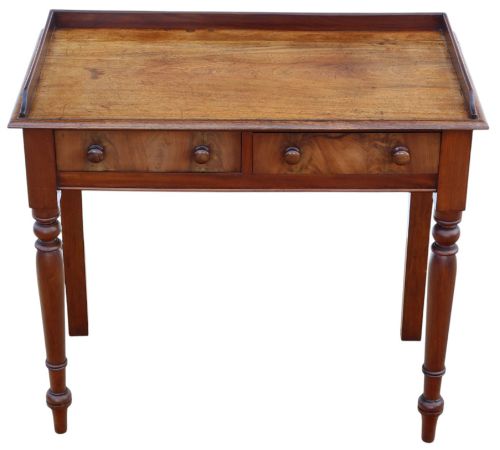
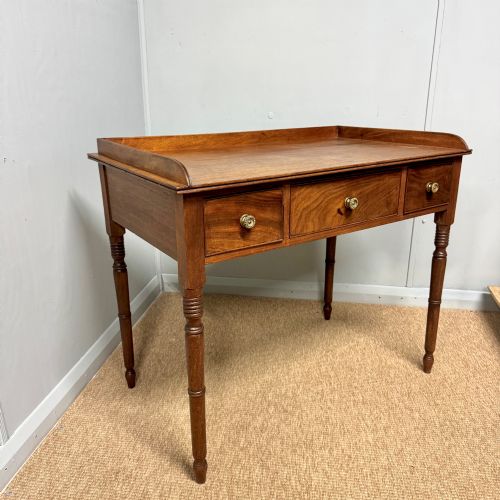
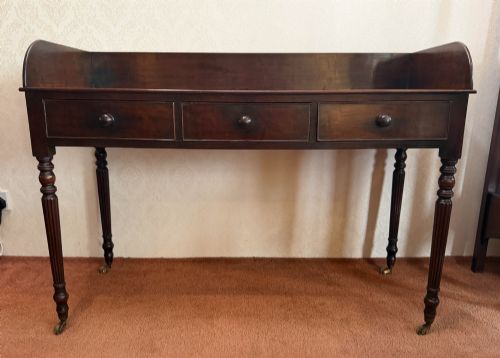
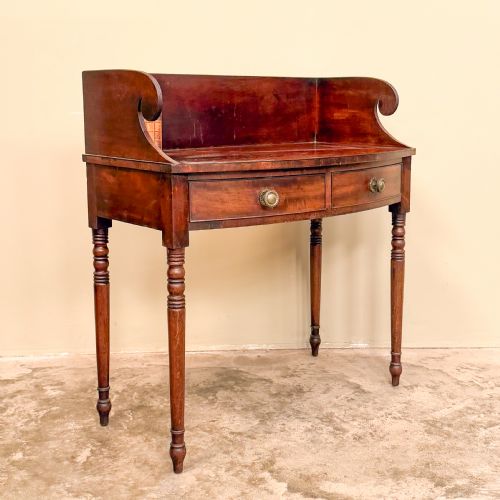
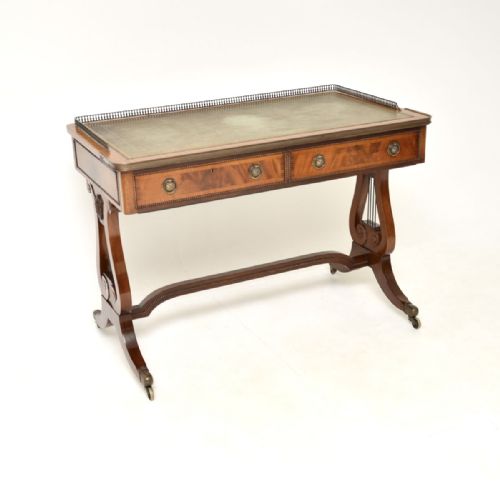
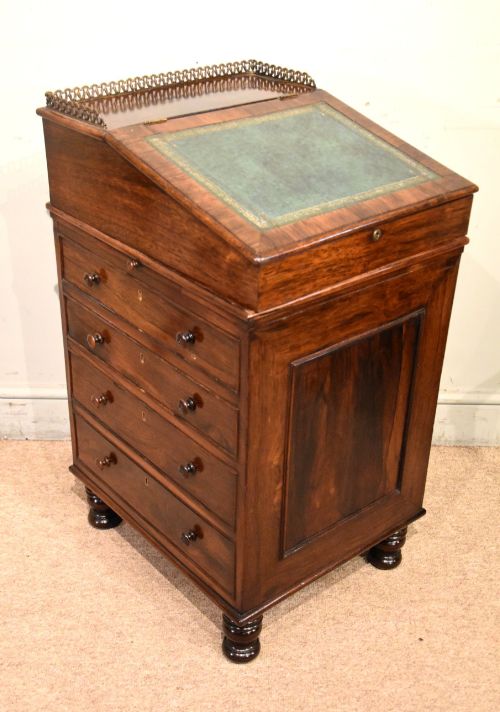
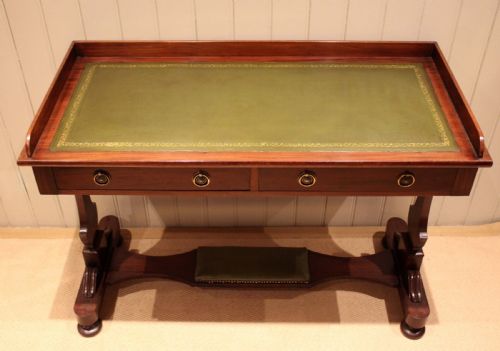
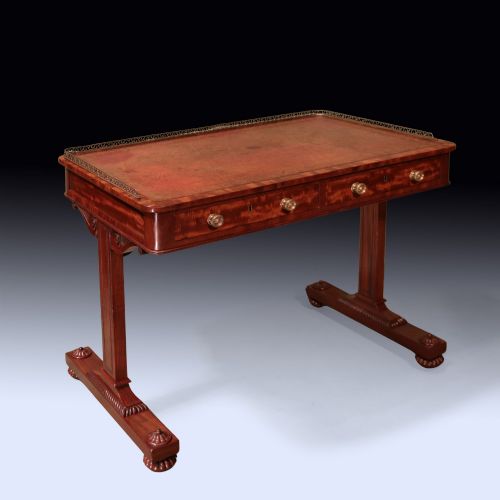
A regency gallery top desk encompasses a variety of writing tables, side tables, dressing tables and davenports associated with the Regency, Georgian and Victorian periods. The pieces appearing here predominantly span the early nineteenth century alongside later revivals, displaying the distinctive proportions of the era.
Materials and construction
Cabinetmakers constructed these pieces primarily using dense hardwoods such as mahogany and rosewood, often complemented by secondary timbers like oak and pine. Selected pieces incorporate inset leather writing surfaces and cast brass elements including gallery rails and fittings.
Joinery techniques reflect the period's standards of cabinet work, utilising solid timber frames and veneers applied to stable foundation boards. Structural detailing incorporates serpentine fronts, sliding tops and integrated small drawers tailored to compact writing and dressing furniture.
Regency Gallery Top Desk Retail Price Guide 2026
Typical asking prices for regency gallery top desk among the pieces listed under this phrase on Sellingantiques today, from the lower quarter to the upper quarter. They describe what is for sale here now, not the wider market.
Listings feature mahogany and rosewood timber surfaces alongside brass gallery rails and leather writing inserts.
Distinctions in quality
The standard of a piece rests upon the selection of timber grain, the crispness of carved elements and the integrity of the brass gallery work. Desks featuring finely figured rosewood or mahogany demonstrate superior initial craftsmanship.
Proportion and execution define the upper tiers of these tables. Original brass galleries, well-integrated sliding mechanisms and harmonious secondary woods elevate individual examples far above standard utility items.
Gillows of Lancaster
The Regency Gallery Top Desk Glossary
- Gallery
- A raised rail or border surrounding the top of a table or desk to prevent items from rolling off. These decorative surrounds appear in pierced brass or carved timber.
- Davenport
- A compact form of small desk featuring a sloping writing surface above a pedestal of drawers. These pieces became popular during the Regency period for domestic correspondence.
- Serpentine front
- A curved piece of cabinet furniture featuring a convex centre flanked by concave ends. This shaping requires advanced woodworking skill.
- Veneer
- A thin layer of superior wood applied to a base timber to provide an ornamental surface. Cabinetmakers utilised this method to display rich grain patterns.
Regency Gallery Top Desk: Frequently Asked Questions
How do I identify a Regency desk?
Regency pieces typically date from the early nineteenth century and display classical proportions influenced by Greek and Roman design. Look for restrained ornamentation, fine mahogany or rosewood timbers, and distinctive brass mounts.
Later Victorian revivals from the nineteenth and twentieth centuries often emulate these exact forms. Examining the secondary woods and interior construction helps clarify the true age.
Where were these desks used?
These tables served primarily in private libraries, drawing rooms and private dressing quarters for correspondence and grooming. Their compact proportions made them versatile items for domestic spaces.
Smaller variants like davenports were specifically designed for writing letters in intimate settings. Larger writing tables accommodated more extensive administrative tasks.
Are davenport desks practical for daily use?
Davenports provide a compact writing surface combined with built-in drawer storage beneath a sloping desk top. Their modest footprint suits modern rooms where floor space is limited.
The enclosed drawers and stationery compartments keep writing materials organised. The sloping surface offers a comfortable angle for reading and writing.