

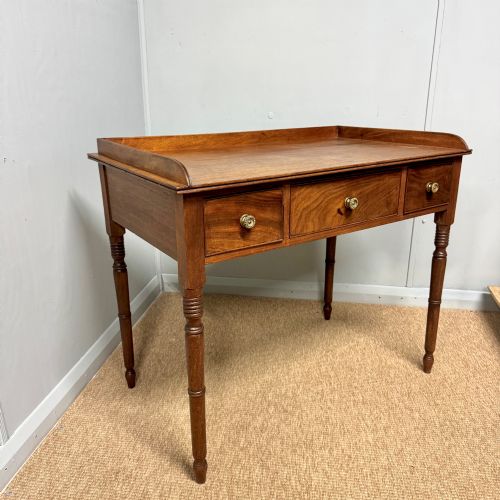
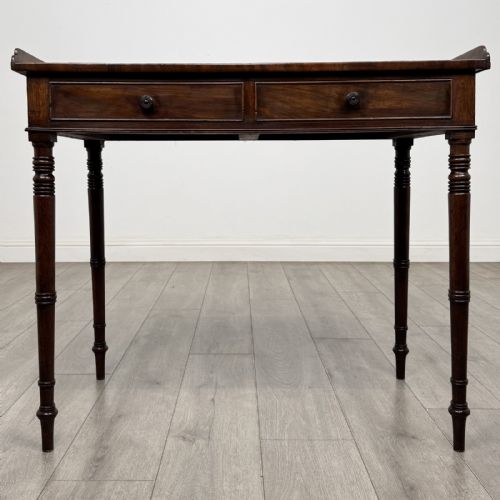
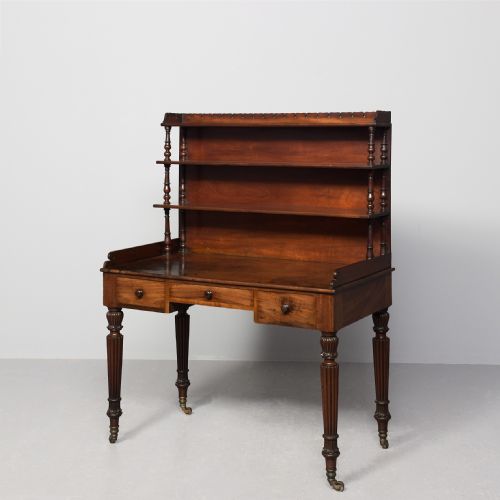
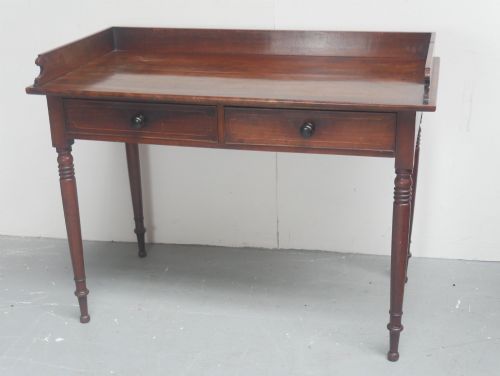

Regency Gallery Desk
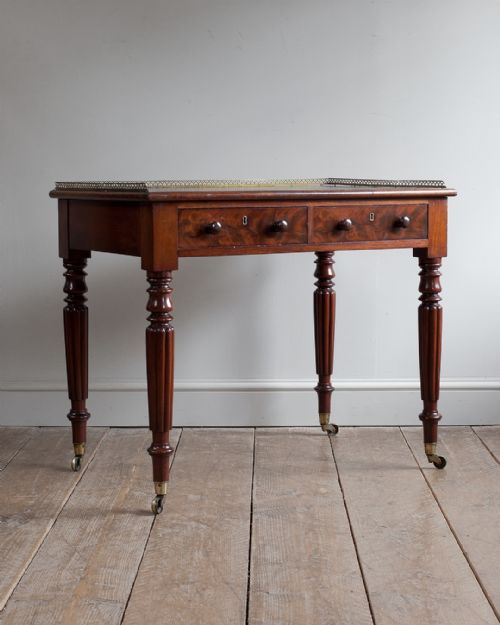
These regency gallery desk examples bring refined timber surfaces and elevated brass surrounds together for dedicated writing and dressing.
Regency Gallery Desk
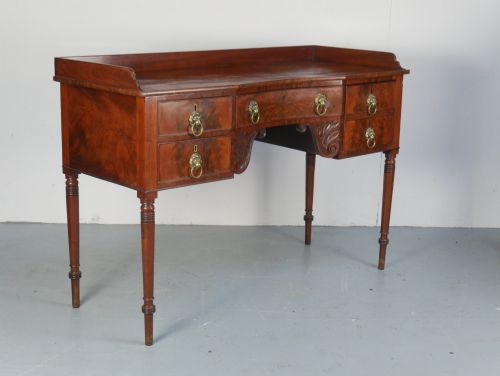
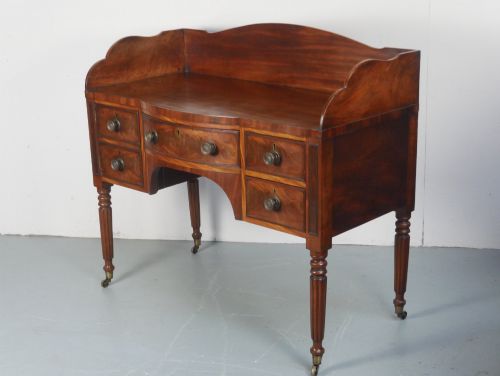
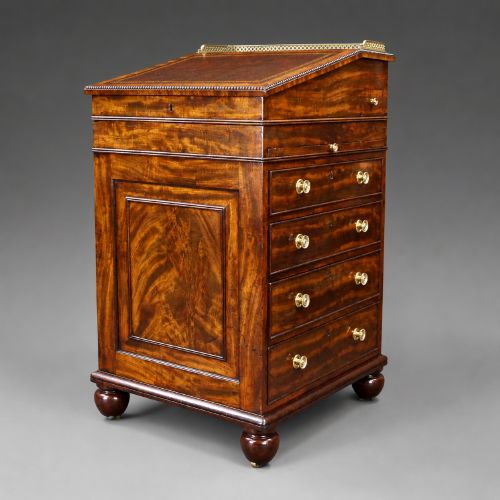
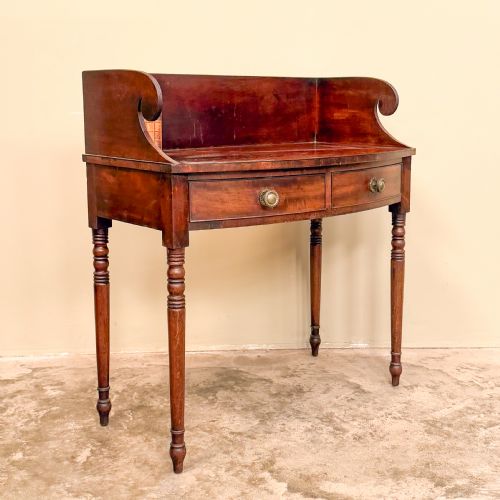
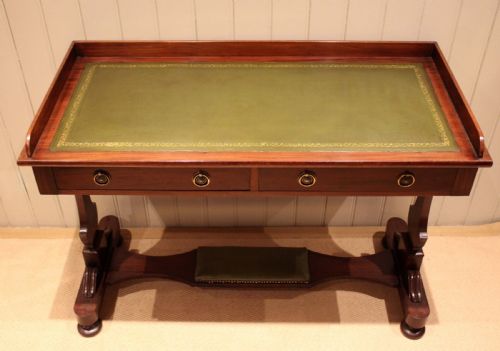
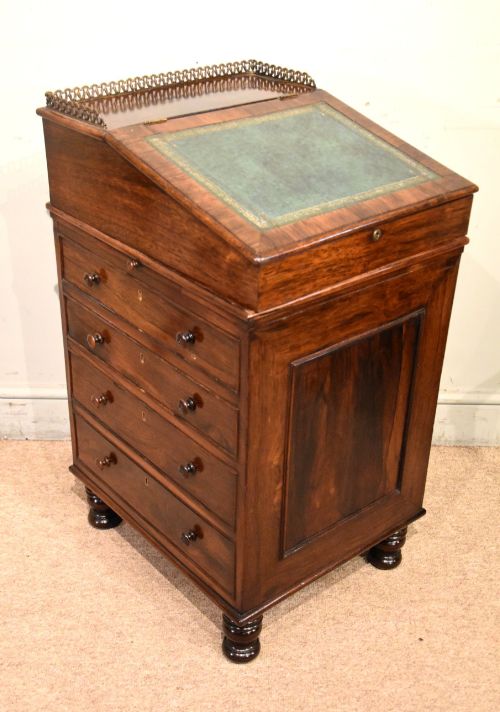
A regency gallery desk centres on writing tables, dressing tables, and compact davenports equipped with raised back or side upstands. You encounter pieces spanning the Regency, Georgian, and Victorian periods alongside later interpretations.
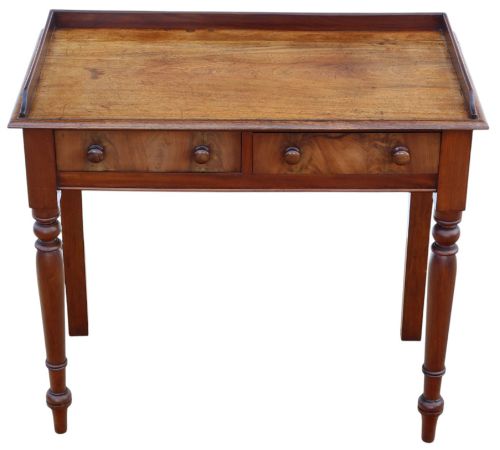
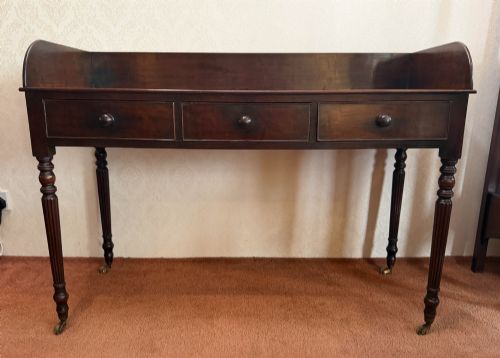
The form encompasses side tables, washstands, and occasional writing desks featuring low wooden or brass surrounds. Mahogany and rosewood dominate the selection, often finished with leather writing surfaces.
Makers and workshops of the era designed these pieces for studies, dressing rooms, and home offices. The defining gallery feature serves to keep writing equipment or toiletries secure upon the surface.
Assessing quality and execution
The refinement of the timber selection marks the difference between standard production and top-tier workshop output. Richly figured flame mahogany and dense rosewood elevate the visual presence of a piece.
Details such as finely pierced brass galleries, precise boxwood inlay, and secondary drawer linings demonstrate superior craftsmanship. Named makers and documented provenance further distinguish exceptional examples from typical workshop pieces.
Regency Gallery Desk Retail Price Guide 2026
Typical asking prices for regency gallery desk among the pieces listed under this phrase on Sellingantiques today, from the lower quarter to the upper quarter. They describe what is for sale here now, not the wider market.
Listings feature mahogany, rosewood, oak, and pine alongside brass hardware and leather inserts across eighteenth, nineteenth, and early twentieth-century periods.
Gillows·James Mein of Kelso·John McLean
The Regency Gallery Desk Glossary
- Gallery
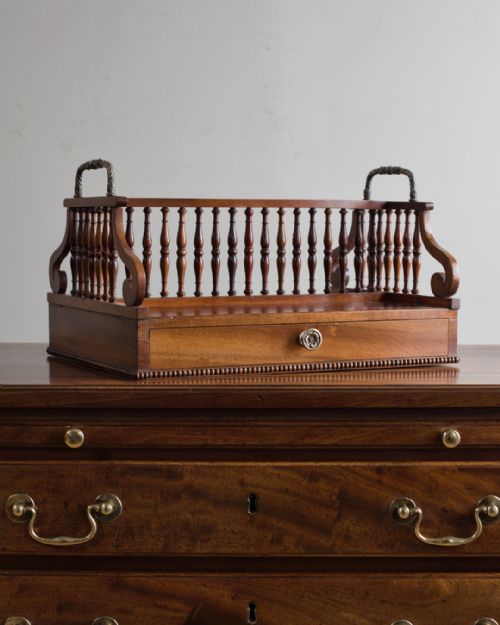
- A raised border or rail running along the back and sides of a tabletop to prevent items from rolling off. This feature appears in brass or carved timber.
- Davenport
- A compact desk featuring a sloping writing lid above a pedestal of drawers. These pieces often incorporate side drawers and stationary compartments.
- Flame mahogany
- A veneer cut from the fork of a mahogany tree that displays a distinctive flickering, flame-like grain pattern. Cabinet makers used this to create highly decorative facades.
- Stringing
- Thin inlay lines of contrasting wood, such as boxwood, set flush into the surface of a panel or drawer front. It provides delicate geometric framing.
- Bonheur du jour
- A light lady's writing desk featuring a small cabinet or set of shelves superstructure above the main writing surface.
Regency Gallery Desk: Frequently Asked Questions
How were these desks used originally?
These tables served multiple domestic purposes in polite households, functioning as writing desks, dressing tables, or side tables in private chambers. Occupants used the writing surfaces for letter-writing and keeping personal accounts.
Dressing variants provided space for toiletries and mirrors, while compact davenports stored writing materials inside internal compartments. Their versatile scale allowed them to sit comfortably in bedrooms and small parlours.
How do I care for a rosewood desk?
Keep antique rosewood and mahogany furniture away from direct sunlight and strong heat sources to prevent timber splitting and fading. Dust the surfaces regularly with a soft, dry cloth rather than applying heavy silicone polishes.
Maintain a stable room humidity to protect vulnerable veneers and historical leather writing inserts. Treat leather surfaces with specialised balms sparingly if they begin to dry out.
How do I distinguish Regency from Victorian pieces?
Regency pieces generally display strict classical proportions, architectural mounts, and restrained brass or mahogany detailing dating from the early nineteenth century. They often feature clean lines influenced by Grecian and Roman design.
Victorian items tend to incorporate heavier proportions, denser carving, and darker finishes as production methods shifted later in the century. Examining secondary timbers and construction methods helps clarify the exact manufacturing period.