




Regency Foldover Games Table
A regency foldover games table is a clever dual-purpose surface in mahogany or rosewood designed for card play and social rooms.
Regency Foldover Games Table
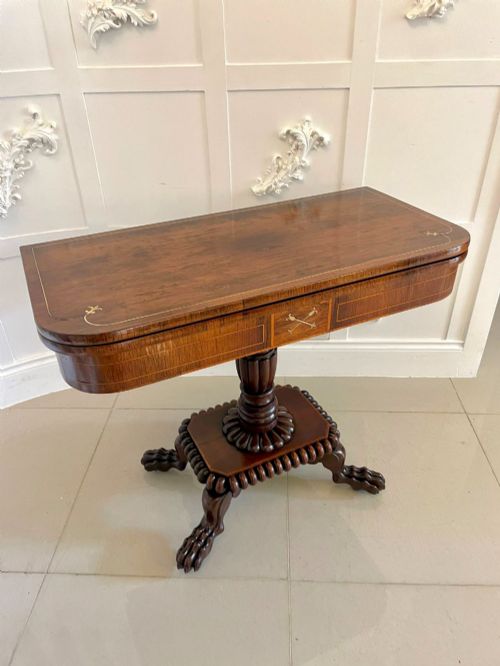
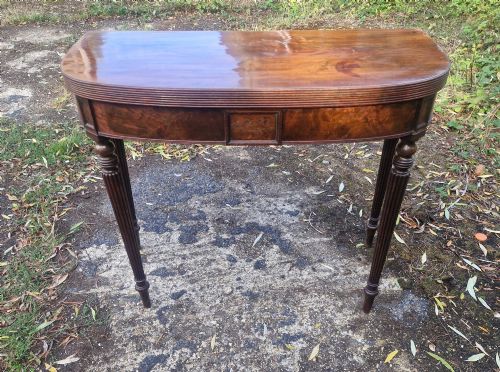
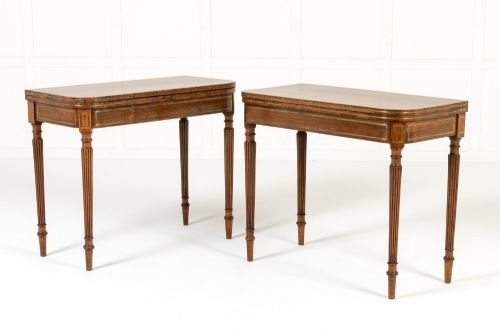
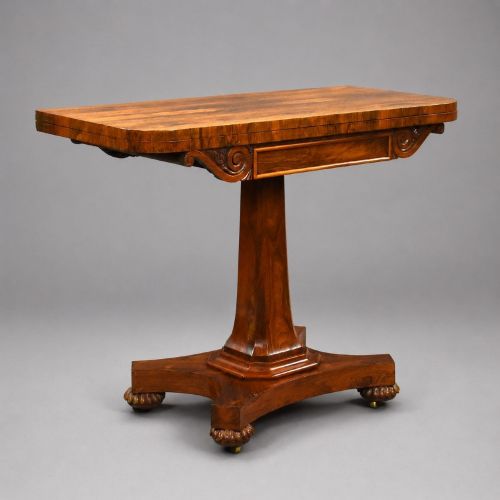
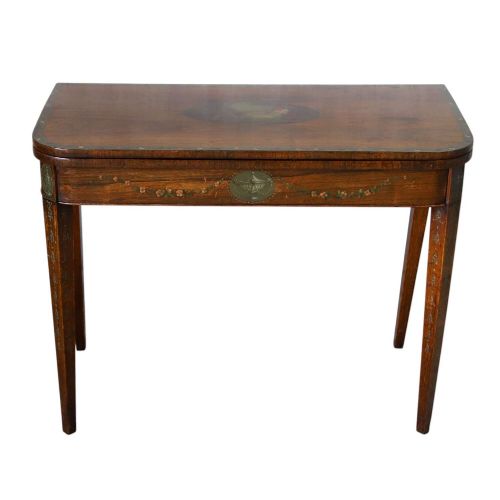
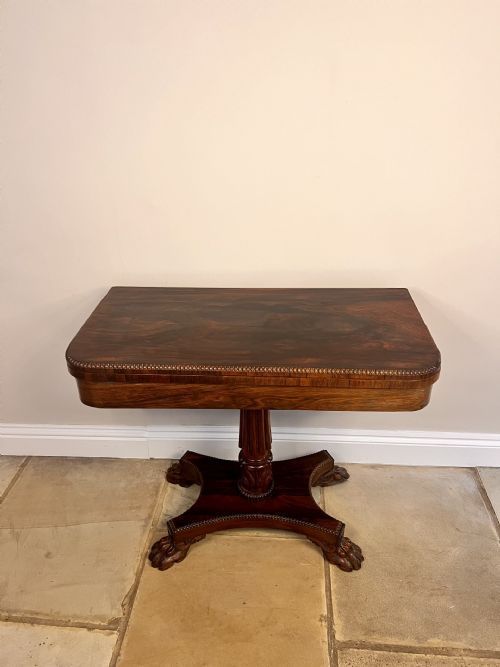
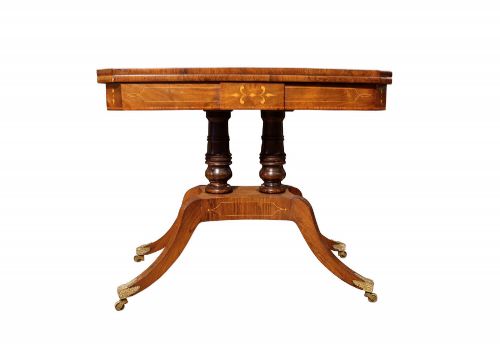
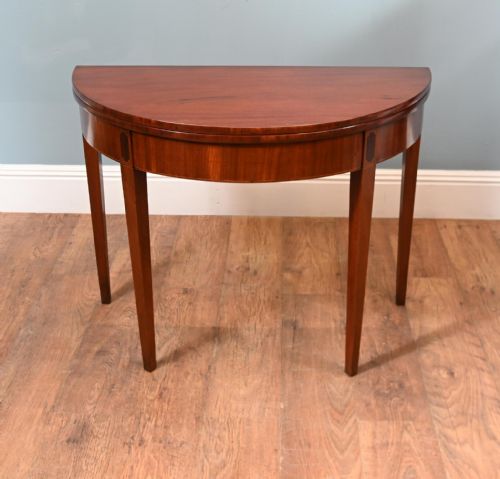
When you search for a regency foldover games table, you encounter versatile furniture built for domestic entertainment during the Georgian and Regency periods. These pieces typically function as a compact console or side table when closed, revealing a baize-lined playing surface when the top leaf rotates and folds out.
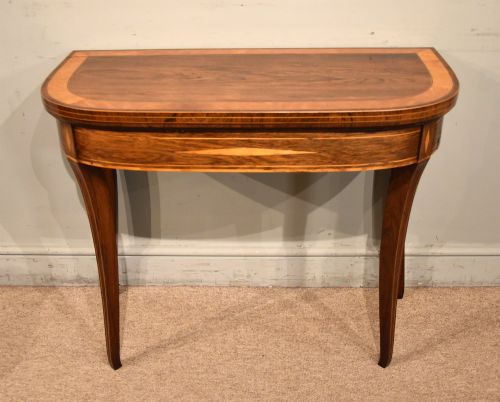
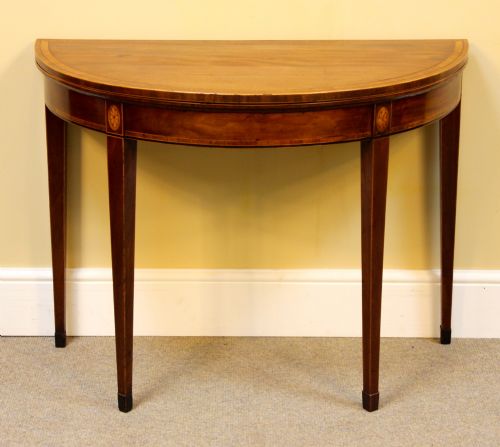
The versions most commonly met on this page span the late eighteenth and early nineteenth centuries, constructed predominantly in rich timbers like mahogany and rosewood. Makers frequently shaped these tables in a D-form or demi-lune profile to sit neatly against a drawing room wall when not in use.
How They Were Made
Cabinet makers utilised solid timbers and fine wood veneers, often combining mahogany or rosewood with contrasting inlays of satinwood, boxwood, and ebony. Brass detailing appeared through intricate line inlay, decorative sabots, and original castors that allowed these heavy tables to move easily across carpets.
Structural support relied on robust pedestal bases, central lyre supports, or turned and carved legs, frequently executed in the manner associated with Gillows. The pivoting top mechanism required precise carpentry to ensure the leaf sat level and stable when opened for play.
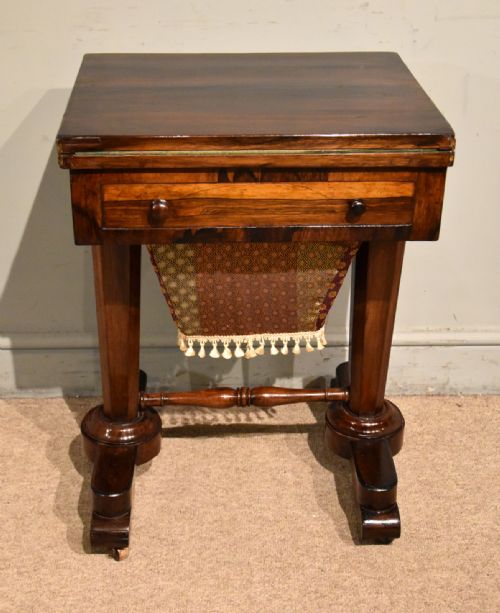
Some tables double as workboxes, hiding sewing compartments beneath the playing surface for industrious card players.
What Varies in Quality
The tier of a piece depends heavily on the select figure of the wood veneer and the ambition of the brass inlay work. Simpler mahogany examples contrast with elaborately figured rosewood surfaces enriched by precise brass stringing and finely cast mounts.
Construction methods and secondary details dictate the standing of the table, from plain turned legs to deeply carved supports and intact original castors. The crispness of the joinery where the foldover leaf meets the frieze marks the distinction between standard workshop production and high-status cabinet work.
George Bullock·Gillows
The Regency Foldover Games Table Glossary
- Demi-lune
- A half-moon shape popular for the tops and frames of side tables designed to stand flush against a wall.
- Foldover
- A hinged top mechanism that doubles the surface area of a table when opened out flat.
- Sabot
- A metal sleeve fitted over the foot of a furniture leg for protection and decoration.
- Lyre support
- A central table base carved in the symmetrical, curved outline of a classical musical instrument.
- Goncalo Alves
- A dense, exotic timber with striking contrasting grain patterns utilised in high-end cabinet making.
Regency Foldover Games Table: Frequently Asked Questions
What is a regency foldover games table used for?
These tables served primarily as dual-purpose furniture for the home, functioning as decorative console or side tables during the day. When evening arrived, the hinged top folded open to reveal a baize-covered surface intended for card games and social gatherings.
Their clever engineering allowed households to maximise space in formal reception rooms without sacrificing utility or elegance.
How do I identify a Regency period table?
Regency pieces often display classical architectural influences, featuring dark tropical timbers like rosewood and mahogany enhanced by contrasting stringing in satinwood or ebony. Look for characteristic supports such as central pillar pedestals, lyre shapes, or sabre legs.
Hardware details like brass toe castors and intricate inlay work further point to the early nineteenth-century aesthetic.
Where should I place this table in a room?
A D-shaped or demi-lune version sits flat against a wall as a console, making it ideal for hallways, living rooms, or dining spaces. When guests arrive, the table pulls out into the room and unfolds to create a functional playing or display surface.
Keeping the piece away from direct sunlight protects the sensitive rosewood or mahogany veneers and polished finishes.
What is the difference between a tea table and a games table?
While both utilise the same clever foldover mechanism, tea tables generally featured plain wooden interiors designed for serving tea or displaying porcelain. Games tables typically incorporated a lined interior surface, occasionally featuring small corner wells for counters or coins.
Many listings group these related forms together due to their shared silhouette and mechanical design.