
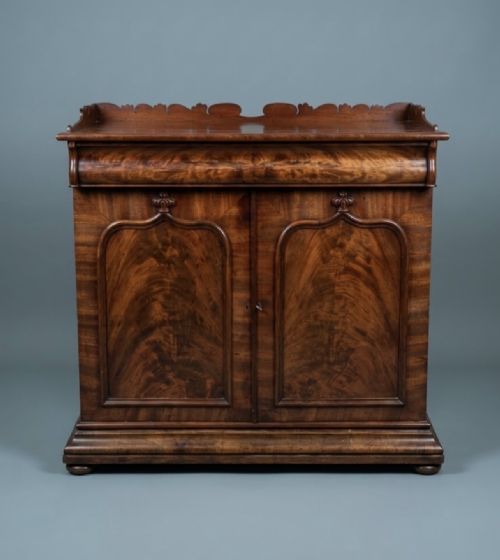
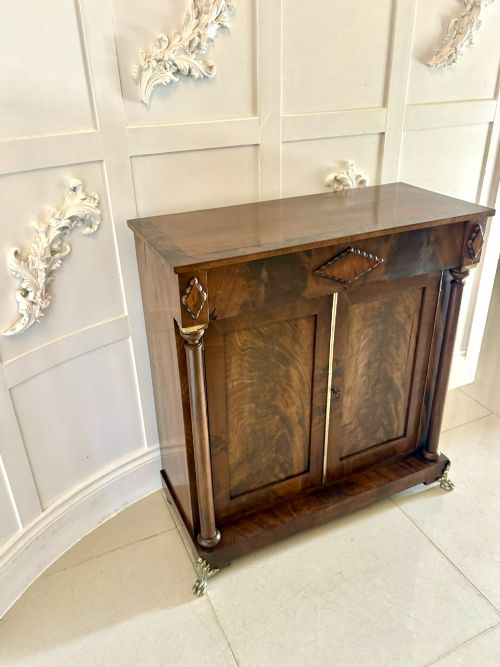
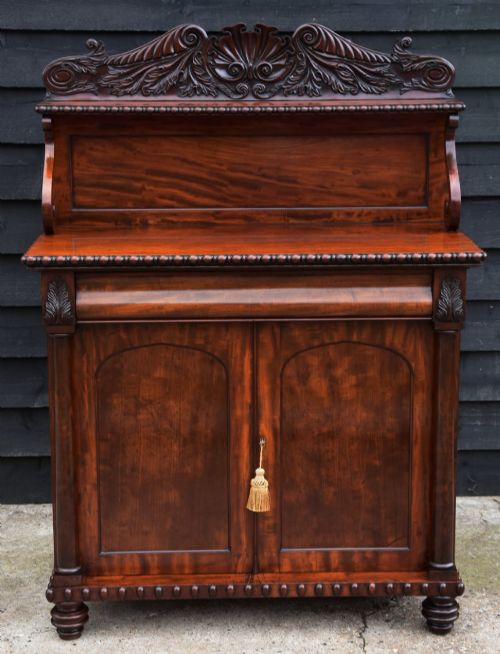
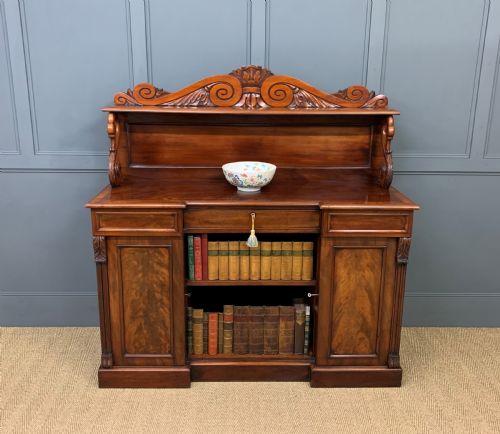
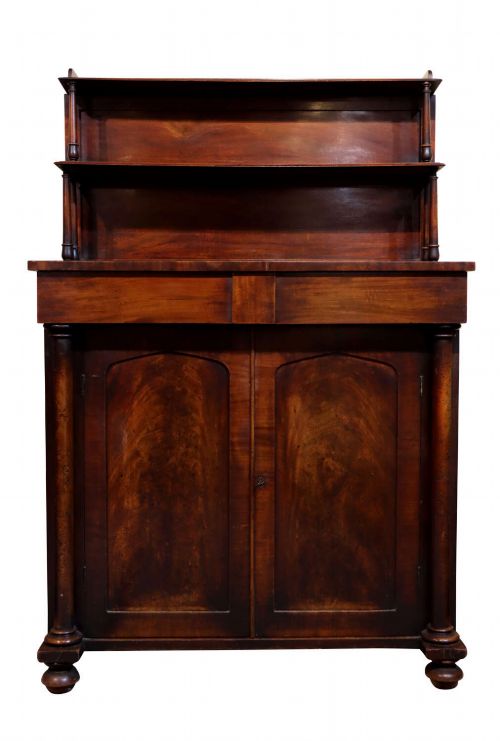
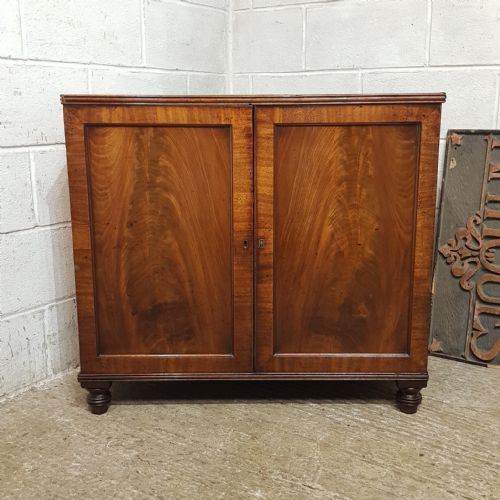
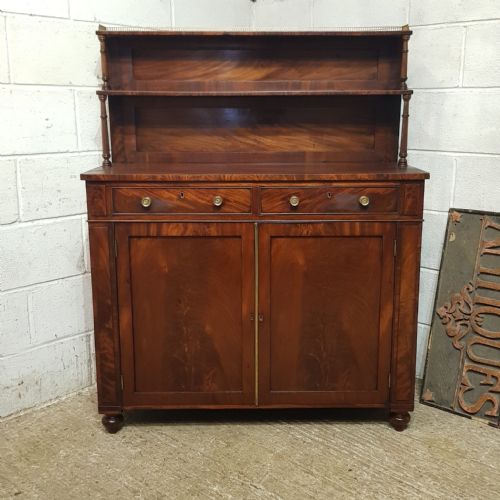


Regency Flame Mahogany Chiffonier
A regency flame mahogany chiffonier brings architectural proportion and richly figured timber into a room, offering both display surface and enclosed storage.
Regency Flame Mahogany Chiffonier
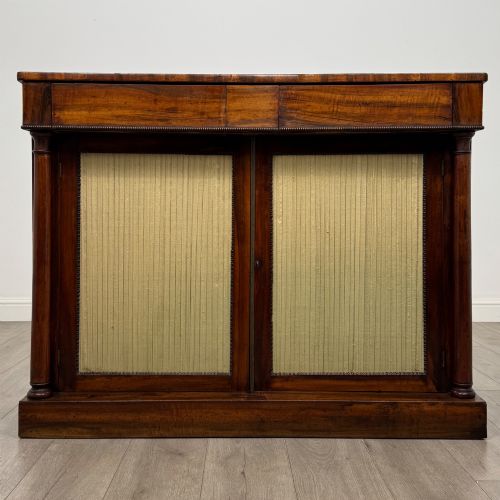
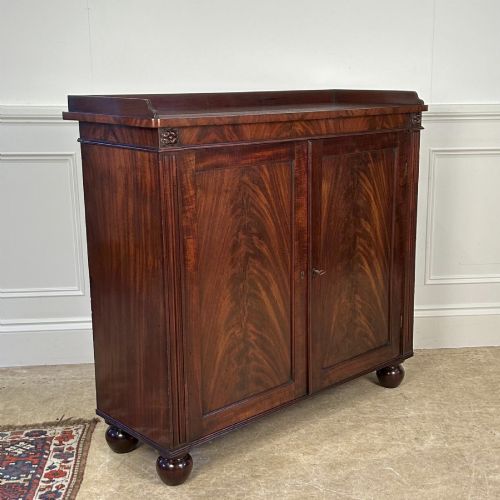
A regency flame mahogany chiffonier is a low, enclosed cabinet designed for the principal rooms of nineteenth-century houses, combining a flat top with lower doors and occasionally a raised shelf back. The form emerged during the Regency and William IV periods, serving as a compact alternative to the larger sideboard.
Most examples found on this page date from the early nineteenth century, spanning the Regency, George IV, and William IV eras. They appear alongside related side cabinets and low cupboards sharing the same characteristic timber and proportions.
What varies in quality
The visual strength of the timber grain marks the distinction between ordinary pieces and superior examples, particularly where the flame veneer is symmetrical and uninterrupted across the doors. Cabinetmaking skill also shows in the tightness of the drawer dovetails and the integrity of the structural joints.
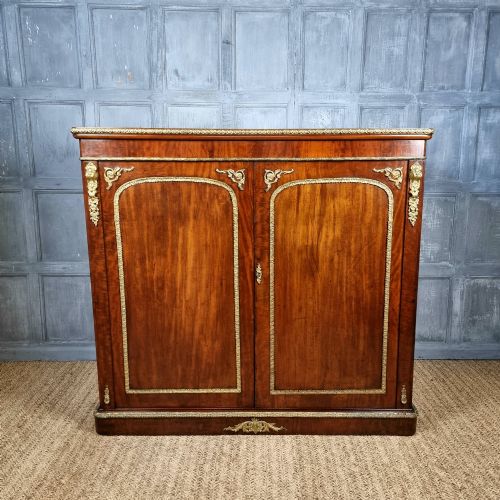
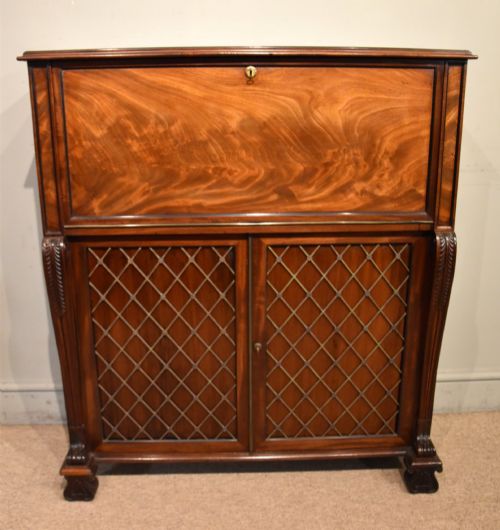
Proportion and scale dictate the desirability of a piece, with smaller, untouched examples commanding greater attention from collectors. The crispness of carved details, such as barley twist supports or applied brass mouldings, further separates standard production from workshop pieces attributed to makers like Gillows.
Several cabinets include secret compartments hidden behind seemingly stationary architectural mouldings.
Gillows·S Jamar
The Regency Flame Mahogany Chiffonier Glossary
- Flame mahogany
- A veneer cut from the branch junctions of the mahogany tree, producing a swirling, flame-like grain pattern. This figuration was highly prized by Regency cabinetmakers for principal door panels.
- Secretaire
- A cabinet or drawer containing a drop-down writing surface fitted with small pigeonholes and drawers. Examples on this page combine this writing function with the low proportions of a side cabinet.
- Dovetail
- A joint used in drawer construction formed by interlocking wedge-shaped fingers. Hand-cut dovetails indicate cabinetmaking work predating mass manufacturing.
- Escutcheon
- A protective plate surrounding a keyhole, frequently cast from brass on these cabinets. It guards the surrounding wood from wear caused by the key.
Regency Flame Mahogany Chiffonier: Frequently Asked Questions
What is a chiffonier used for?
Originally placed in dining rooms or drawing rooms, these cabinets served to store serving silver, linens, or books while providing a surface for displaying decorative objects.
Today, they function well in living spaces as media consoles or side storage units due to their shallow depth and low height.
How do I date a Regency chiffonier?
Dating relies on stylistic markers such as turned feet, brass inlay, and the transition from delicate Regency reeding to the heavier, scroll-carved forms of the William IV period. Construction details like hand-cut drawer linings also help establish the approximate decade of manufacture.
Examining the secondary timbers, such as the oak used in internal framing, provides further clues regarding the workshop origin.
Are all these cabinets made of solid mahogany?
Most pieces use a stable secondary wood like oak or pine for the internal carcase, drawer linings, and structural framing. Solid mahogany appears on structural columns and mouldings, while figured veneer covers the flat surfaces.
This method of construction prevented warping in the large expanses of timber used for the doors and sides.
How should I care for flame mahogany?
Keep the timber away from direct sunlight and heat sources to prevent the veneer from drying out or lifting from the carcase. Regular dusting with a dry cloth and occasional application of appropriate wax maintains the lustre of the polish.
Avoid liquid cleaners and silicone sprays, which can penetrate damaged areas of the finish and harm the wood.