

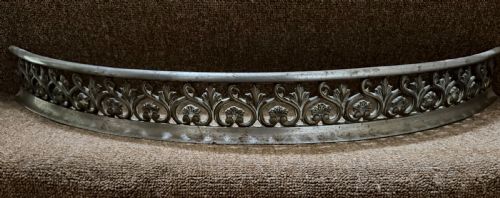


Regency Fire Guard
These regency fire guard pieces protect a room from stray embers while bringing refined metalwork and timber into a hearth setting.
Regency Fire Guard
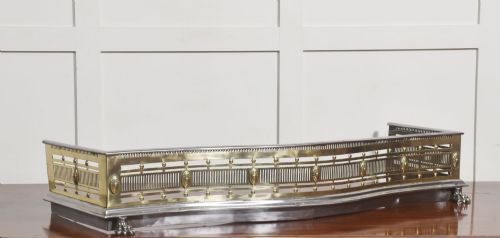
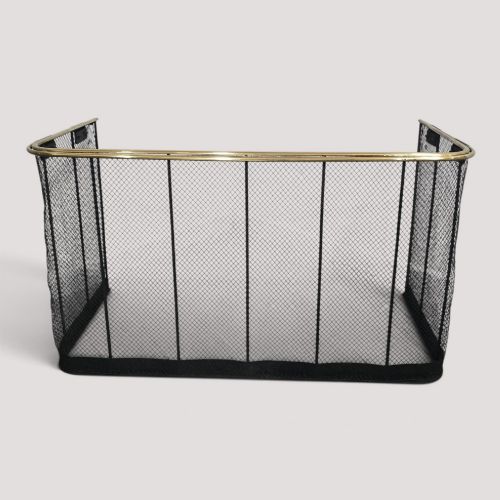
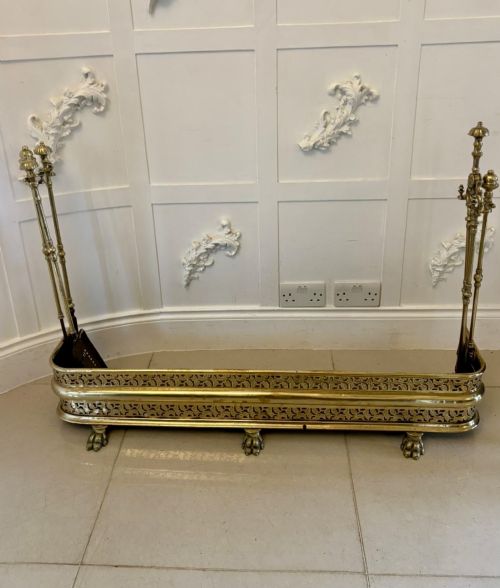
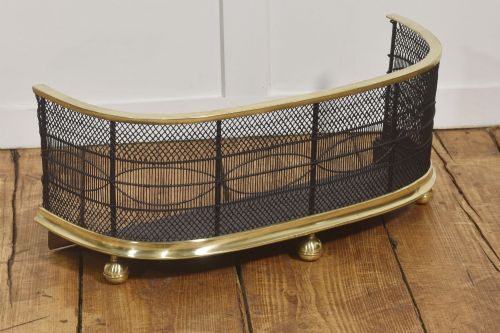
A regency fire guard encompasses various hearth furnishings designed to contain sparks, span fender curbs, or shield a room from excessive heat. Buyers searching for a regency fire guard commonly encounter protective wirework nursery guards alongside low brass fenders and adjustable pole screens made of mahogany or rosewood.
The objects span periods from the Georgian era through the Regency and Victorian epochs, reflecting changing domestic priorities around the fireplace. Many items combine heavy cast brass frames with woven iron wire or incorporate needlework panels mounted on adjustable wooden stands.
Materials and construction methods
Workshops relied heavily on polished brass, cast bronze, iron wire, and sturdy hardwoods such as mahogany and rosewood to build these hearth accessories. Wirework mesh was carefully tensioned within rigid metal frames, while fenders incorporated decorative cast brass garlands, lions, and hairy paw feet.
Joinery on timber fire screens involved precise framing to hold delicate tapestry, embroidery, or poker work panels securely. Metal components were cast, hammered, and polished to achieve clean curves and rigid structures capable of withstanding daily fireside heat.
Regency Fire Guard Retail Price Guide 2026
Typical asking prices for regency fire guard among the pieces listed under this phrase on Sellingantiques today, from the lower quarter to the upper quarter. They describe what is for sale here now, not the wider market.
Listings feature items built from brass, iron, mahogany, rosewood, steel, and glass across various 19th century styles.
Distinguishing quality across examples
Exemplary pieces demonstrate superior metal casting with crisp detailing on mounts, lions, and garlands, whereas lesser items show softer edges from worn moulds. The tightness and uniformity of woven iron wire mesh distinguish high grade nursery guards from simpler industrial substitutes.
Timber screens display refinement through dense grain selection, precise inlay work, and smooth mechanical action on adjustable poles or pull out leaves. Structural weight also plays a part, with heavier brass frames indicating substantial metal content rather than thin plating.
The Regency Fire Guard Glossary
- Fire guard
- A protective barrier placed before a hearth to catch flying sparks and embers. These often take the form of tall wirework enclosures.
- Fender
- A low metal border placed on the floor around the hearth perimeter. They frequently incorporate tool rails or decorative pierced brass panels.
- Nursery guard
- A tall protective enclosure designed to keep young children and pets at a safe distance from open flames. They typically combine a solid brass frame with fine wire mesh.
- Kerb fender
- A low barrier defining the hearth edge, often curved or bow fronted to match the room architecture.
Regency Fire Guard: Frequently Asked Questions
What is the purpose of a nursery guard?
A nursery guard provides a tall physical barrier around an open fireplace to prevent children and domestic animals from getting too close to burning coals. The fine wire mesh blocks sparks while allowing maximum warmth to heat the room.
These pieces typically feature sturdy metal frames that stand independently on the floor around the hearth perimeter. They combine utility with decorative metalwork suited to period interiors.
How do pole screens differ from standard guards?
Pole screens use an adjustable vertical panel mounted on a central wooden stand to block heat from the user's face rather than enclosing the entire hearth. They sit beside the fireplace rather than directly in front of the opening.
The textile panel can be raised or lowered along the pole as needed during different stages of a fire.
What metals appear most frequently?
Brass and iron dominate the surviving examples, often appearing together in a single piece. Frames use cast or polished brass alongside woven iron wire mesh.
Steel and bronze also occur in fenders and specialised hearth accessories from the same periods.
How should these pieces be positioned?
Fire guards and fenders sit directly on the floor surrounding the fireplace opening. They establish a clear boundary between the active hearth and the main living space.
Freestanding screens occupy a spot nearby to deflect direct heat away from seating areas.