

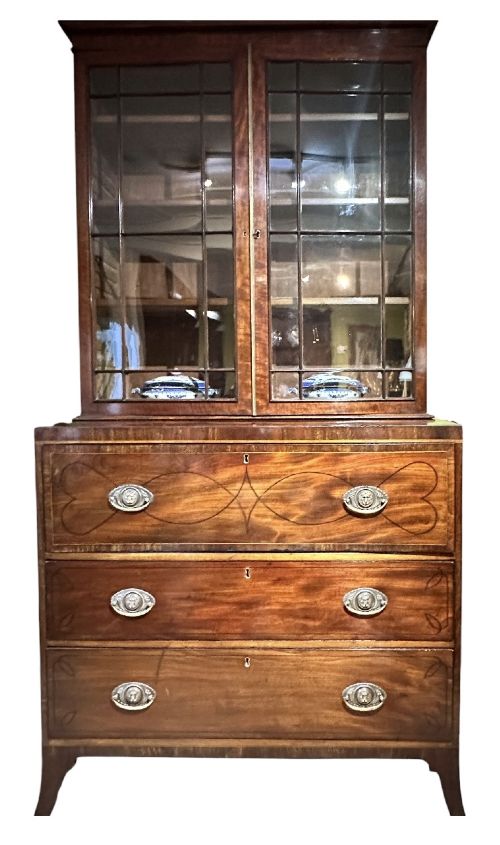
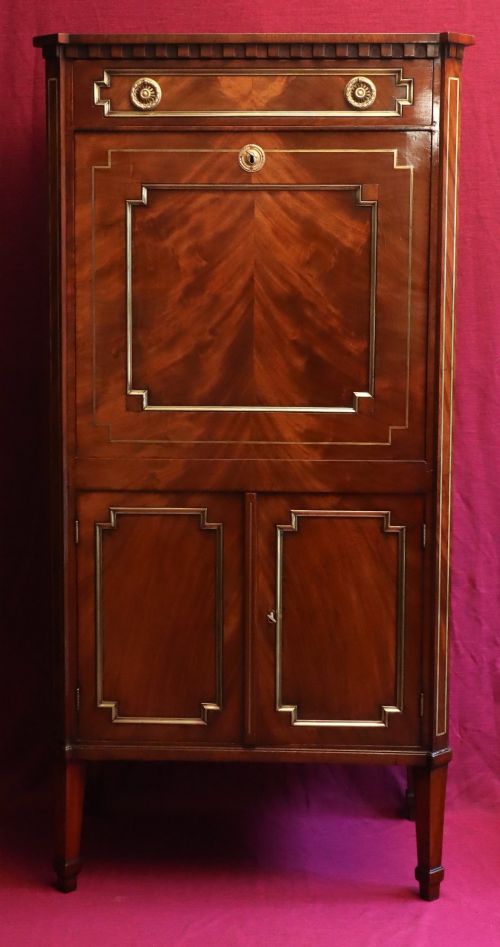


Regency Fall Front Desk
A regency fall front desk brings architectural discipline and clever interior compartments into a room, offering a writing surface that hides away when the work is done.
Regency Fall Front Desk
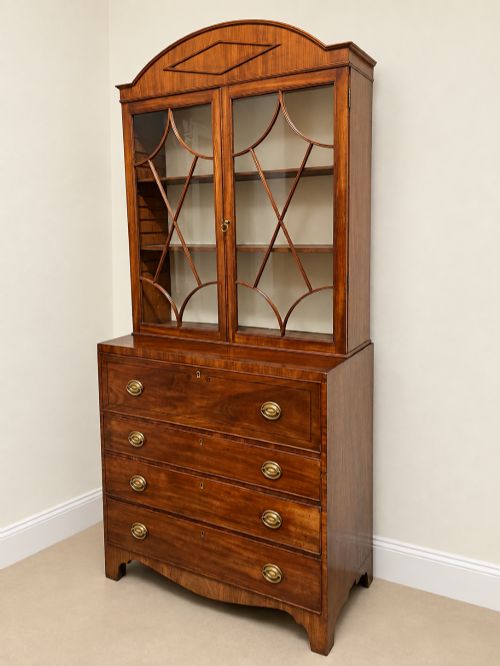
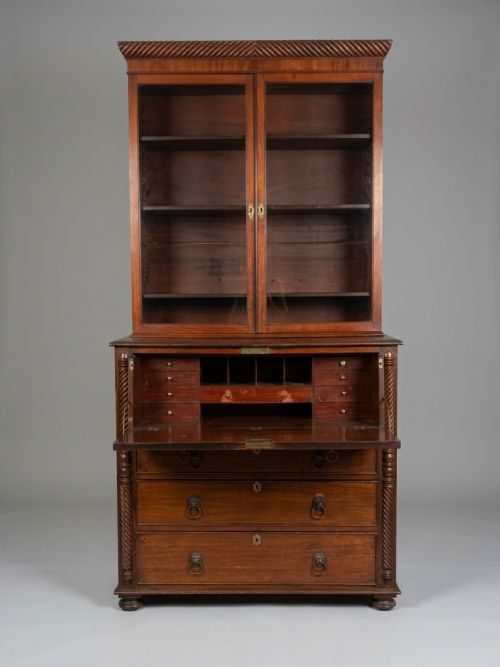
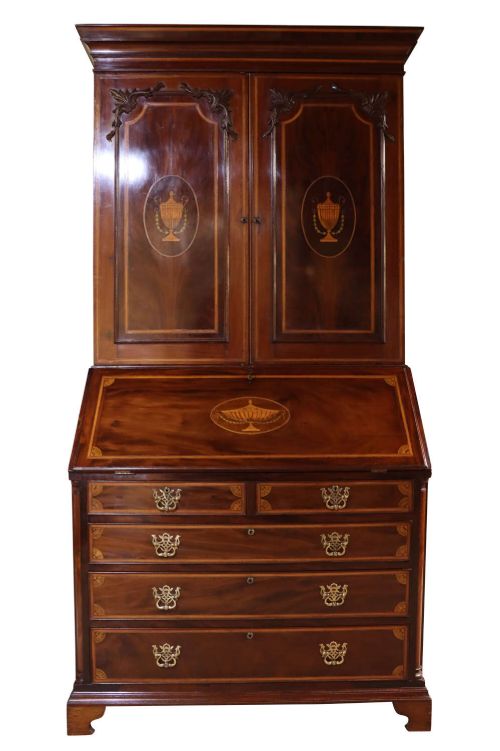
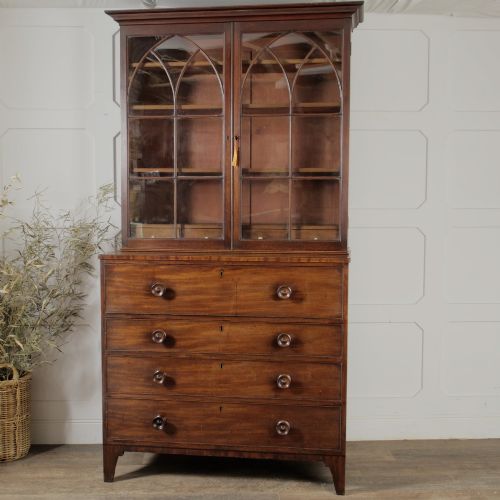
A regency fall front desk takes several forms across the nineteenth century, appearing as secretaire bookcases with glazed upper sections, smaller cabinets, and bureau chests of drawers. These pieces emerge predominantly from the Regency, Georgian, and William IV periods, carrying the heavy architectural lines characteristic of the era.
The defining feature across these variations is the hinged writing flap that drops forward to create a surface for correspondence, concealing small drawers, pigeonholes, and compartments inside. Makers combine these fitted interiors with sturdy exterior cabinetry in mahogany, rosewood, and walnut, often raised on bracket feet or turned legs.
Materials and construction
Cabinetmakers construct these desks using solid timbers and carefully cut veneers, applying flame mahogany veneer and contrasting woods like satinwood to create figured surfaces on the fall front and drawer fronts. Secondary woods provide structural stability inside the hidden compartments and carcass frames.
Detailing involves precision metalwork and glass, incorporating brass inlay, handles, and escutcheons alongside astral-glazed cabinet doors. Interiors frequently line writing surfaces in leather or baize, providing a durable platform for ink and paper.
Regency Fall Front Desk Retail Price Guide 2026
Typical asking prices for regency fall front desk among the pieces listed under this phrase on Sellingantiques today, from the lower quarter to the upper quarter. They describe what is for sale here now, not the wider market.
Many fall front desks conceal tiny hidden drawers behind sliding panels, designed to guard private correspondence from curious houseguests.
Distinctions in quality
The standard of a regency fall front desk rests on the selection of timber and the precision of its veneers, where highly figured flame mahogany or rosewood demonstrates superior craftsmanship. Grain matching across drawer fronts and the fall front indicates the maker's attention to visual harmony.
Interior architecture further separates individual pieces, distinguishing simple pigeonholes from complex arrangements of secret compartments, satinwood drawers, and fine cockbeading. The integration of brass inlay and the sharpness of carved details mark the distinction between standard workshop production and finer cabinet work.
Gillows·Gillington of Dublin
The Regency Fall Front Desk Glossary
- Fall front
- A hinged panel that drops down to form a horizontal writing surface. When closed, it conceals the fitted interior of drawers and pigeonholes.
- Secretaire
- A piece of furniture containing a built-in writing drawer or drop-front compartment. The term often describes tall bookcase combinations.
- Astral glazed
- Cabinet doors fitted with delicate wooden glazing bars forming geometric patterns across the glass panes. This style keeps books visible while protected from dust.
- Escritoire
- A French term for a writing cabinet or desk with a fall front. These pieces often feature compact proportions for domestic studies.
Regency Fall Front Desk: Frequently Asked Questions
How were these desks used historically?
These desks served as private writing spaces for correspondence, household accounts, and the storage of important documents in the home. The drop-front flap provided an immediate workspace that could be locked shut to secure private papers when guests were present.
Upper bookcase sections housed personal libraries and ledgers, while the lower drawers held stationery and larger volumes. The internal compartments kept inkstands, quails, and letters organised out of sight.
How do I live with a fall front desk?
Living with a regency fall front desk involves treating the antique wood and writing surfaces with care, keeping them away from direct heat sources and strong sunlight. The drop-front panel requires a flat position when opened to avoid putting strain on the brass hinges.
Regular dusting and occasional treatment with appropriate wax maintain the finish of the flame mahogany or rosewood veneers. The internal compartments provide practical storage for modern stationery, tablets, or small collections.
How can I tell the periods apart?
Differentiating periods relies on observing shifts in proportion, timber choice, and decorative motifs across the nineteenth century. Earlier Georgian and Regency examples often feature crisp architectural lines and brass inlay, while later William IV and Victorian pieces tend towards heavier, bolder proportions.
Secondary woods, construction methods of the interior small drawers, and the style of the feet offer further clues to the exact decade of manufacture. Glazing bars on upper bookcase doors also transition from delicate geometric leadwork to heavier wood profiles over time.