



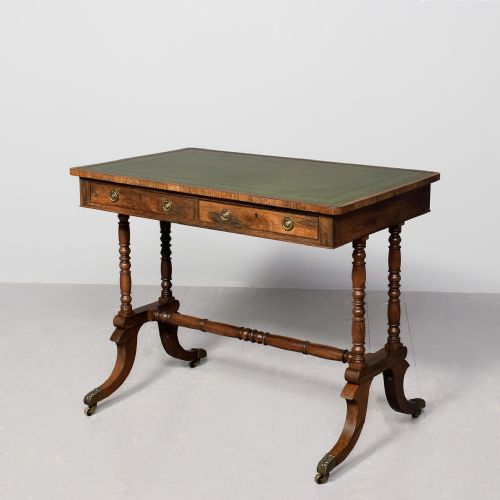

Regency Executive Table
A regency executive table commands a room with architectural authority, serving as a spacious partner desk or freestanding library table designed for serious daily work.
Regency Executive Table
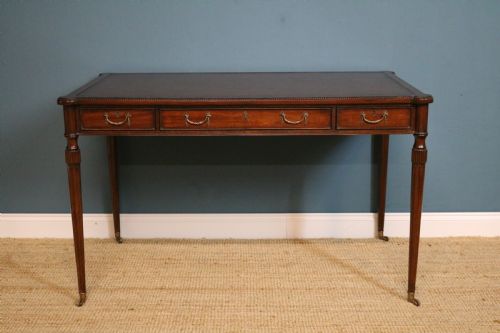
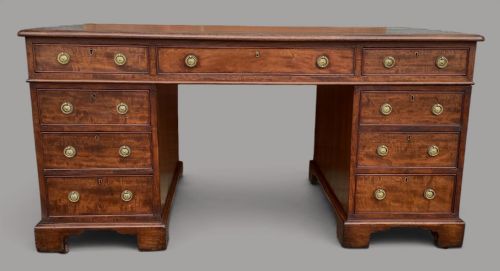
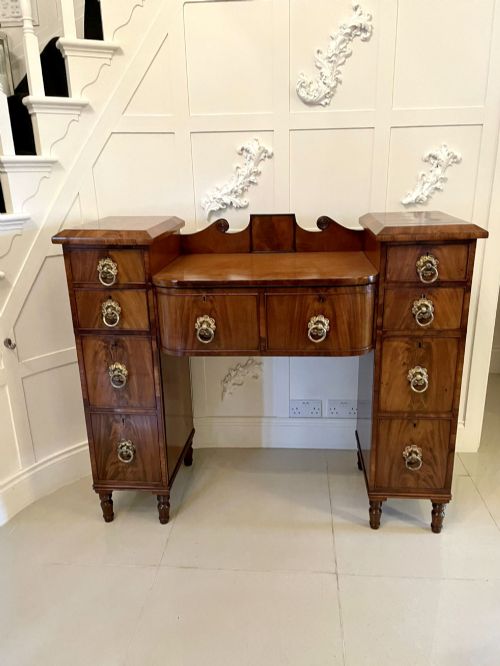
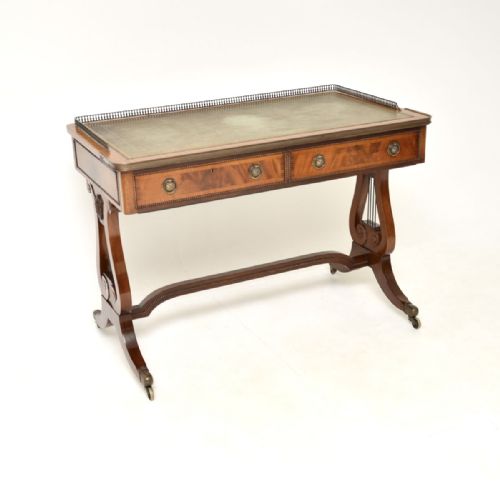
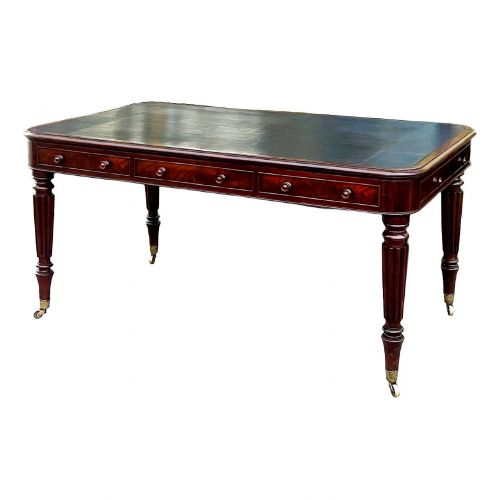
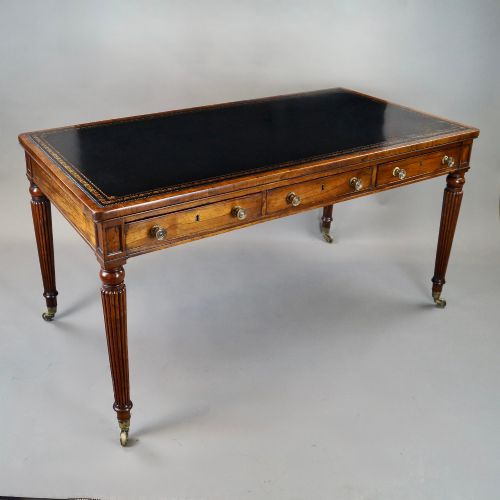
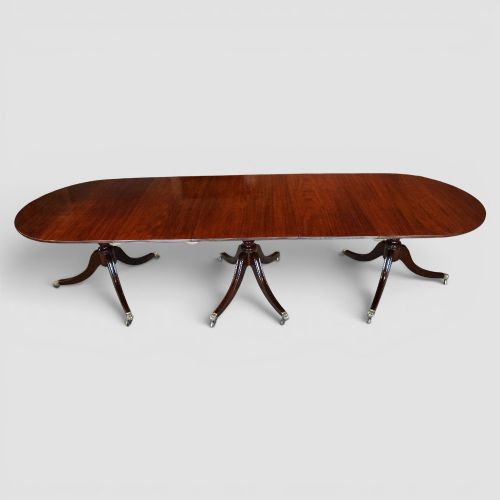
A regency executive table encompasses large library tables, partner writing desks, and pedestal desks built primarily during the early nineteenth century and later nineteenth-century revivals. These substantial pieces provide generous writing surfaces, frequently fitted with multiple drawers and inset leather tops for practical administrative tasks.
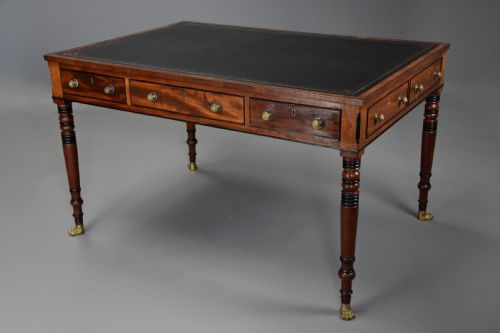
The selections span authentic Regency, George IV, and William IV periods alongside later Regency revival examples from the early twentieth century. Common forms include freestanding library tables meant to sit centrally in a room and double-sided partners desks designed for simultaneous use.
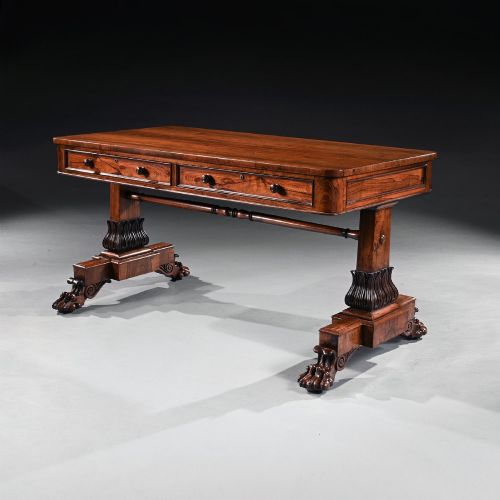
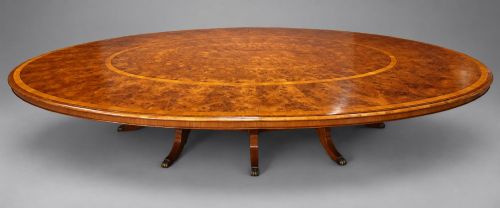
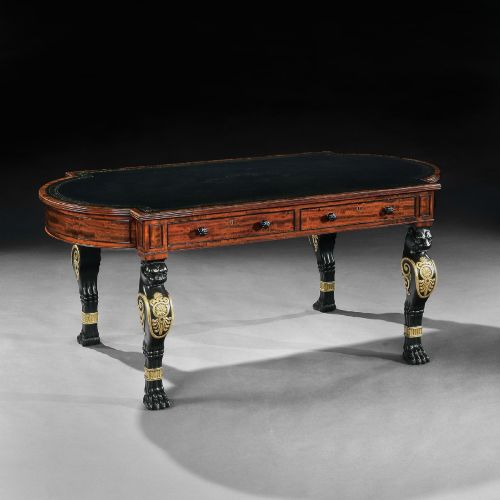
Makers and designers of the period such as George Smith, Richard Bridgens, and Gillows of Lancaster established the vocabulary of these executive tables. Pieces range from straightforward mahogany library tables to grander rosewood, gonçalo alves, and burr oak examples featuring carved details like lion paw feet.
Materials and Construction
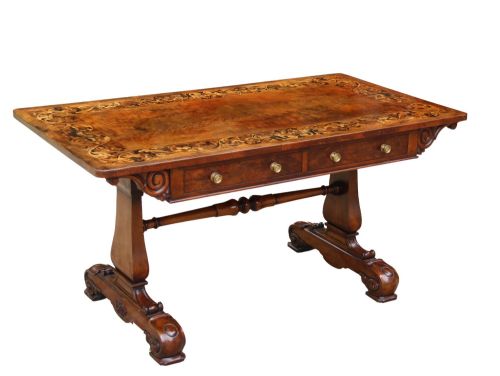
Cabinetmakers constructed these tables using dense timbers including Cuban mahogany, rosewood, gonçalo alves, burr oak, and amboyna, often highlighted with contrasting ebony inlay and brass fittings. Surfaces frequently received inset panels of tan or coloured leather to provide a durable writing plane.
Structural integrity relied on heavy pedestal bases, pillar supports, and multiple drawer configurations joined with traditional cabinetmaking techniques. Carved wooden elements, such as lion paw feet and classical neoclassical motifs, were hand-chiseled to accent the heavy timber frames.
Regency Executive Table Retail Price Guide 2026
Typical asking prices for regency executive table among the pieces listed under this phrase on Sellingantiques today, from the lower quarter to the upper quarter. They describe what is for sale here now, not the wider market.
Listings feature woods including mahogany, rosewood, gonçalo alves, burr oak, and amboyna across the nineteenth century and subsequent revival periods.
Evaluating Execution
Quality rests in the selection of timber veneers and the depth of the natural patina achieved across expansive desk tops. Finely figured rosewood or Cuban mahogany paired with crisp, hand-carved mahogany feet distinguishes exceptional commissions from standard utility pieces.
The sophistication of internal joinery, drawer lining, and brass hardware configuration separates standard workshop production from attributed pieces in the manner of Gillows. Proportion, scale, and the retention of original leather writing surfaces further define the upper tier of these executive tables.
George Smith·Richard Bridgens·Gillows of Lancaster·Gillingtons of Dublin
The Regency Executive Table Glossary
- Partners desk
- A large double-sided desk designed with drawers and cupboards on both faces so two people could work opposite each other. This form served boardroom and executive administrative functions.
- Library table
- A freestanding table with a finished back intended to sit in the centre of a room rather than against a wall. These typically feature drawers beneath the top and stand on pillar or pedestal bases.
- Gonçalo alves
- A dense exotic hardwood prized for its striking contrasting grain patterns, utilised in high-status nineteenth-century tables. It appears frequently in robust library furnishings.
- Patina
- The lustrous surface sheen developed through age, wax application, and use. A fine faded patina indicates genuine historic surface evolution.
- Neoclassical
- A style drawing inspiration from classical antiquity, featuring restrained classical motifs, symmetry, and architectural proportion. This aesthetic frequently guides the carved details on Regency tables.
Regency Executive Table: Frequently Asked Questions
What is a regency executive table used for?
These large tables function as primary workspaces, library desks, or central boardroom tables. Their generous proportions and multiple drawers accommodate heavy administrative tasks and storage.
Freestanding formats allow them to anchor the middle of a study or office rather than pushing against a perimeter wall.
What woods were used for these desks?
Cabinetmakers relied heavily on dense tropical hardwoods, primarily Cuban mahogany and richly figured rosewood. More ambitious commissions incorporated exotic selections like gonçalo alves, burr oak, and amboyna.
Inlays of contrasting ebony and brass fittings frequently accented these primary timbers.
Are these tables suitable for daily modern work?
Their robust construction and expansive surface areas make them exceptionally practical for contemporary offices and studies. The deep drawers provide ample modern stationery storage.
Leather top inserts offer a durable, classic writing plane suited to daily paperwork and laptop use.