


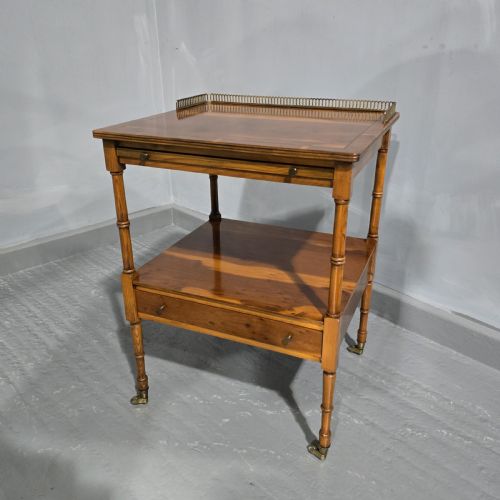


Regency Etagere Table
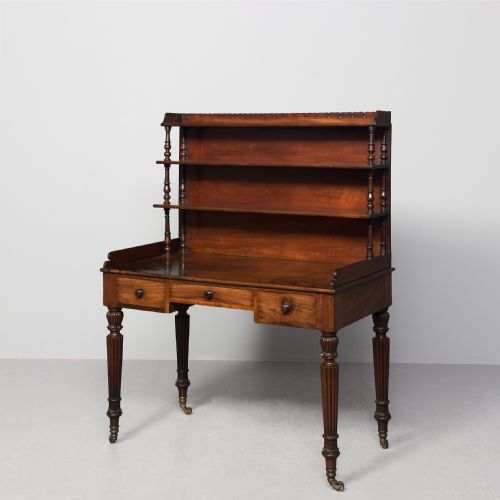
A regency etagere table is an open tiered stand built to display or hold items within a room.
Regency Etagere Table
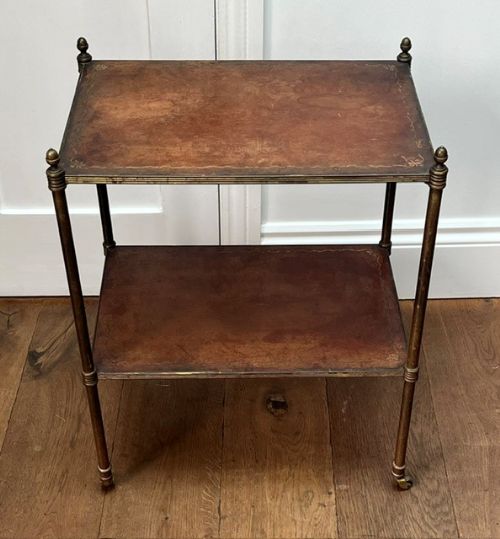
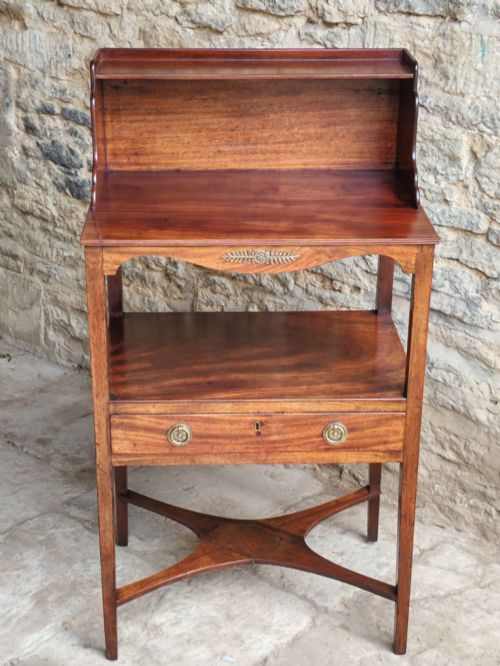
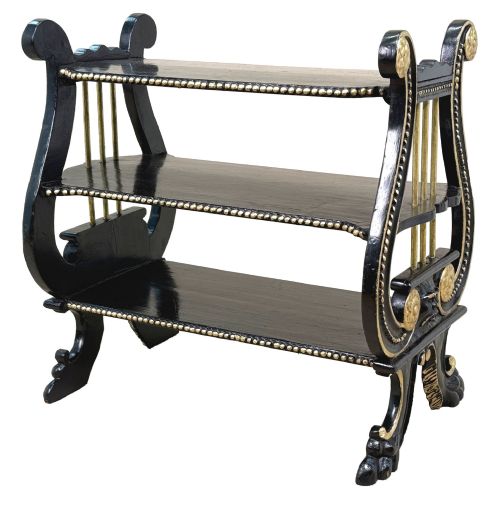
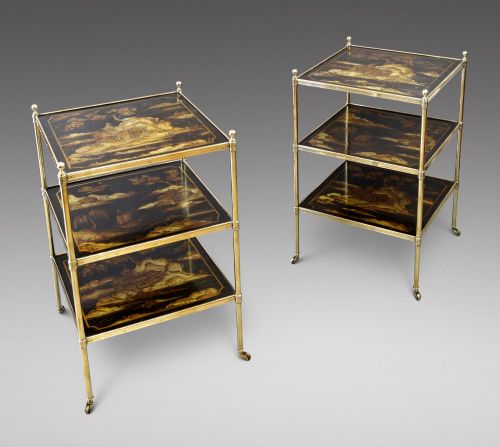
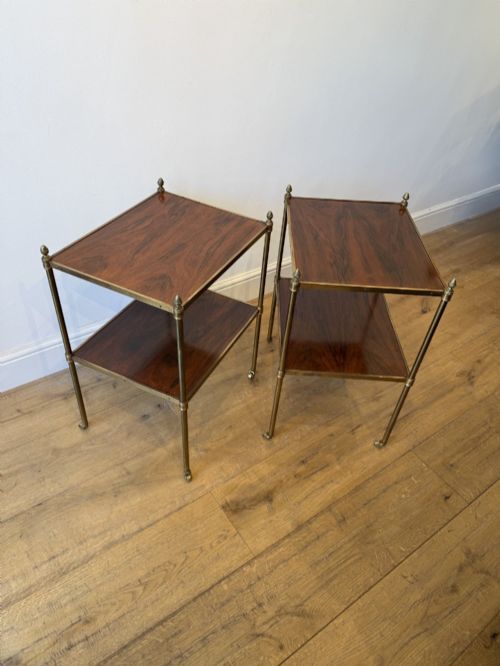
A regency etagere table typically takes the form of a multi-tiered open display stand or occasional table.
The pieces appearing on this page span several periods, most notably the Regency era alongside nineteenth century and Georgian examples.
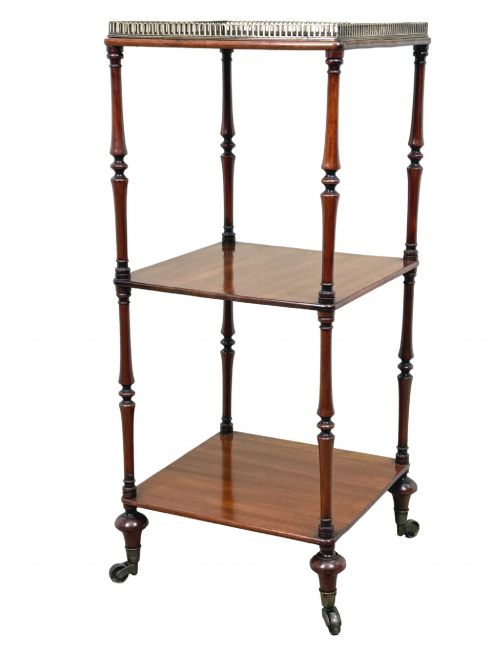
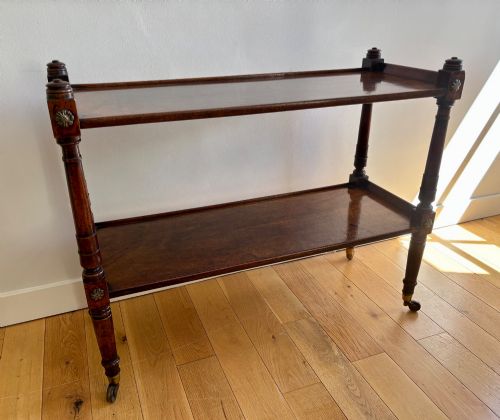
Forms range from simple two-tier occasional tables and side tables to three-tier whatnots and dumb waiters.
How they were made
Cabinet makers utilised dense hardwoods such as mahogany, rosewood, oak and walnut for the framework and tiers.
Details often include brass mounts, leather inserts, lacquer finishes and ebonised or parcel gilt treatments.
Construction relies on stacked tiers supported by slender uprights or columns.
Listings feature woods including mahogany, rosewood, oak, walnut, yew, burr elm and birdseye maple.
What varies in quality
Quality rests upon the selection of timber figures, such as burr elm, birdseye maple or Cuban mahogany.
The refinement of turned uprights and the integration of brass or leather components distinguish finer examples.
Attribution to known workshops or makers elevates the standing of a piece.
James Mein of Kelso·Gillows·Mallett of London
The Regency Etagere Table Glossary
- Etagere
- An open piece of furniture with shelves or tiers for displaying small objects or serving. The form became popular during the Regency period.
- Whatnot
- A multitiered storage and display unit used for books or ornaments. It shares a similar form to the etagere.
- Dumb waiter
- A tiered serving table or trolley used in dining rooms. Examples appear in mahogany and other woods.
- Cuban mahogany
- A dense, dark timber utilised in high-grade furniture manufacture. It shows a rich grain when polished.
Regency Etagere Table: Frequently Asked Questions
What is a regency etagere table?
A regency etagere table is a tiered open stand designed for display or auxiliary surface use.
Such pieces range from two-tier occasional tables to multi-tier whatnots.
How were these tables used?
These tables served as portable display stands for ornaments, books or serving items.
Many functioned as side tables, bedside tables or serving trolleys in period interiors.
What woods were used?
Cabinet makers utilised timbers such as mahogany, rosewood, oak and walnut.
Decorative variations include birdseye maple, burr elm and ebonised wood.
How to tell periods apart?
Period identification relies on timber selection, structural detailing and turned upright designs.
Georgian and Regency pieces contrast with later nineteenth century and revival examples.