




Regency Entryway Furniture
Regency entryway furniture brings architectural discipline and striking timbers into the hall, offering both formal presence and practical seating.
Regency Entryway Furniture
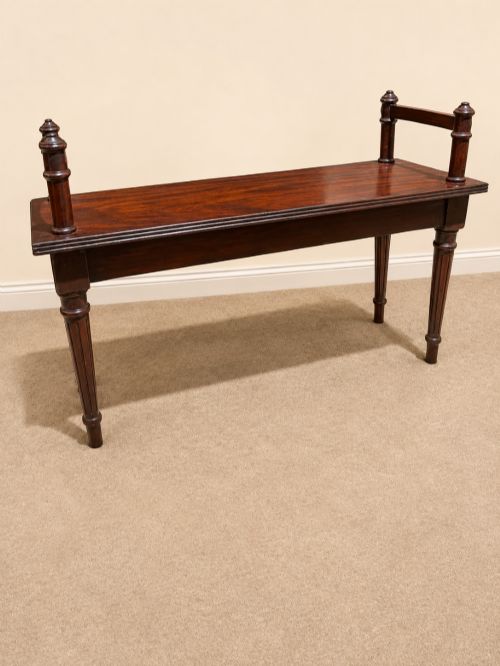
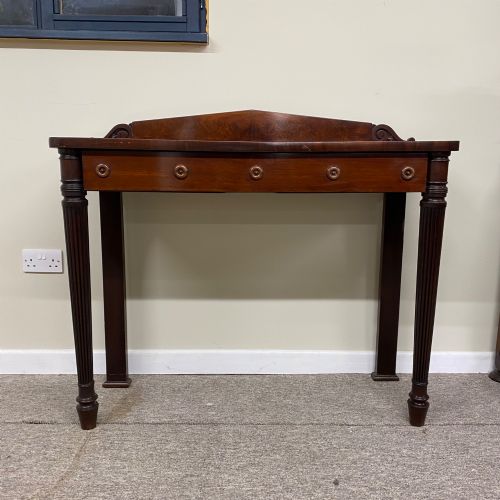
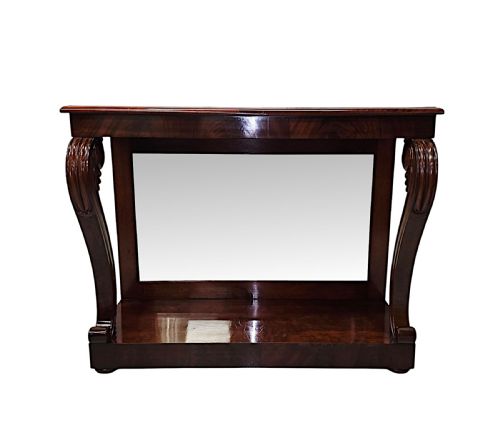
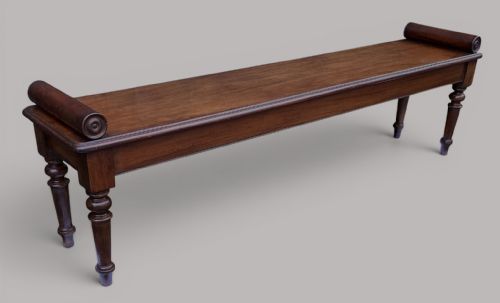
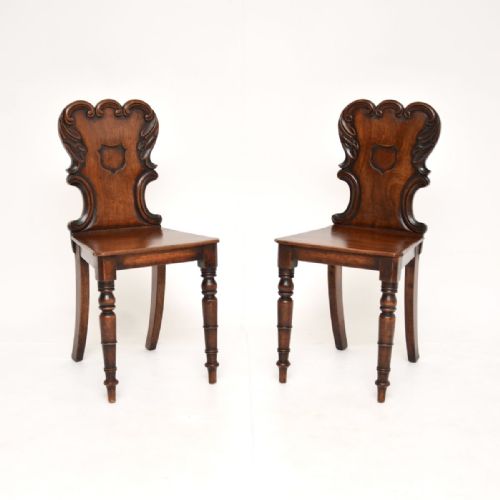
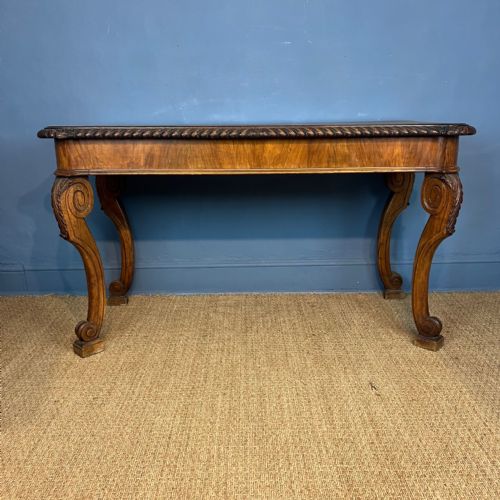
When you search for regency entryway furniture, you encounter pieces designed to furnish the halls and reception rooms of substantial houses during the early nineteenth century. The selection centres heavily upon mahogany hall chairs, console tables, and long benches intended for placement against a wall.
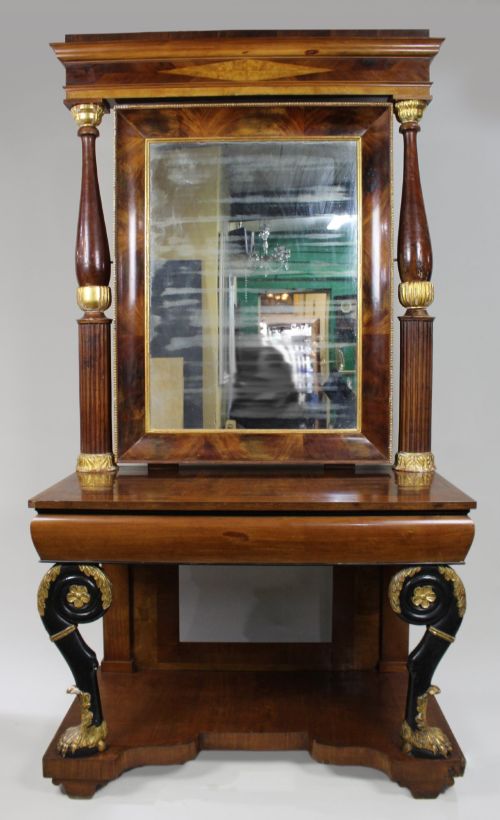
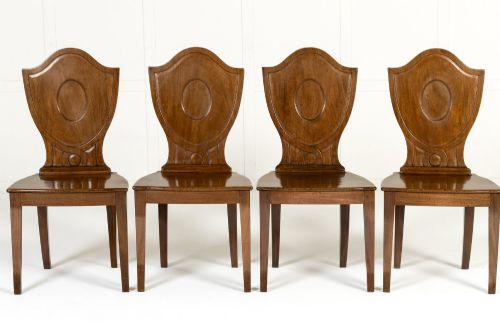
The objects span periods from the Georgian era through the Regency and William IV reigns, capturing styles that range from plain English vernacular to Irish Regency and Scottish interpretations. Hall chairs typically feature solid timber seats and shaped backs, whilst console tables frequently pair polished mahogany or pollard oak with giltwood and mirror glass.
Makers such as Gillows and Gillingtons appear among the workshop attributions, alongside robust Scottish oak and walnut examples. You find furniture built to withstand the traffic of an entrance hall whilst maintaining a strict classical line.
Materials and Technique
Makers relied primarily upon dense solid mahogany, complemented by pollard oak, walnut, and ebonised timber for visual contrast. Giltwood highlights and brass mounts accent the primary woods on console tables and pier mirrors, catching the light in narrow corridors.
Construction techniques prioritise structural strength in seating through pegged joints and heavy turnings, whilst cabinetwork on console tables employs finely figured veneers applied to stable secondary timbers. Carved details on chair shields and bench rails are hand-executed rather than moulded.
Regency Entryway Furniture Retail Price Guide 2026
Typical asking prices for regency entryway furniture among the pieces listed under this phrase on Sellingantiques today, from the lower quarter to the upper quarter. They describe what is for sale here now, not the wider market.
Six-foot benches remind us that Georgian hallway guests required considerable room to sit while waiting for the master of the house.
Quality and Distinction
Superior examples distinguish themselves through the choice of timber, particularly highly figured mahogany or well-matched pollard oak veneers on console tables. The crispness of hand-carved ornament, such as shield backs on hall chairs or parcel gilding on mirror frames, separates standard workshop output from distinguished cabinet-making.
Proportion and scale dictate the success of these pieces in an interior, with substantial six-foot benches and console tables of balanced massing representing the upper tier of design. Original surfaces and untouched patination carry far more weight than heavily restored or later surfaces.
Gillows·Gillingtons of Dublin
The Regency Entryway Furniture Glossary
- Console Table
- A table designed to be fixed against a wall, frequently supported by front legs or brackets and paired with a matching pier mirror above.
- Hall Chair
- A rigid wooden seat with a solid timber panel back, often carved with family crests or heraldic shields, intended for occasional use in an entrance hall.
- Pier Mirror
- A tall looking glass designed to hang on the narrow section of wall between windows, frequently placed directly above a console table.
- Parcel Gilt
- Partially gilded woodwork where gold leaf is applied only to specific carved details to contrast against the dark timber beneath.
- Pollard Oak
- Timber taken from trees that have been pollarded, producing a dense, speckled grain pattern highly prized for decorative veneer.
Regency Entryway Furniture: Frequently Asked Questions
What is regency entryway furniture?
It encompasses console tables, hall chairs, and benches made during the early nineteenth century to furnish formal entrance halls and corridors.
These pieces combine classical architectural motifs with durable timbers like mahogany and oak to create a striking first impression in a home.
How were hall chairs used?
Hall chairs served as functional seating for visitors waiting in entrance halls, rather than comfortable chairs for long periods of sitting.
Their rigid wooden construction and upright backs encouraged correct posture and allowed servants to move them easily during cleaning.
Where should I place a console table?
Console tables sit flat against a wall, frequently in a hallway or reception room beneath a pier mirror or painting.
Their shallow depth provides a surface for lighting or decorative objects without blocking the walkway of a narrow space.
How do I identify William IV style?
William IV furniture, dating from the 1830s, displays heavier proportions and bolder classical carving than earlier Regency work.
Look for robust scroll legs, rich walnut or mahogany grains, and architectural elements that lean towards Victorian mass.