
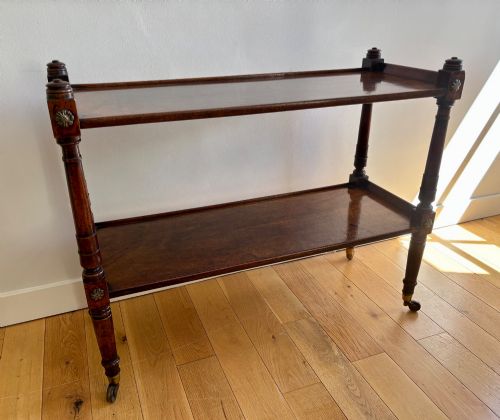


Regency Display Table
A regency display table brings tiered elegance and practical display space to a room, drawing the eye with rich timber and refined proportion.
Regency Display Table
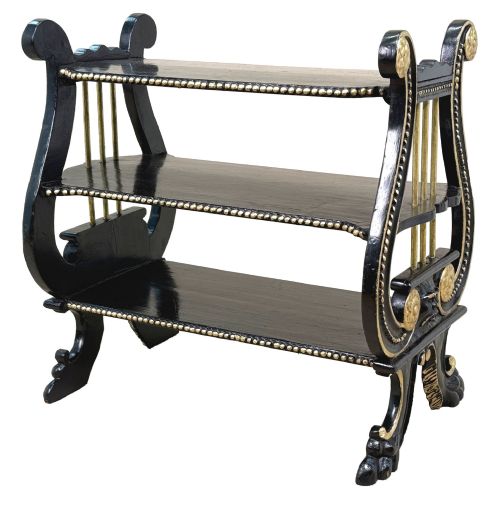
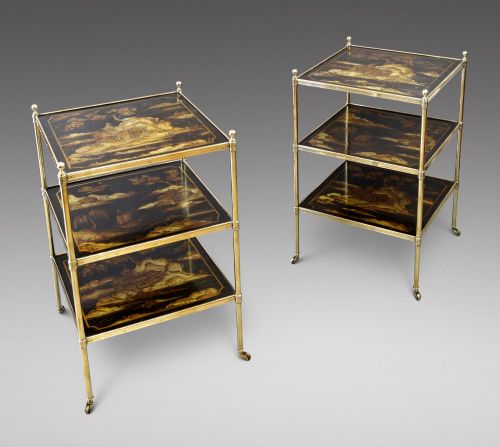
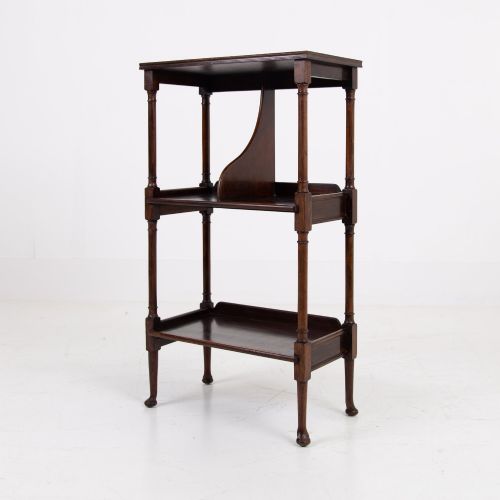
When you search for a regency display table, you encounter a variety of multi-tiered furniture designed to exhibit ceramics, books, and decorative objects. The selection spans open etageres, multi-tiered whatnots, side tables, and specialised display cabinets originating from the early nineteenth century onward.
The pieces on this page lean heavily toward classic mahogany and rosewood forms, alongside later revivals from the Victorian era and the nineteen-thirties. You will find compact corner stands, pedestal planters, and tiered serving tables that reflect the functional versatility demanded by period households.
How they were made
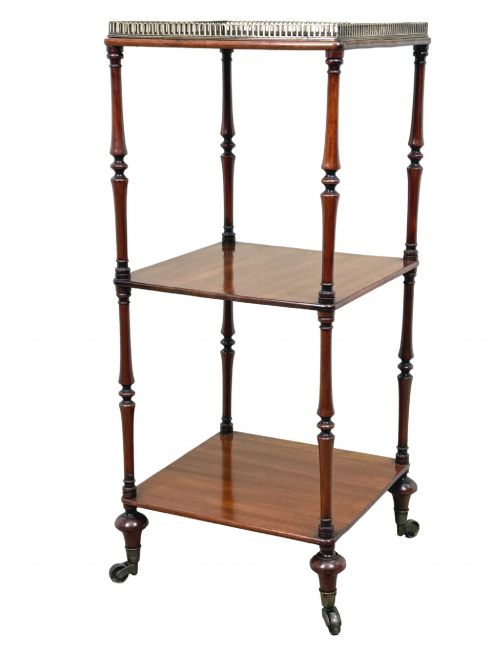
Cabinet makers utilised dense native and exotic timbers, framing shelves in rich mahogany, rosewood, and burr elm supported by slender turned columns. Brass mounts, ebonised accents, and marble tops provide structural contrast and surface durability.
Joinery techniques relied on precise mortise and tenon construction to support multiple open tiers without heavy side panels. Surface treatments range from polished wood grains to parcel gilding and lacquer work.
Listings feature woods such as mahogany, rosewood, and walnut, alongside marble and brass elements.
What varies in quality
The distinction between standard utility items and exceptional pieces rests in the choice of timber and the refinement of the turning. Finer examples display carefully matched veneer grains, substantial brass details, and harmonious proportions across every tier.
Design complexity also sets tiers apart, where simpler three-tier stands contrast with pieces incorporating drawers, fine spindle galleries, or attribution to notable workshops.
Gillows·Jennens and Bettridge·Baetens London
The Regency Display Table Glossary
- Étagère
- A set of open shelves for displaying small ornaments or books, typically with multiple tiers supported by slender uprights.
- Whatnot
- A piece of furniture consisting of shelves one above another, used for displaying ornaments or holding books and writing materials.
- Centre table
- A freestanding table designed to be viewed from all sides, placed centrally within a room rather than against a wall.
- Jardiniere stand
- An ornamental stand or pedestal designed specifically to hold a plant pot or flower container.
- Cellarette
- A lockable container or cabinet used for holding bottles of wine, often integrated into the lower section of dining or side furniture.
Regency Display Table: Frequently Asked Questions
What is a whatnot table?
A whatnot is a multi-tiered shelving unit designed for displaying decorative objects, china, and books within a principal reception room.
These pieces emerged in popularity during the Georgian and Regency periods to provide vertical storage and display surface without occupying excessive floor space.
Where were etageres placed?
Etageres were traditionally positioned against drawing room walls or in corners to hold collections of small ceramics, glassware, and decorative trinkets.
Their open tiers allowed guests to inspect items from multiple angles while contributing to the decorative scheme of the interior.
How do I identify a Regency period piece?
Identification relies on observing characteristic proportions, timber selection such as figured mahogany or rosewood, and classical decorative motifs.
Turned supports, brass details, and clean architectural lines typically distinguish pieces produced during this era from later Victorian revivals.
Can these tables support heavy items?
While sturdy in construction, tiered display tables were built primarily for ceramics, books, and decorative ornaments rather than heavy loads.
The slender turned columns and multiple platforms distribute weight across the structure, making them ideal for light display purposes.