



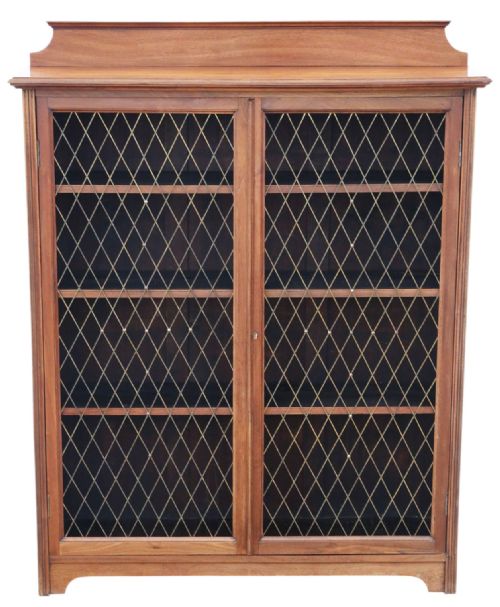

Regency Display Case
A regency display case brings refined timber and clear glazing together to show off treasured objects in any room.
Regency Display Case
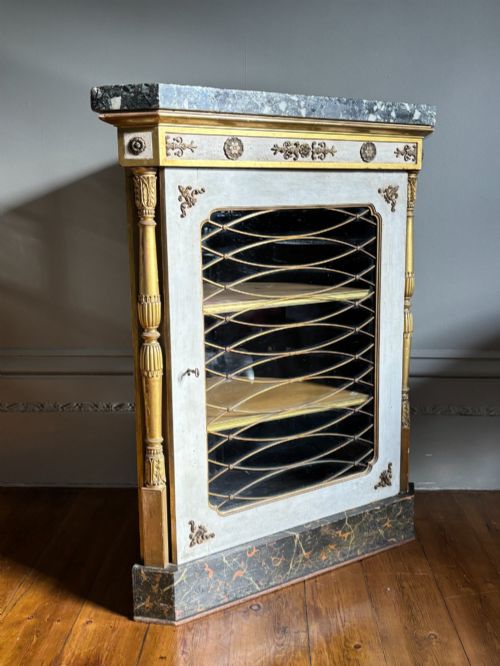
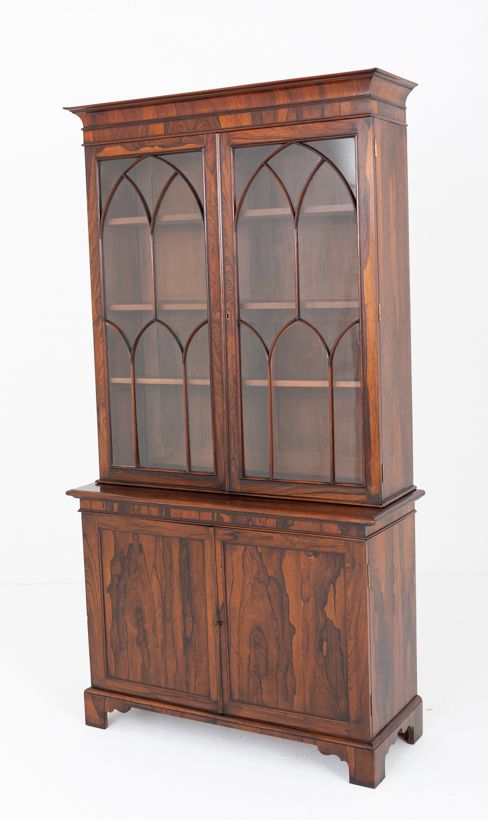
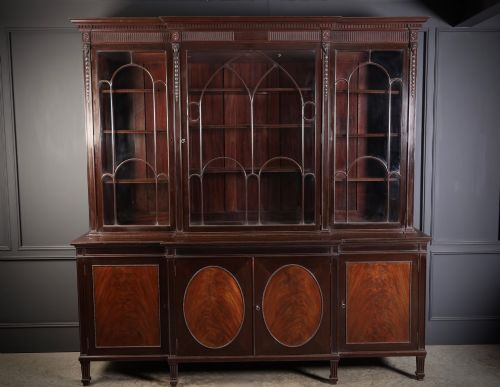
A regency display case unites timber framing with glazed doors to protect and exhibit books, curiosities, and fine objects. These pieces encompass corner cupboards, hanging wall cabinets, and substantial breakfront bookcases spanning the nineteenth century.
The most common forms on this page include mahogany bookcases and display cabinets, alongside walnut and rosewood iterations. Makers from the period employed architectural proportions and glass panels to lighten heavy timber frames.
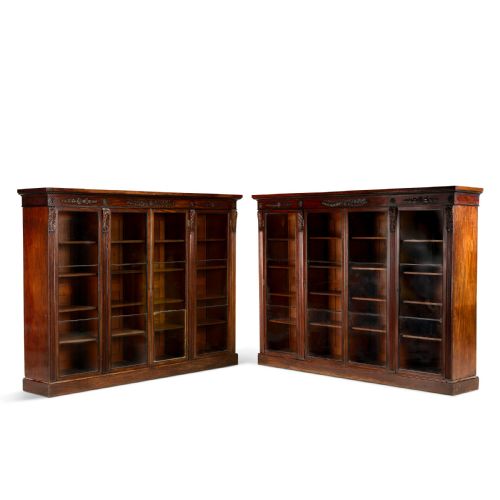
Variations range from compact corner cabinets and hanging wall units to expansive twin pedestal display cabinets and side cabinets. Each type serves a distinct spatial requirement while maintaining formal balance.
Materials and construction
Carpenters built these pieces primarily from solid and veneered mahogany, walnut, and rosewood, often pairing dark timbers with brass hardware and mirrored backs. Glazing bars segment the glass doors into neat geometric panes that structure the front elevation.
Internal arrangements feature adjustable wooden shelving designed to accommodate varying heights of books and porcelain. Painted finishes and delicate chinoiserie decoration appear alongside traditional timber surfaces to create contrasting visual textures.
Regency Display Case Retail Price Guide 2026
Typical asking prices for regency display case among the pieces listed under this phrase on Sellingantiques today, from the lower quarter to the upper quarter. They describe what is for sale here now, not the wider market.
Cabinetmakers occasionally concealed mirrored panels inside display doors to bounce afternoon sunlight across porcelain collections.
Judging quality in a regency display case
Quality rests upon the selection of timber veneers and the crispness of applied mouldings rather than mere age. Superior examples demonstrate thoughtful grain matching across large doors and precise joinery that keeps heavy timber plumb.
Hardware choice and internal detailing further separate standard utility pieces from exceptional commissions. Fine brass mounts, clean glass retention, and refined architectural proportions elevate a cabinet from basic storage to a statement of design.
Gillows·Town and Emanuel
The Regency Display Case Glossary
- Breakfront
- A cabinet whose central section projects forward from the flanking wings. This configuration breaks up long elevations and adds architectural depth to large bookcases.
- Glazing bar
- A narrow strip of wood or metal that holds individual panes of glass within a sash. These bars form structural grids across display doors.
- Twin pedestal
- A furniture base divided into two distinct supporting columns or pedestals. This format provides robust support for expansive display cabinetry.
- Pier cabinet
- A low cabinet designed specifically to stand against the narrow wall space between windows. Such pieces often incorporate mirrored backs to reflect light into darker rooms.
- Gothic Revival
- A nineteenth century design style inspired by medieval architecture. Pieces adopt pointed arches, trefoils, and vertical tracery.
Regency Display Case: Frequently Asked Questions
What is a regency display case?
A regency display case is a timber cabinet featuring glass panels designed to exhibit books and decorative objects.
These pieces range from tall breakfront bookcases to compact wall-mounted cupboards.
How were these cabinets used?
Owners used them to store leather-bound volumes, ceramic collections, and scientific instruments while protecting them from dust.
Glass doors allowed guests to admire prized possessions without handling them directly.
Where should I place a corner cabinet?
Corner cabinets fit neatly into unused room junctions to maximise floor space without obstructing walkways.
They work well in dining rooms or studies to house porcelain or glassware.
How do I date a display cabinet?
Dating relies on timber selection, construction methods, and stylistic cues such as Gothic tracery or classical proportions.
Comparing hardware styles and internal shelf adjustments also helps narrow the period.