

Regency Curved Front Chest
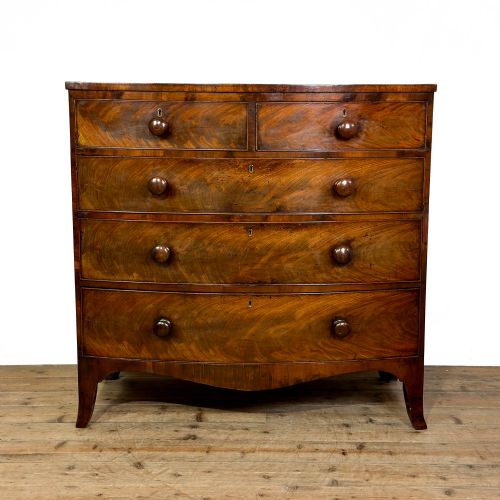
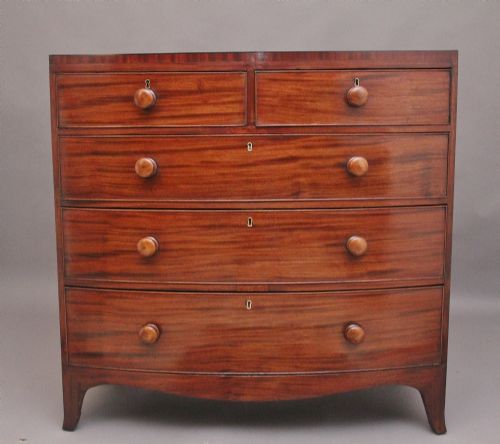
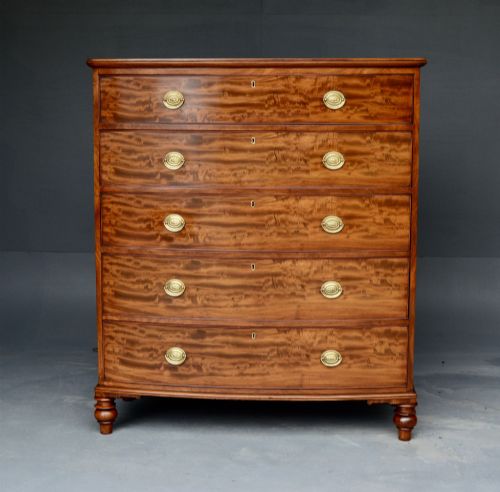
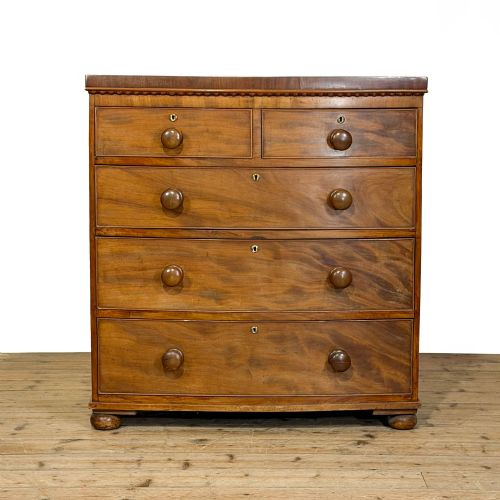
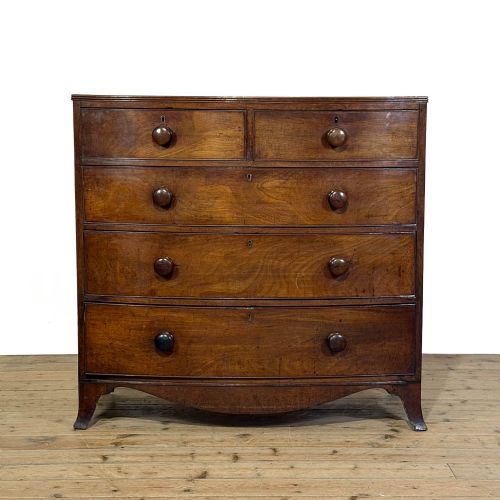
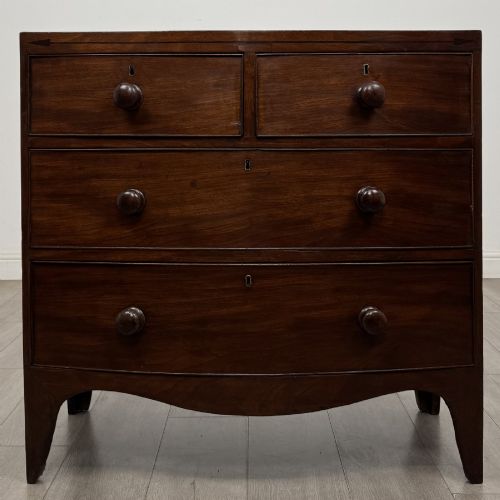
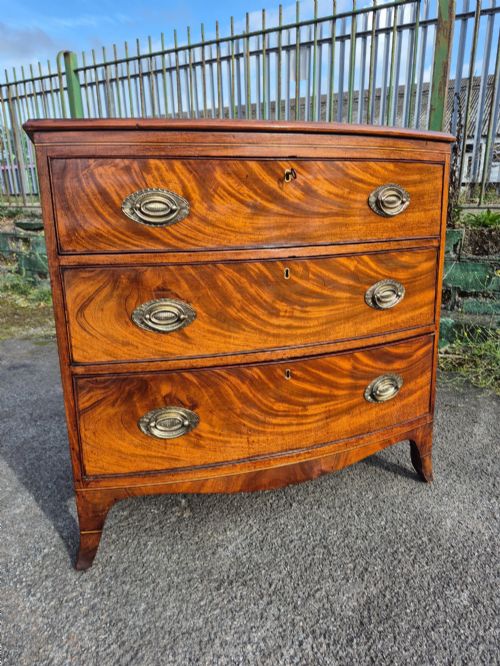
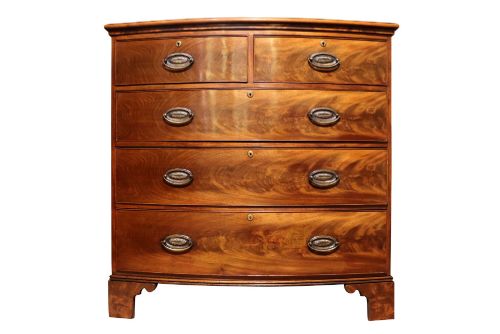
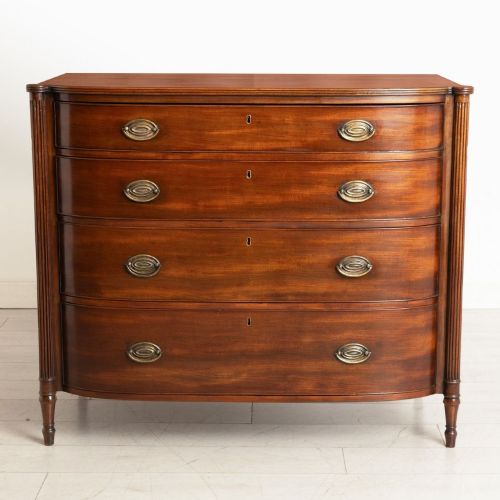
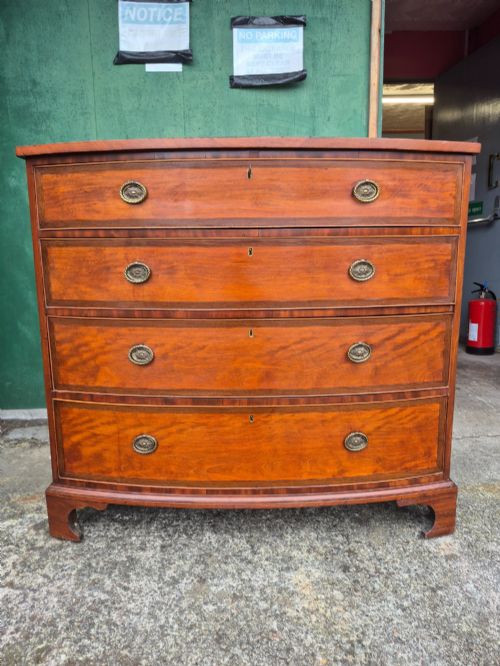
A regency curved front chest offers that characteristic convex sweep to the drawer fronts, bringing elegant proportion and practical storage to a room.
Regency Curved Front Chest
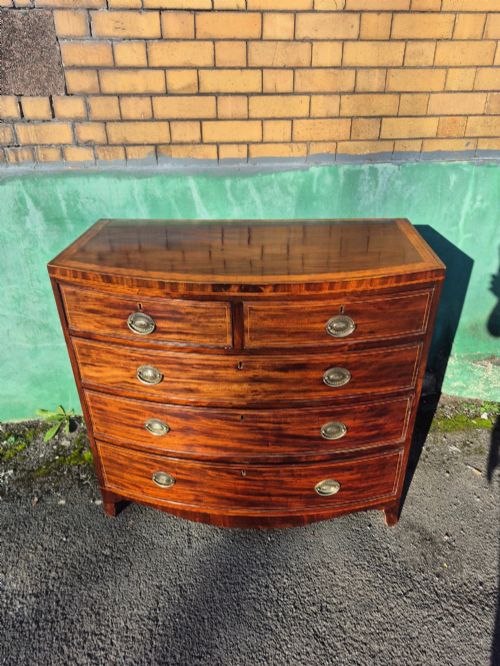
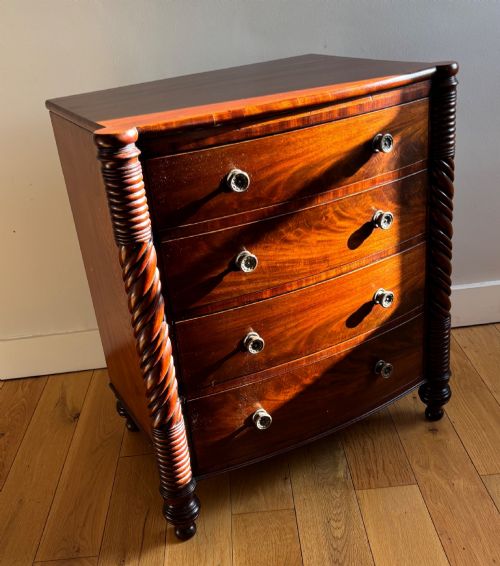
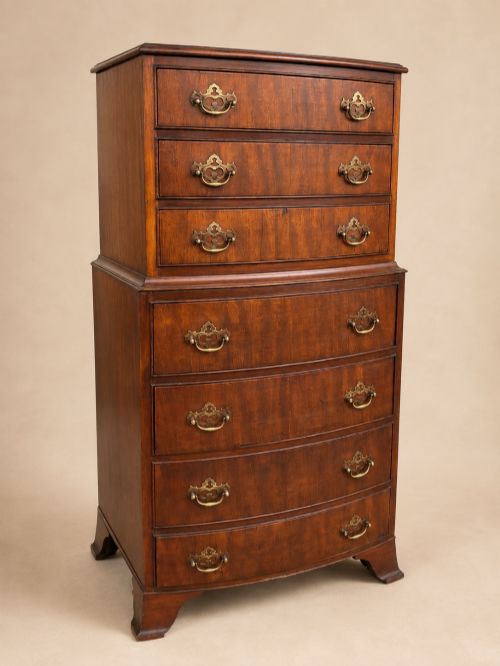
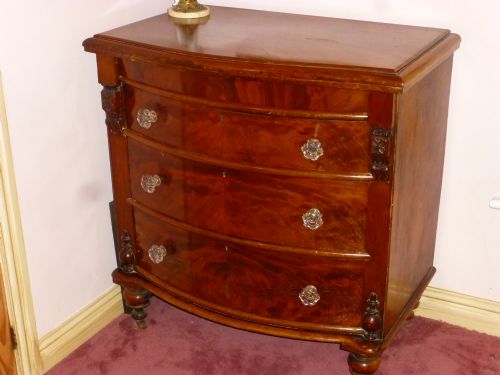
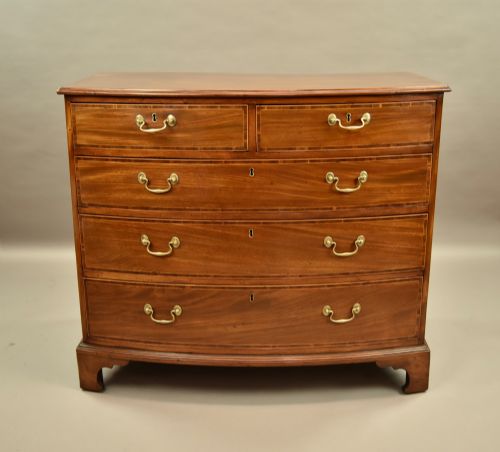
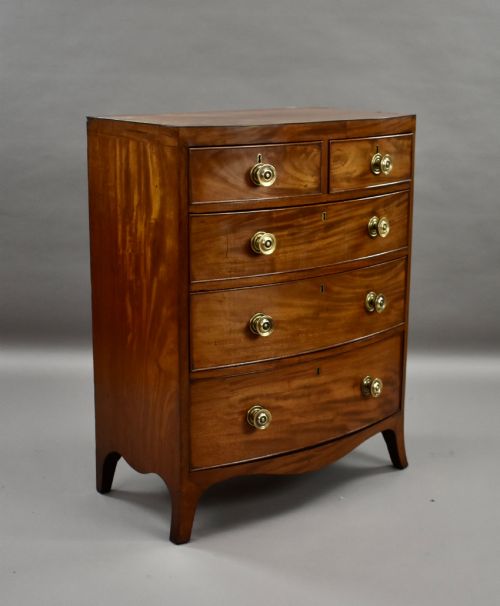
The version most commonly met on this page is the mahogany bow front chest of drawers, frequently featuring secondary timbers and occasional decorative banding. Alongside standard chests, variations include narrower proportions, small bedside cabinets, and taller chest on chest configurations spanning eighteenth century origins to later Victorian revivals.
Construction and materials
Makers relied heavily on mahogany, often selecting flame mahogany veneer to achieve striking grain patterns across the curved drawer fronts. Solid timber frames supported the curved facade, while skilful joinery ensured the drawers followed the convex radius smoothly without binding.
Surface enrichment relied on contrasting timbers and detail work rather than heavy carving. Boxwood inlay, satinwood banding, and brass hardware such as ring pulls or handles completed the construction, while occasional painted finishes appeared on specific regional pieces.
Regency Curved Front Chest Retail Price Guide 2026
Typical asking prices for regency curved front chest among the pieces listed under this phrase on Sellingantiques today, from the lower quarter to the upper quarter. They describe what is for sale here now, not the wider market.
The listings show mahogany as the dominant primary timber, accompanied by decorative boxwood inlay and satinwood banding across nineteenth century forms.
Quality and proportion
The distinction between standard examples and exceptional pieces rests upon timber selection and the precision of the curved cabinetry. Superior items display well-matched flame veneer across the drawer fronts and crisp execution of inlaid banding such as satinwood or boxwood.
Proportion and integrity dictate the upper tier of the range, visible in the harmony of the bow curve, original brass hardware, and well-fitted secret drawers or cockbeading. Lesser examples may show heavy past repairs or poorly aligned drawer runs that disrupt the sweep of the front.
Gillows
The Regency Curved Front Chest Glossary
- Bow front
- A convex curved cabinet front that swells outward in the centre. This shape defines the vast majority of the pieces found in this category.
- Serpentine front
- A furniture front curved in three parts, convex at the centre and concave at the sides. It represents a more complex variation than the simple bow front.
- Flame mahogany
- A decorative veneer cut from timber where the branch meets the trunk, producing a flame-like grain pattern. Cabinetmakers reserved this timber for the most prominent drawer faces.
- Satinwood banding
- A narrow strip of pale exotic timber inlaid around the perimeter of drawer fronts or top surfaces. This technique provided sharp visual contrast against darker mahogany.
- Cockbeading
- A small projecting rounded moulding applied to the edges of drawer frames. It protected the drawer edges and added a refined finish to the cabinet construction.
Regency Curved Front Chest: Frequently Asked Questions
What is a bow front chest?
A bow front chest is a set of drawers featuring a convex, outward-curving front that softens the silhouette of traditional cabinet furniture.
This design gained immense popularity during the Georgian and Regency periods, offering both aesthetic grace and practical interior capacity.
How do I spot a secret drawer?
Secret drawers usually occupy the frieze space directly beneath the top surface, concealed behind plain or moulded wooden panels.
Cabinetmakers integrated these hidden compartments to secure valuables, often requiring the removal of an adjacent drawer to release the spring or catch.
Are these chests suitable for modern bedrooms?
These chests integrate readily into contemporary interiors due to their compact footprints and warm mahogany tones.
The curved facades allow them to sit comfortably in smaller spaces where sharp corners might otherwise disrupt room flow.
How do I tell a Regency chest from a Victorian one?
Regency pieces generally exhibit finer proportions, crisper boxwood or satinwood inlay, and lighter framing timbers characteristic of the early nineteenth century.
Victorian interpretations often present heavier timber scantries, darker finishes, and occasionally bolder, less restrained brass hardware.