




Regency Crystal Light Fitting
A regency crystal light fitting brings unmistakable architectural presence to a room, channelling a grand historical vocabulary through brilliant cut glass and metalwork.
Regency Crystal Light Fitting
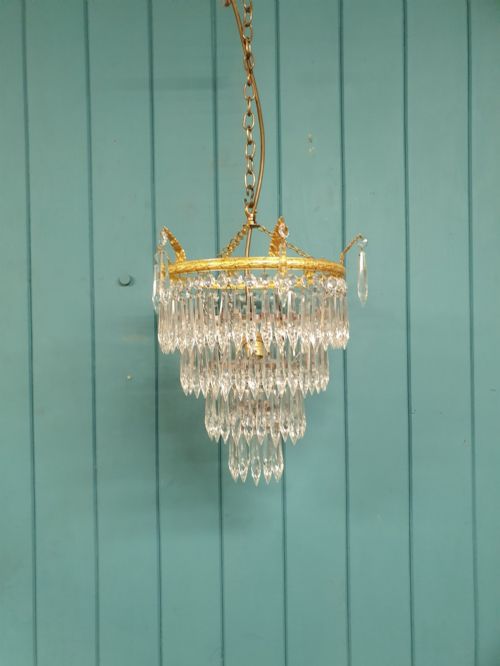
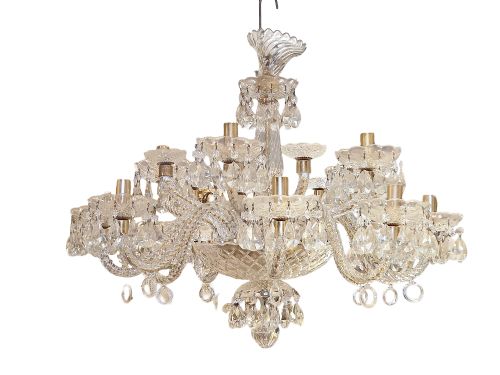
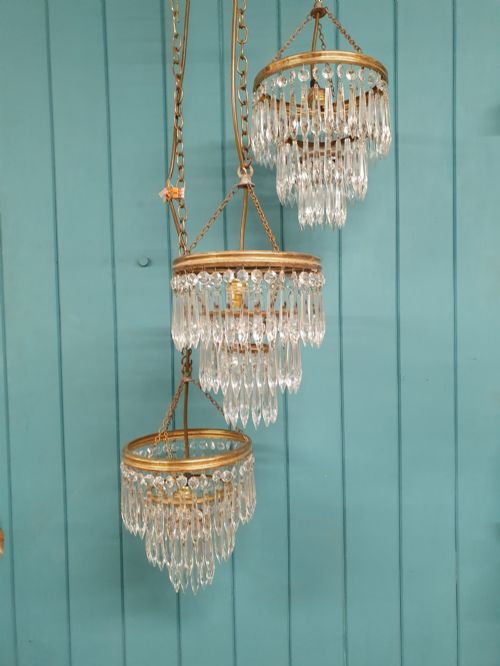
Most examples originate from the Edwardian period and the early decades of the twentieth century, alongside nineteenth-century pieces bearing French Empire or English stylistic influences. These lighting forms range from compact spike chandeliers measuring only a few inches to massive twelve-arm and twenty-arm centerpieces.
How they were made
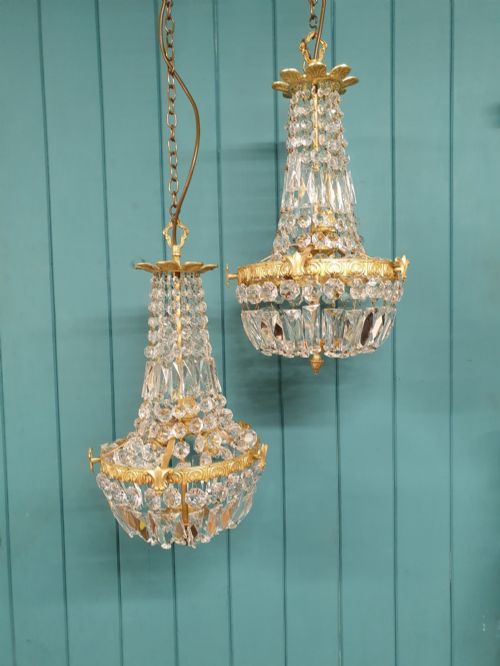
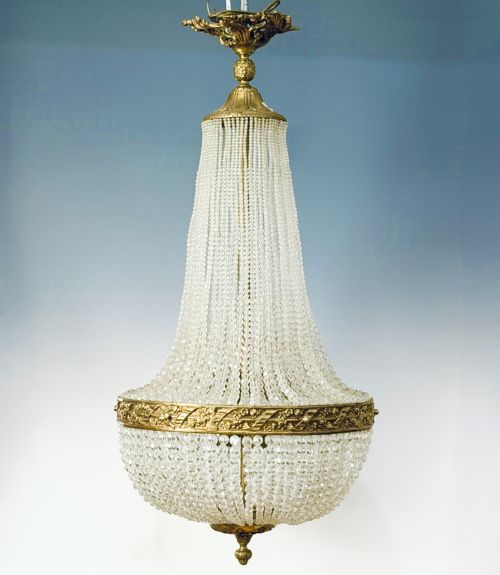
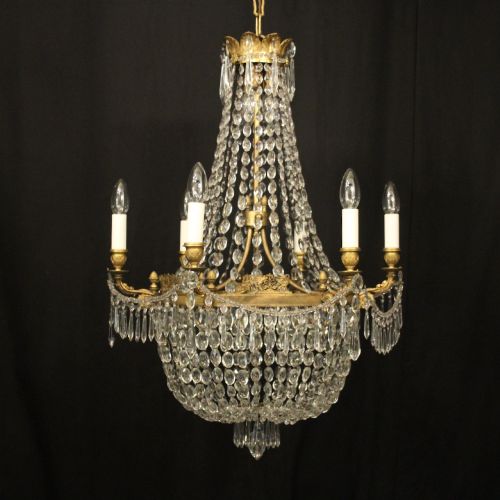
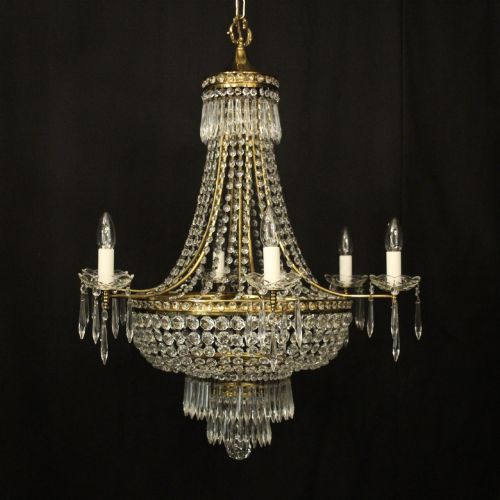
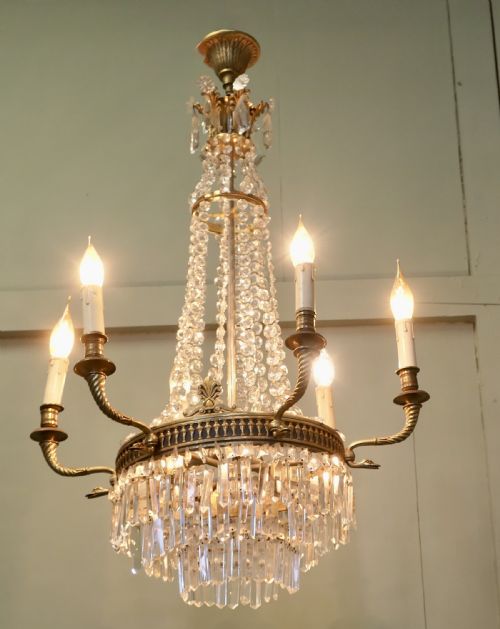
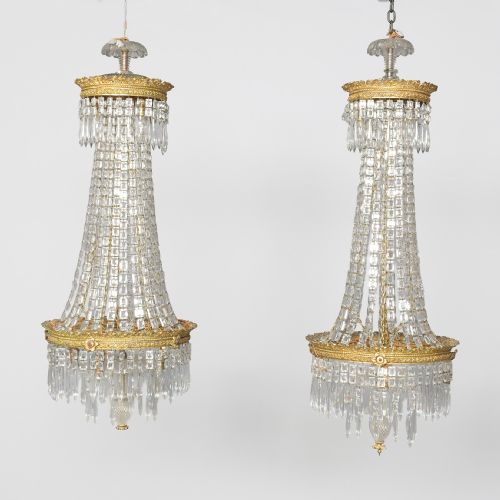
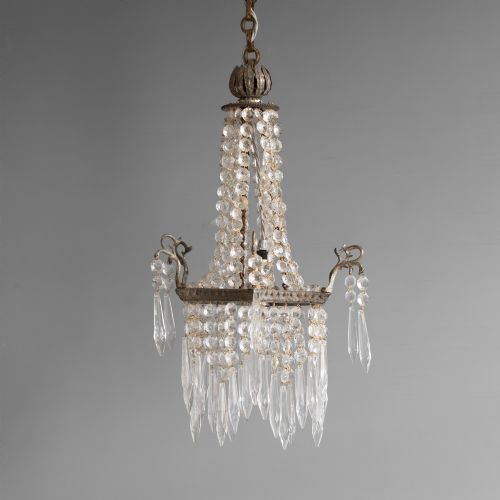
Construction relies upon a marriage of structural metalwork, primarily brass and gilt bronze, supporting intricate arrangements of cut glass and crystal drops. Frames incorporate specialised elements such as gilt candlestick covers, brass mounts, and metal rings that suspend tiers of prisms, swags, and bag formations.
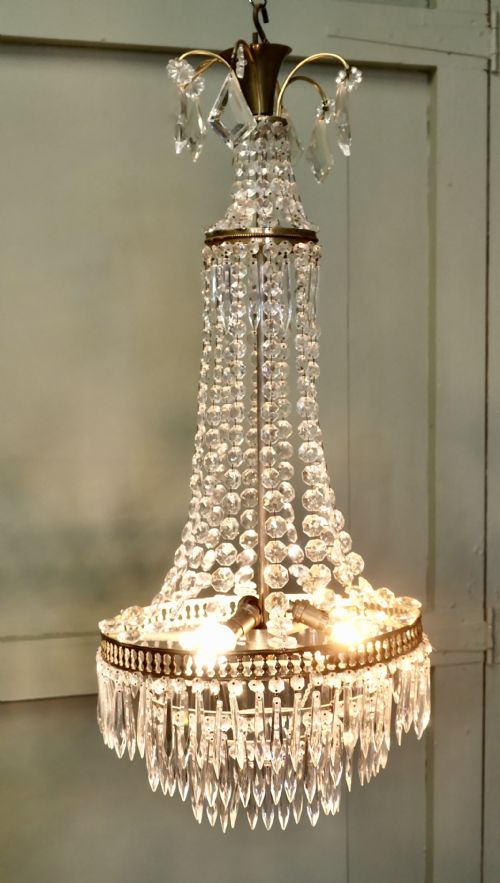
Makers shaped the glass through precise cutting techniques to maximise refraction, hanging individual drops, beads, and pendeloques from wire frameworks to form distinctive tent and waterfall silhouettes.
Regency Crystal Light Fitting Retail Price Guide 2026
Typical asking prices for regency crystal light fitting among the pieces listed under this phrase on Sellingantiques today, from the lower quarter to the upper quarter. They describe what is for sale here now, not the wider market.
Materials recur across brass, gilt metal, cut crystal, and moulded glass configured into multi-tiered structures.
What varies in quality
Quality separates through the ambition of the metal casting and the complexity of the glass cutting, moving from simple two-tier frames to dense, multi-layered bag and basket structures. Superior examples demonstrate substantial scale, integrated gilt finishes on brass arms, and precise geometric cutting across every individual drop.
The refinement of the silhouette distinguishes finer pieces, particularly where swags, tiers, and central spikes display harmonious proportion and heavier metal gauges rather than sparse prism arrangements.
The Regency Crystal Light Fitting Glossary
- Tent and waterfall chandelier
- A lighting form featuring an upper conical section of glass strings resembling a tent that cascades down into a wider bowl or tier of drops.
- Bag chandelier
- A fixture shaped like a tapered bag or basket constructed from closely strung glass beads enclosing internal light sources.
- Spike chandelier
- A vertical hanging light featuring a prominent central spike or spire decorated with glass drops and tiers of arms.
- Pendeloque
- A hanging glass crystal cut in a pear or drop shape, designed to catch and refract light from the candle or bulb branches.
- Gilt brass
- Brass metal treated with a thin layer of gold or gilt finish to enhance the reflective quality and decorative impact of the frame.
Regency Crystal Light Fitting: Frequently Asked Questions
How do I hang a large crystal chandelier safely?
These heavy brass and glass fixtures require direct anchoring into ceiling joists using rated steel fixings to support the combined weight of the metal frame and glass components.
Professional electrical installation is essential to manage the multi-bulb configurations safely within historic or period frames.
What rooms suit a tent and waterfall chandelier?
The dramatic vertical drop and wide tiers of these fixtures demand high ceilings to allow proper clearance and visual proportion within a space.
Dining rooms, entrance halls, and principal reception rooms provide the ideal architectural scale for such elaborate focal points.
How do I clean an antique crystal light fitting?
Maintenance involves wiping individual glass drops and prisms in situ using a mild cleaning solution applied with a soft cloth to preserve the metal mountings.
Removing the intricate swags and glass beads requires careful documentation of the wiring patterns to ensure accurate reassembly.
How can I tell nineteenth-century pieces from later ones?
Nineteenth-century examples typically display heavier cast bronze or brass mounts alongside hand-cut crystal drops with subtle irregularities from period production methods.
Twentieth-century interpretations often incorporate standardised fittings and machine-cut prisms while maintaining traditional French Empire or Regency silhouettes.