

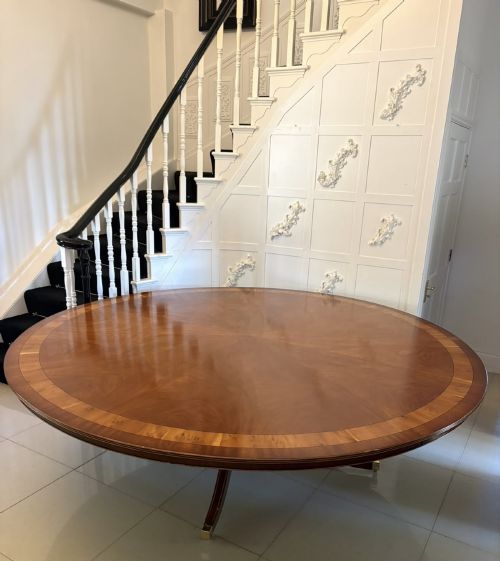
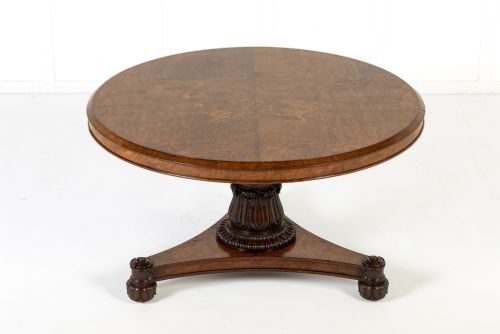
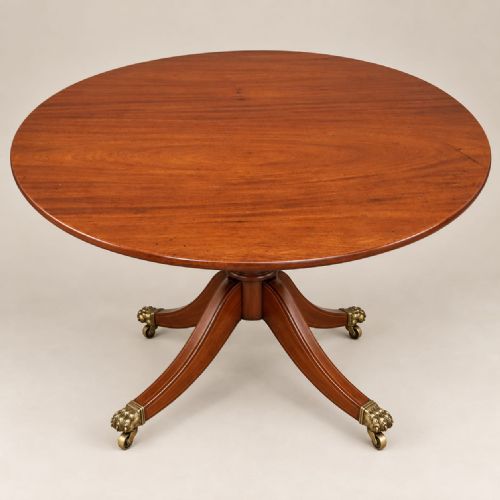
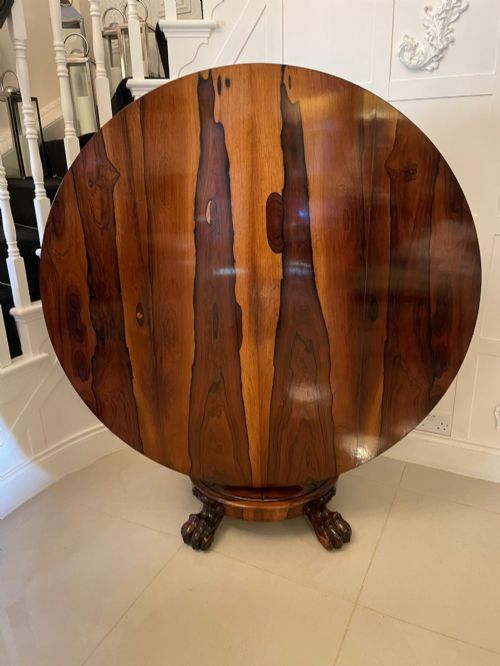

Regency Circular Dining Table
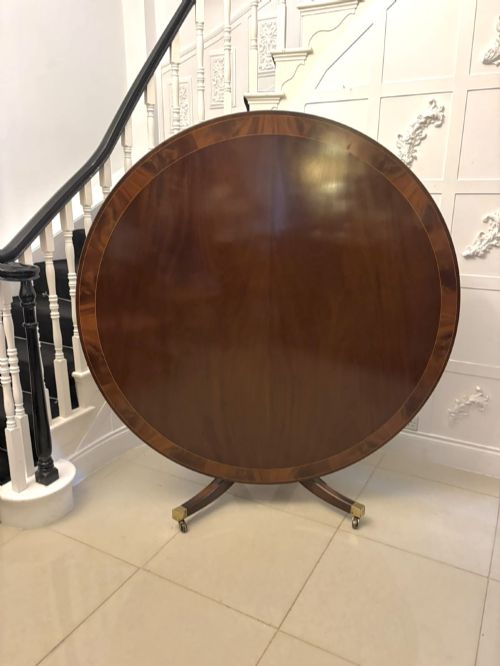
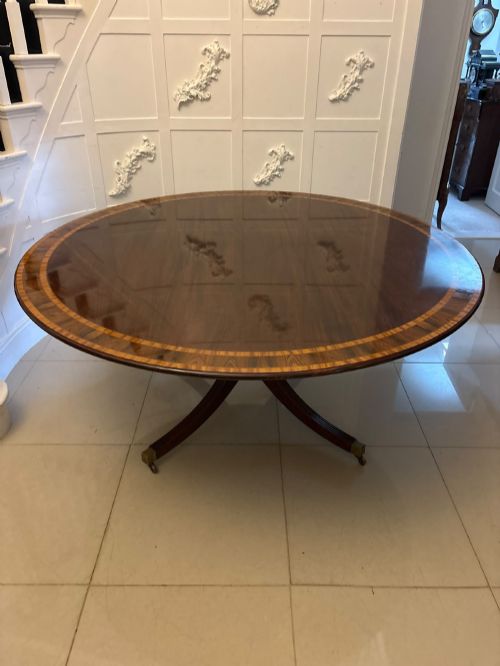
A regency circular dining table centres a room with pedestal balance, offering dining space on mahogany or rosewood.
Regency Circular Dining Table
A regency circular dining table brings proportion and presence to a room, appearing in forms designed for dining, breakfast, or as a central hall table. The pieces found here span the nineteenth century alongside later revival periods, bringing together Georgian origins and William IV interpretations.
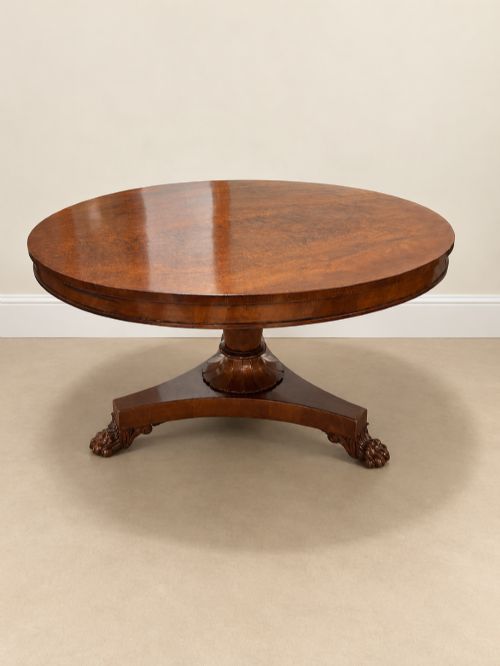
Most examples rely on a central pedestal or pillar rather than four corner legs, allowing chairs to tuck underneath cleanly. Buyers encounter versions set up for six diners alongside larger extending formats and compact tilt-top breakfast tables.
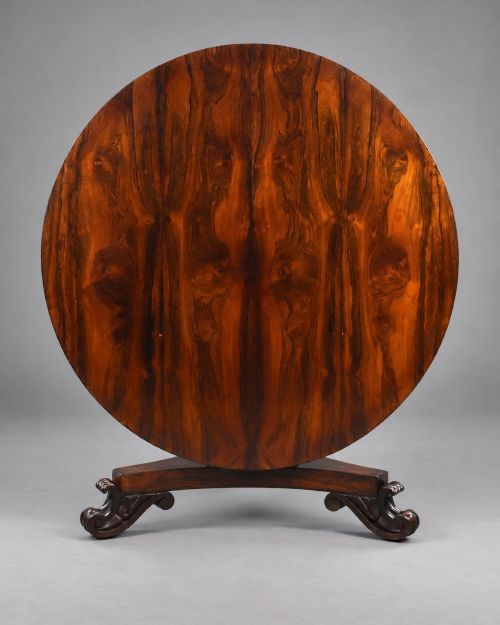
Makers fashioned these works in mahogany, rosewood, and oak, often applying figured veneers to the top surface. The influence of the Regency style runs through the selection, joined by George III, George IV, and Victorian periods.
How they were made
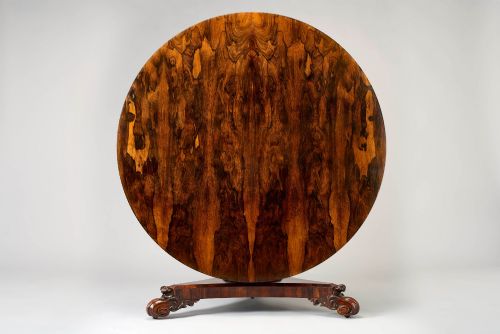
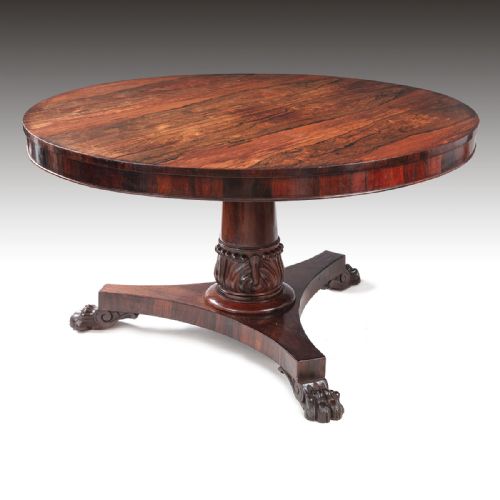
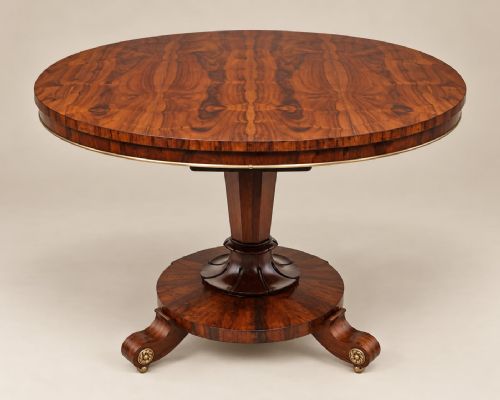
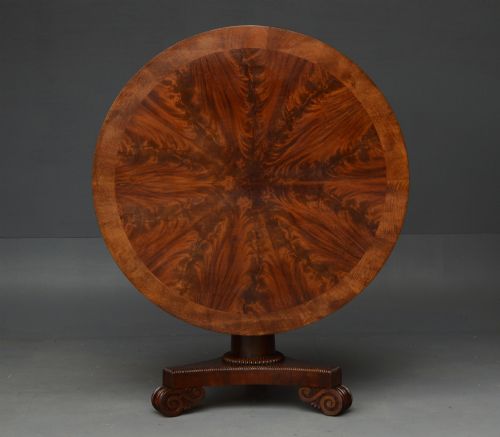
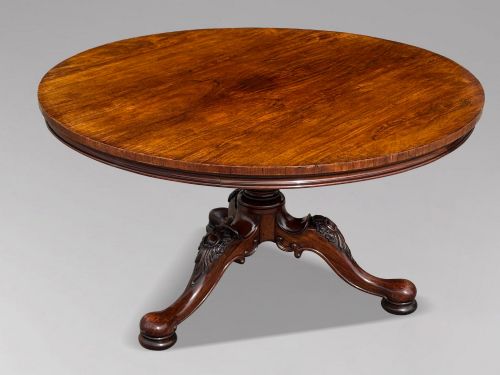
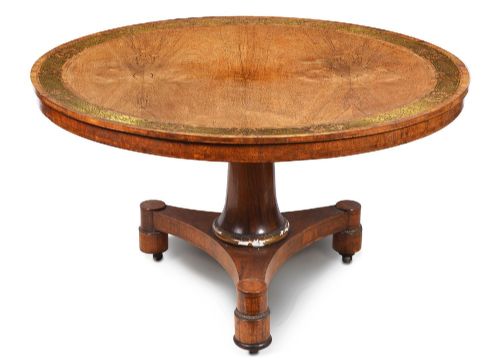
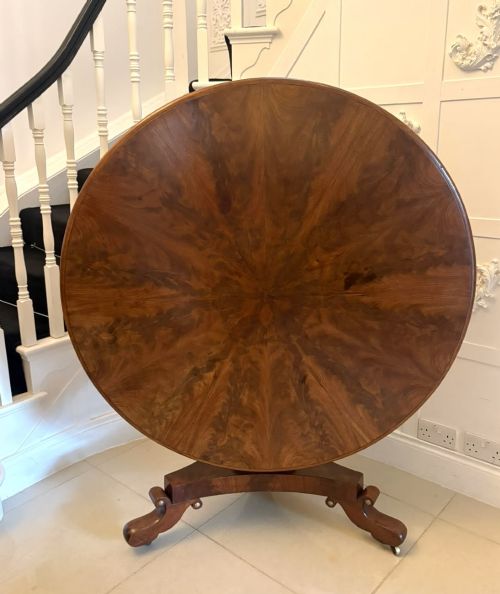
Cabinetmakers constructed these tables using solid timber frames overlaid with carefully matched veneers such as flame mahogany, rosewood, and burr elm to create striking grain patterns across the circular top. Central pillars often rest upon triform or platform bases, sometimes enriched with brass inlays, parcel gilt, or carved wooden details.
Tilt-top mechanisms allowed the circular surface to pivot upright when not in use, saving floor space in period homes. Extending mechanisms incorporated internal leaves supported by additional legs or clever pull-out runners to accommodate larger dinner parties.
Regency Circular Dining Table Retail Price Guide 2026
Typical asking prices for regency circular dining table among the pieces listed under this phrase on Sellingantiques today, from the lower quarter to the upper quarter. They describe what is for sale here now, not the wider market.
Pedestal formats range from sturdy octagonal pillars to triform bases fitted with brass inlays and castors.
What varies in quality
The selection of timber grain defines visual quality, with book-matched flame mahogany or richly figured rosewood sitting at the upper end of the range. Figured veneers require precise hand-cutting and placement to ensure the grain radiates symmetrically from the centre.
Engineering of the pedestal base and tilt mechanism dictates mechanical stability. Robust internal bracing and well-fitted brass hardware ensure the heavy top remains steady without sagging or wobbling over time.
Gillows·Peters of Genoa·Walker-Lancaster
The Regency Circular Dining Table Glossary
- Tilt-top
- A hinged tabletop mechanism allowing the surface to pivot into a vertical position for storage or display against a wall when not in use. This construction requires a secure locking catch beneath the board.
- Flame mahogany
- A veneer cut from the branch junctions of the mahogany tree, producing a distinctive flickering flame pattern. Cabinetmakers prized this figure for its visual movement on large table surfaces.
- Triform base
- A three-sided pedestal support resting on three feet, frequently seen on breakfast and centre tables from the Regency and William IV eras. It provides stable weight distribution beneath a heavy central pillar.
- Parcel gilt
- Portions of a furniture piece highlighted with applied gold leaf over a prepared surface, accentuating carved details or mouldings. It adds contrast to dark woods like rosewood and mahogany.
- Radial veneer
- Wood veneer pieces arranged like spokes in a wheel, radiating outwards from a central point to create a geometric pattern across a circular top. This layout demands exceptional precision in cutting.
Regency Circular Dining Table: Frequently Asked Questions
How do I seat six people around a circular table?
Tables measuring around sixty inches in diameter typically accommodate six diners comfortably, provided the pedestal base allows sufficient legroom underneath.
Pedestal designs without corner legs make it easier to arrange chairs flexibly compared to four-legged dining tables.
What is the difference between a breakfast table and a dining table?
Breakfast tables historically featured tilt-top mechanisms for everyday use and storage in smaller morning rooms, whereas formal dining tables remained fixed.
Both forms share circular tops and pedestal supports, leading to considerable overlap in how modern homes utilise them.
How do I care for a rosewood or mahogany surface?
Protect the polished wood from direct sunlight and excessive heat fluctuations to prevent the natural timber from drying out or fading over time.
Regular dusting with a soft dry cloth maintains the patina without the need for heavy silicone polishes.
How can I tell a Regency period table from a later revival?
Original pieces from the early nineteenth century exhibit construction methods, timber selections, and hand-cut joinery consistent with the Georgian and Regency eras.
Revival pieces from later decades often employ machine-cut elements and different secondary woods while copying the earlier aesthetic.