


Regency Center Table
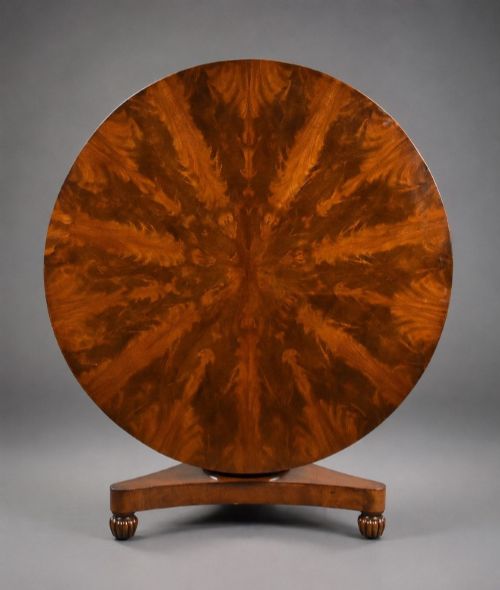
A regency centre table stands free in a room, designed to anchor a space with figured timber and proportion.
Regency Center Table
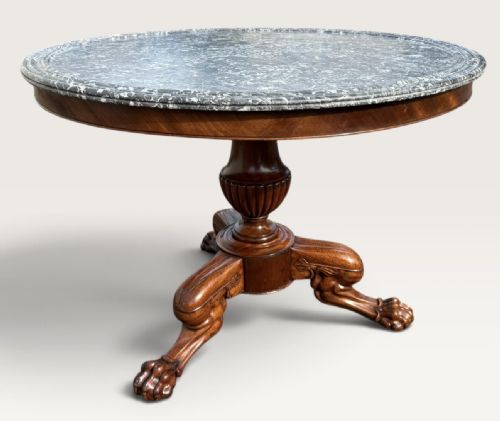
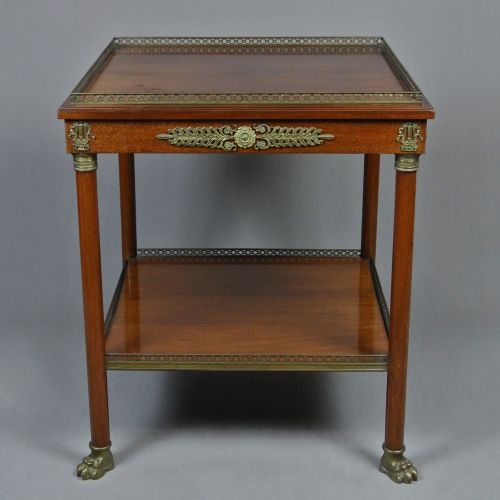
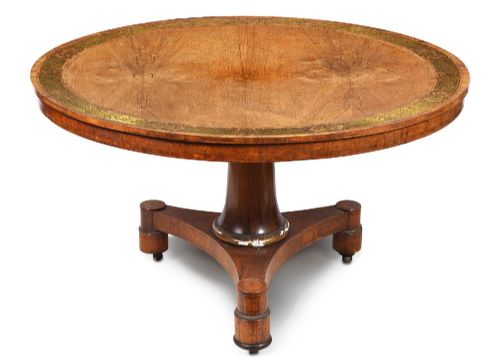
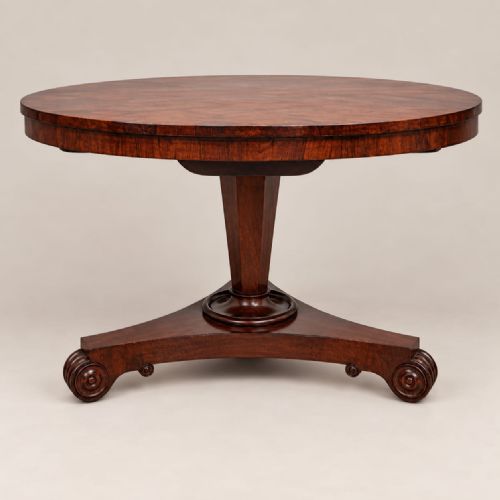
A regency centre table is a freestanding piece designed to be viewed from all sides rather than pushed against a wall. The examples found here span the nineteenth century, Regency, William IV, and Georgian periods, alongside later revivals.
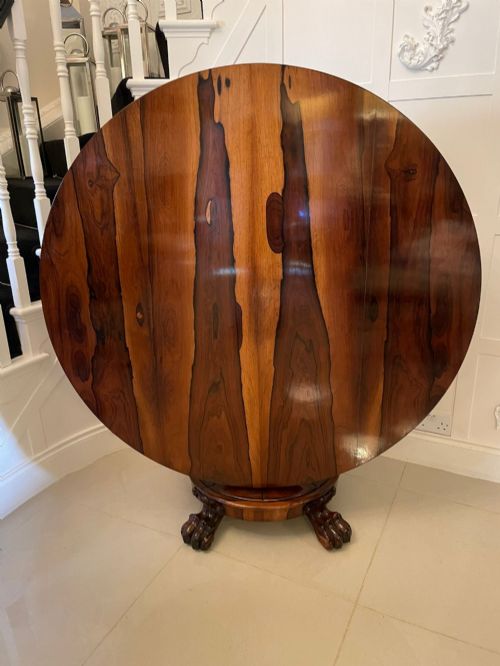
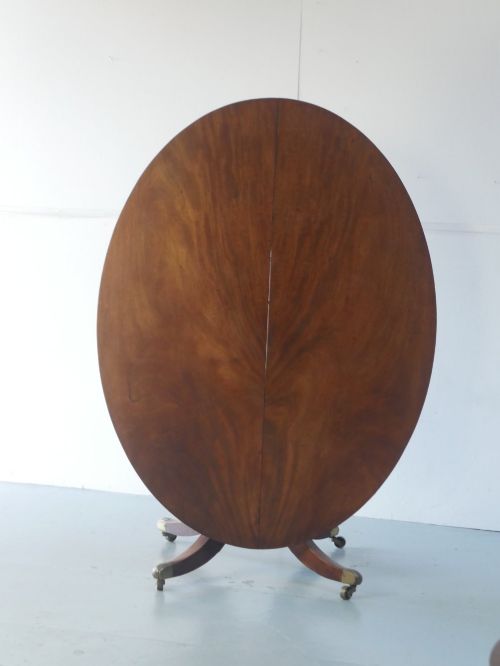
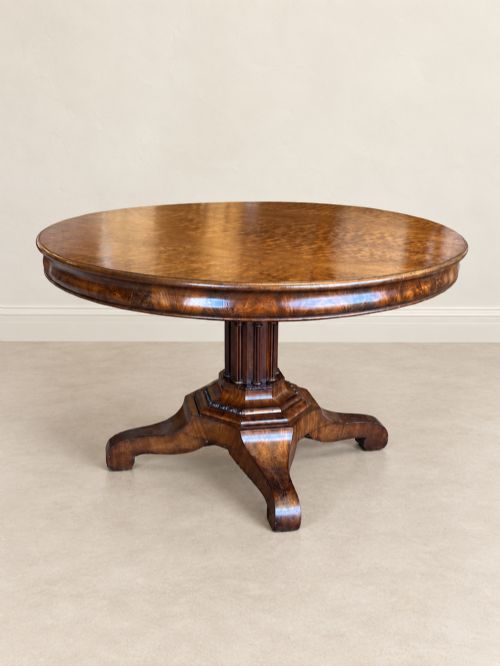
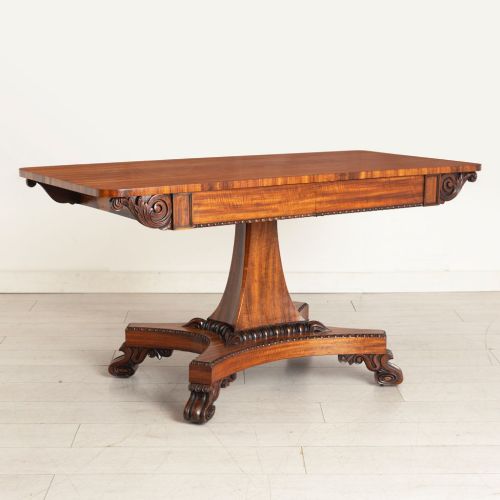
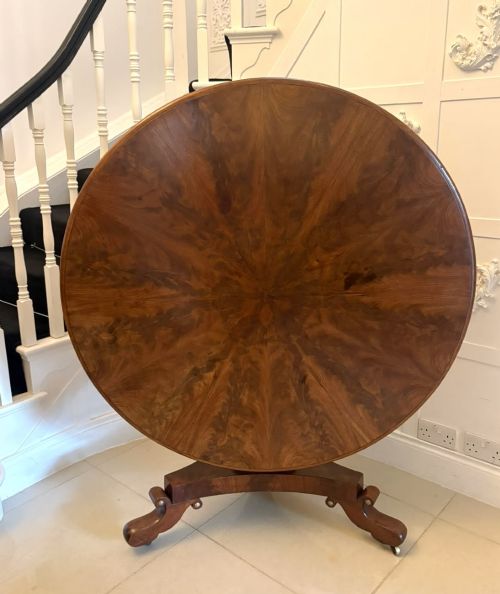
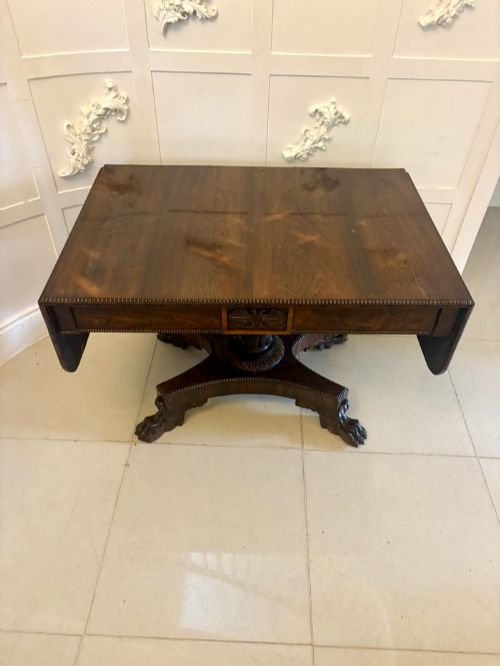
Most pieces encountered in this selection are constructed from mahogany, rosewood, or oak, often finished with flame mahogany veneer or intricate crossbanding. Forms range from circular breakfast tables and library tables to drop flap and drum variations.
Makers and workshops of the era produced these tables to serve multiple functions in large reception rooms, libraries, and dining spaces. Buyers meet both original nineteenth-century specimens and later revival iterations on this page.
How they were made
Cabinet makers utilised solid timbers and sophisticated veneers, applying flame mahogany, rosewood, satinwood, and burr elm over sturdy foundational woods. Brass inlay, parcel gilding, and leather inserts frequently supplemented the primary timber surfaces.
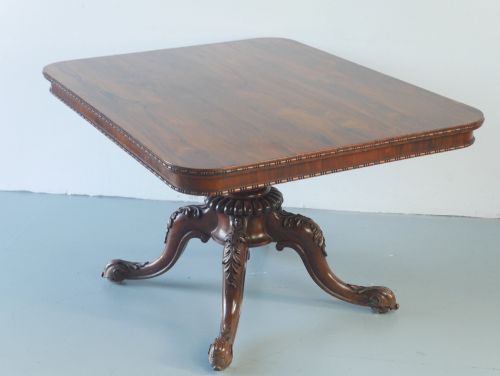
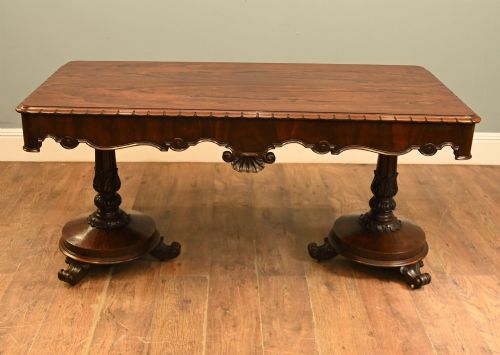
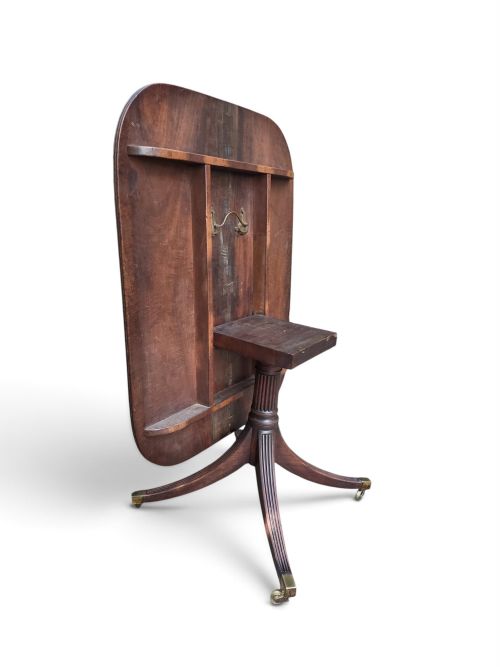
Construction techniques included tilt-top mechanisms supported by triform or pillar bases, pedestal columns, and occasionally secret drawers integrated into the apron. Joinery relied on traditional methods to ensure stability for heavy circular and rectangular tabletops.
Listings feature mahogany, rosewood, and oak alongside specialised timbers like amboyna, satinwood, and padouk across multiple centuries.
What varies in quality
The distinction between tiers rests upon the selection of timber veneers and the crispness of carved details such as pedestal bases and feet. Superior examples display symmetrical figuring in flame mahogany or rosewood, coupled with balanced proportions and original brass inlays.
Execution of secondary elements, including the smoothness of tilt mechanisms and the integration of secondary woods, defines the standard of the piece. Tables bearing attributed workshops or refined patination demonstrate the pinnacle of period craftsmanship.
Gillows·Williams and Gibton·Peters of Genoa
The Regency Center Table Glossary
- Crossbanding
- A strip of veneer applied to the border of a tabletop running perpendicular to the main grain. This technique creates a contrasting decorative frame around the primary timber.
- Drum table
- A circular library table with a deep top containing drawers, usually supported on a central pillar and tripod base. These tables derive their name from their cylindrical proportion.
- Tilt-top
- A tabletop hinged to the pedestal base so it can be tipped vertically when not in use. This mechanism allowed tables to be stored against walls to save space.
- Triform base
- A three-sided pedestal foot configuration typical of Regency and William IV furniture. It provides stable support for heavy circular dining and breakfast tables.
- Patina
- The surface sheen and colour developed by wood through age, light, and use. A faded or soft patina indicates long preservation of the original finish.
Regency Center Table: Frequently Asked Questions
Where do you place a regency centre table?
These tables occupy the middle of a room, functioning as a focal point for lamps, books, or decorative objects. Because they are finished on all sides, they allow movement entirely around them.
In larger spaces, a circular or drum table breaks up linear room layouts and provides practical surface area away from walls.
How do I distinguish a regency table from a revival piece?
Original tables from the early nineteenth century exhibit construction methods, timber maturity, and hand-cut joinery consistent with the period. Secondary woods inside drawers and beneath tabletops offer clear clues to age.
Revival pieces, such as those from the later Victorian era or the twentieth century, often show machine-made components and different finishing techniques beneath the surface.
Can a tilt top table still be used safely?
The tipping mechanism on these tables was originally designed for convenient storage rather than daily folding. While the catch and hinge may remain fully operational, regular tilting of heavy rosewood or mahogany tops is generally discouraged to protect the pivot.
Most owners keep the top locked in the flat position for everyday use as a dining or centre table.
What is the difference between a breakfast table and a dining table?
Breakfast tables typically feature a single central pillar with a tilt top, making them smaller and lighter than their dining counterparts. They were traditionally used for morning meals or informal gatherings in private rooms.
Dining tables often span larger proportions, sometimes incorporating multiple pedestals and drop leaves to accommodate groups for evening meals.