

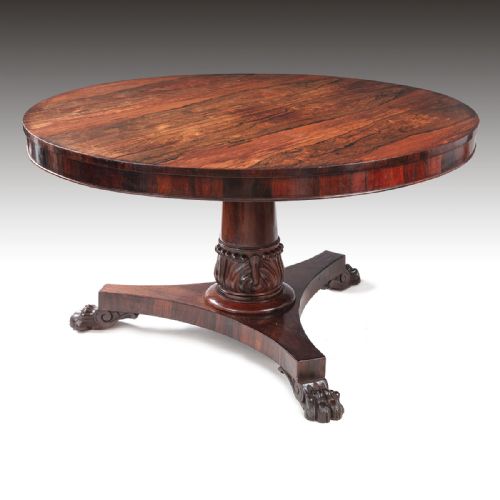
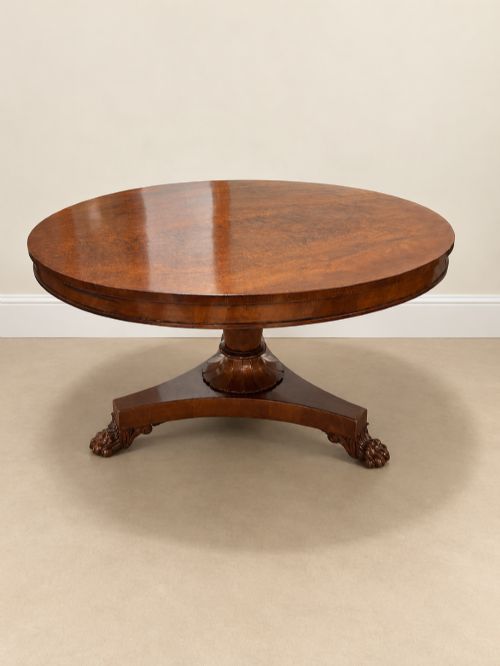
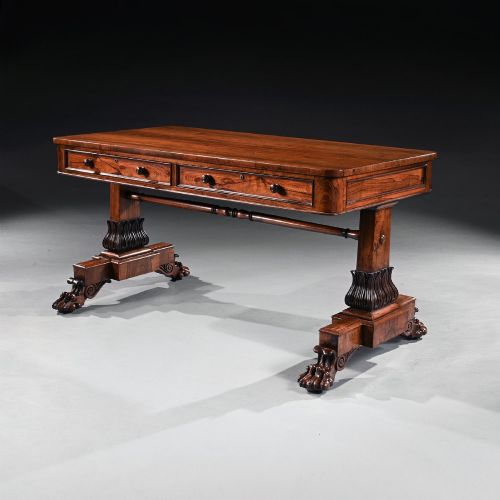
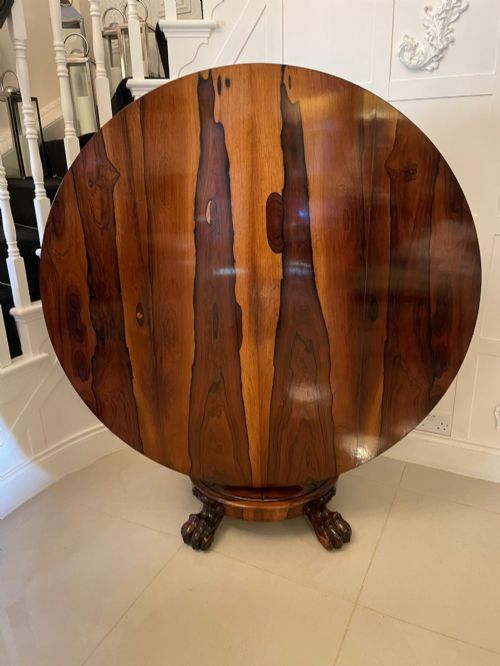

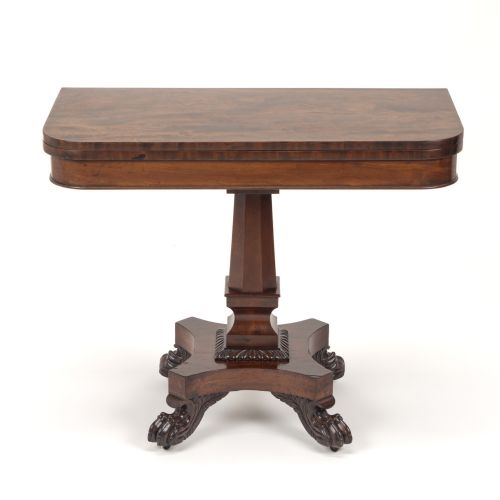


Regency Carved Paw Feet Table
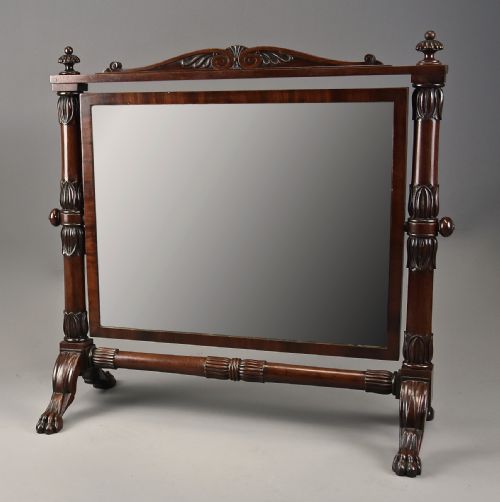
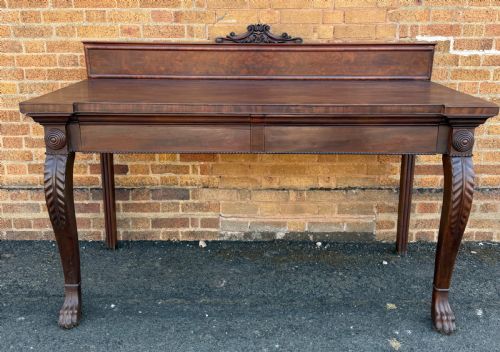
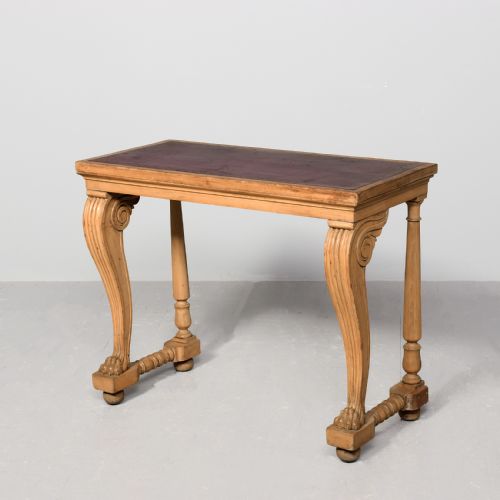
A regency carved paw feet table anchors a room with sculptural presence, combining robust timber and classical animal supports.
Regency Carved Paw Feet Table
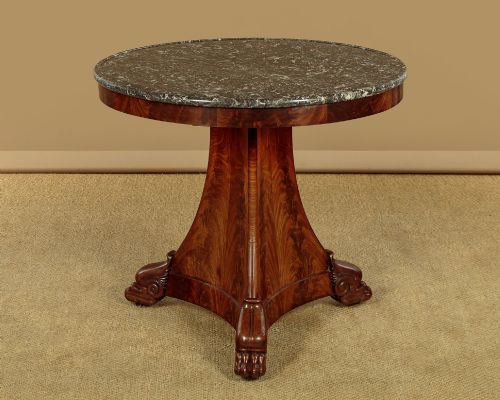
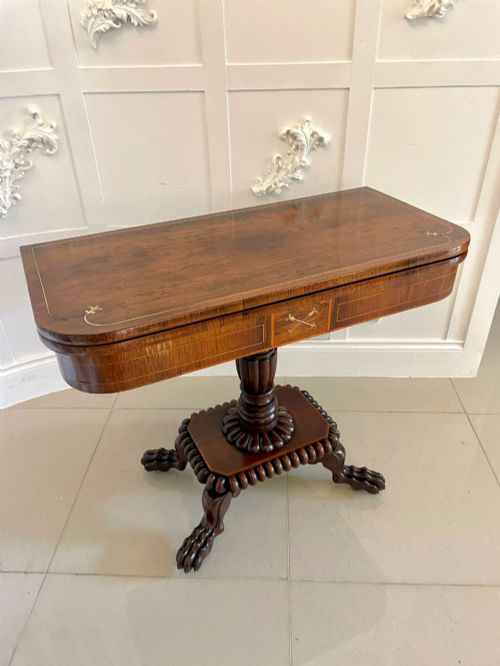
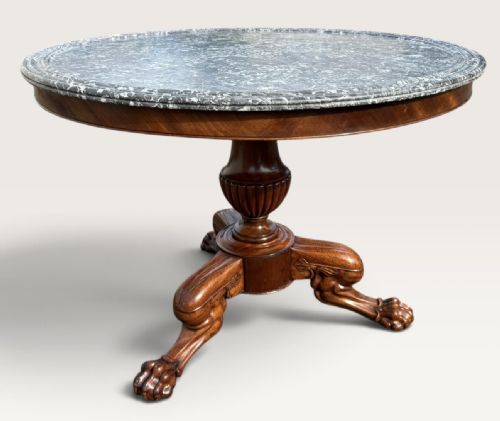
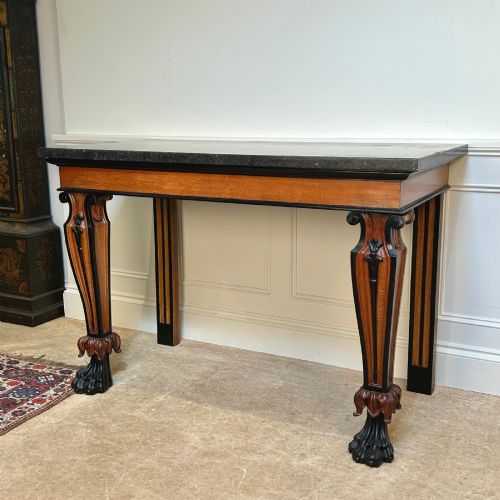
When searching for a regency carved paw feet table, buyers encounter a variety of forms designed for dining, display, and social gathering. The selection includes circular centre tables, folding card tables, and substantial serving consoles from the nineteenth century.
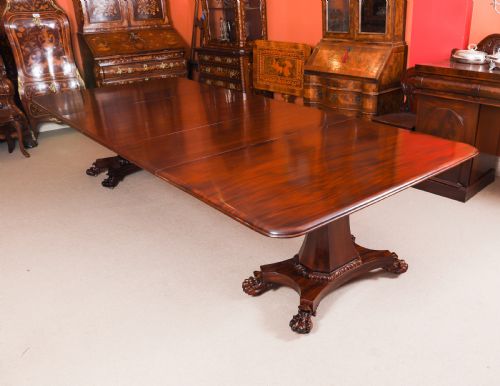
Dining and breakfast tables dominate the selection, often featuring pedestals or tripod bases terminating in detailed feet. Smaller occasional pieces, library tables, and writing desks also appear frequently across the period styles.
Origins span English workshops alongside examples from France, Ireland, and Scotland, reflecting diverse regional interpretations of classical design. Timbers range from domestic oak and mahogany to exotic rosewood and macassar ebony.
How they were made
Cabinet makers utilised dense native and imported timbers, frequently applying flame mahogany veneer or rosewood over solid secondary woods. Brass inlay and giltwood accents appear alongside carved wooden details to enhance the decorative surface.
Construction techniques involve heavy central pillars, triform bases, and pedestal supports designed to bear the weight of thick timber tops and marble inserts. Carvers rendered animal paws with distinct claws and musculature directly into solid mahogany, oak, or rosewood.
Regency Carved Paw Feet Table Retail Price Guide 2026
Typical asking prices for regency carved paw feet table among the pieces listed under this phrase on Sellingantiques today, from the lower quarter to the upper quarter. They describe what is for sale here now, not the wider market.
Listings feature woods including mahogany, rosewood, gonçalo alves, macassar ebony, and birdseye maple.
What varies in quality
The degree of sculptural refinement in the carved paw feet dictates the initial visual impact of the table. Crisp undercutting and naturalistic shaping separate workshop standards from simpler production.
Selection of timber grain, particularly matched flame mahogany veneers and figured rosewood, marks the distinction between standard utilitarian furniture and high-status pieces. The integration of brass inlay, gilt details, and specialised marble tops further elevates the execution.
James Mein of Kelso·Jean-Joseph Chapuis·Gillows
The Regency Carved Paw Feet Table Glossary
- Gueridon
- A small circular table on a central pillar, originating in France during the seventeenth century. These pieces often serve as centre tables or lamp stands.
- Console table
- A table designed to stand against a wall, frequently secured with brackets. They appear often in hallways and dining rooms.
- Triform base
- A three-sided pedestal foot configuration common on dining and centre tables of the period. This design provides stability for heavy circular tops.
- Card table
- A folding table with a hinged top that opens to reveal a playing surface. Many feature specialised compartments for counters.
- Macassar ebony
- A heavily figured exotic wood with dark brown and warm golden stripes. Makers used this dense timber for high-status cabinet work.
Regency Carved Paw Feet Table: Frequently Asked Questions
Where do I put a centre table?
Centre tables function best in the middle of a spacious room where people can walk around them entirely. They hold lamps, books, or decorative arrangements while establishing a focal point.
In larger entrance halls or libraries, these freestanding tables provide a surface for welcoming guests or displaying collections without crowding the perimeter walls.
How do I use a fold-over card table?
The hinged top swings open and unfolds to double the surface area for evening games or writing. When closed against a wall, the piece functions as a side table.
Interior spaces benefit from this versatility because the furniture adapts easily between display and active use during social gatherings.
What is the difference between a breakfast table and a dining table?
Breakfast tables typically feature a single central pillar with a tilt-top mechanism or a fixed circular surface designed for morning meals. Dining tables are larger, often extending with multiple pedestals to seat groups.
While breakfast tables remain compact and portable, dining tables anchor the room permanently for formal meals.
How do I care for rosewood and mahogany surfaces?
Maintain timber surfaces by dusting with a dry cloth and applying traditional beeswax sparingly to preserve the natural lustre. Avoid placing tables near direct heat sources or strong sunlight to prevent timber movement.
Regular polishing protects the grain and enhances the deep patina developed over centuries of use.