



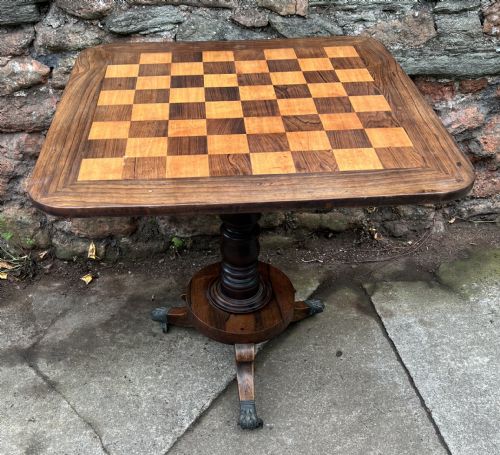
Regency Card Table Brass Feet
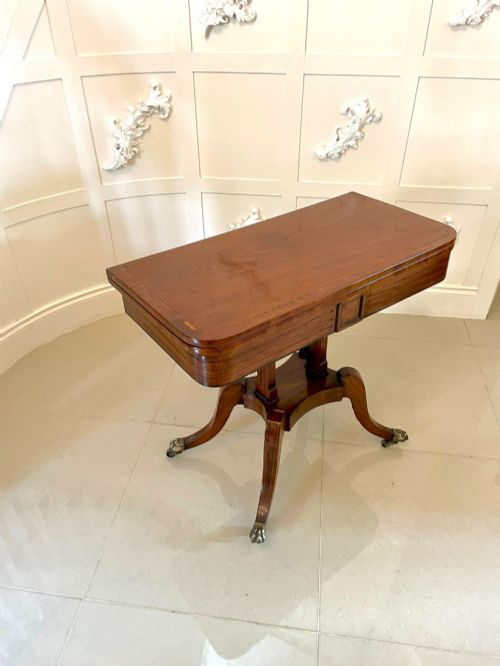
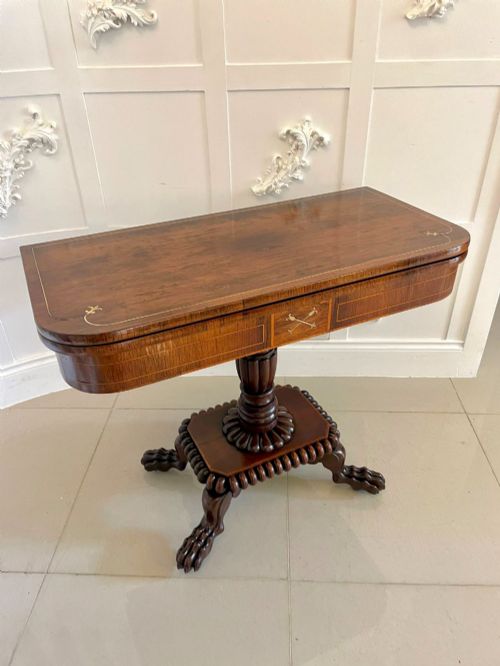
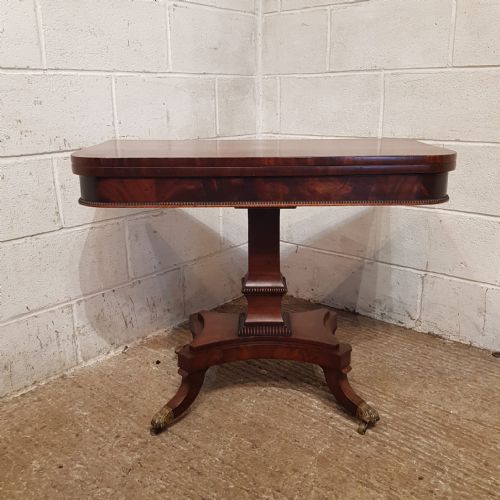
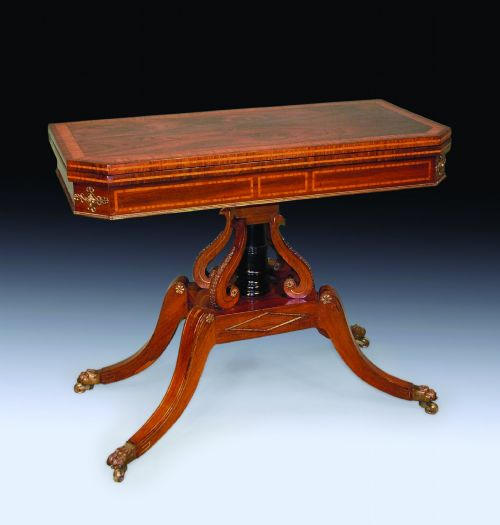
These regency card table brass feet pieces combine clever folding tops with rich timbers and bright metal mounts, built for the parlours of the early nineteenth century.
Regency Card Table Brass Feet
A regency card table brass feet piece sits on wheels or cast paws of yellow metal, supporting timbers such as rosewood and mahogany. You are most likely to meet fold-over gaming tables from the Regency and late Georgian periods on this page.
The form exists to serve card games and tea drinking, opening out on hinges to reveal a baize-lined surface. Makers shaped these objects as card tables, games tables, and tea tables during the nineteenth century.
What varies in quality
The choice of primary timber and the precision of the brass inlay set the standard for each piece. Figured mahogany and richly grained rosewood indicate greater material investment by the workshop.
Carving detail on pedestal bases and the execution of gilded brass mounts distinguish standard production from workshop pieces attributed to makers such as George Bullock or John McLean.
Some tables crossed the seas from Ceylonese workshops before reaching British parlours.
George Bullock·John McLean
The Regency Card Table Brass Feet Glossary
- Crossbanded
- A border of veneer laid around the perimeter of a tabletop with the grain running perpendicular to the centre.
- Pedestal base
- A central pillar supporting the tabletop, often resting on a platform with scroll feet.
- Stringing
- Thin lines of contrasting wood or metal inlaid into channels cut into the surface of the timber.
- Fold-over
- A hinged tabletop design that rotates and opens flat to double the usable surface area for games.
Regency Card Table Brass Feet: Frequently Asked Questions
How do I use a card table?
The hinged top swivels and folds open to reveal a lined playing surface supported by the frame.
When closed, the table stands against a wall as a console or side table.
What woods were used?
Makers constructed these pieces using mahogany, rosewood, and satinwood veneers over secondary timbers.
Detailing often involved ebony and boxwood stringing alongside brass inlay.
How do I identify a Regency piece?
Look for classical proportions, pedestal bases with scroll work, and brass mountings typical of the early nineteenth century.
Styles span from George III through to George IV and the broader Regency period.
Are these tables good for small spaces?
The fold-over design allows the furniture to occupy minimal floor space when closed against a wall.
Opening the top provides a larger surface only when needed for games or tea.