


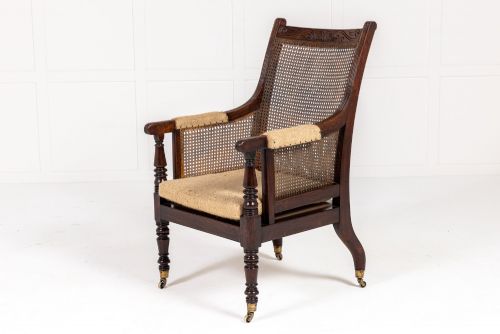


Regency Cane Armchair Castors
These regency cane armchair castors bring refined library seating and smooth mobility together, offering the classic elegance collectors seek.
Regency Cane Armchair Castors
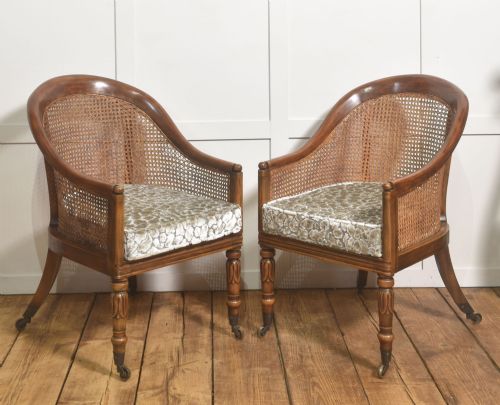
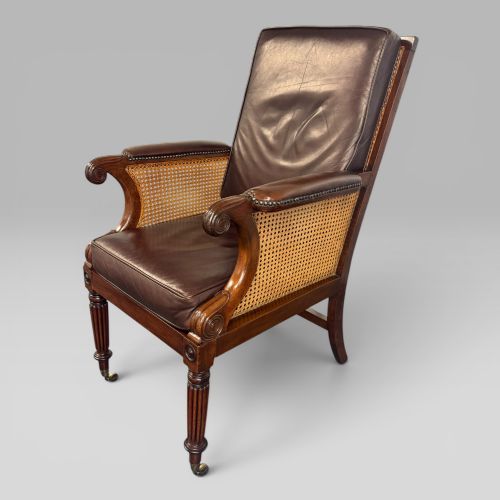
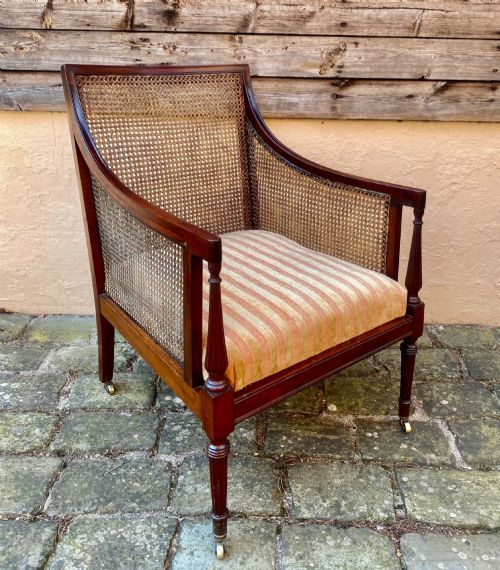
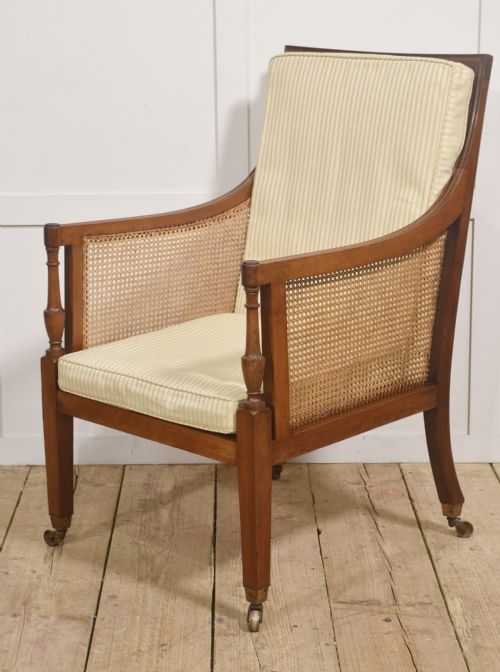
When you search for regency cane armchair castors, you encounter sophisticated library bergère armchairs designed for reading rooms and domestic studies during the early nineteenth century. These forms typically feature woven cane panels to the back and sides, paired with timber frames and small metal wheels beneath the legs for effortless movement across carpets and wooden floors. Mahogany and rosewood form the primary structural woods of these library chairs, reflecting the cabinet-making standards of the Regency and William IV periods.
The pieces on this page span the Regency era and the broader nineteenth century, frequently incorporating generous proportions and deep seats. Examples range from plain mahogany frames to simulated rosewood finishes and pieces attributed to esteemed workshops. Buyers most commonly meet library bergère chairs equipped with cane work and turned supports, anchored by original brass castors designed to protect heavy carpets.
Judging Quality
The refinement of the wooden turnings and the crispness of the carved details separate standard pieces from superior examples. Better workshops invested time in well-drawn proportions and generous curves that balance comfort with visual grace.
The condition and tightness of the hand-woven cane panels significantly influence the overall integrity of the chair. Original brass castors that retain their smooth rolling action add considerable merit to a piece.
Regency readers evidently possessed places of business that required surprisingly mobile seating.
Gillows
The Regency Cane Armchair Castors Glossary
- Bergere
- An enclosed upholstered armchair with solid sides, frequently filled with cane work in Regency examples. This French-derived form prioritised comfort and was a staple of the nineteenth-century library.
- Castor
- A small wheel mounted on a swivel attached to the foot of a piece of furniture for easy movement. These metal fittings allowed heavy library chairs to be repositioned without lifting.
- Rattan cane
- A pliable material stripped from climbing palms and used for intricate woven panels. It provides a strong, breathable surface for chair backs and sides.
- Simulated rosewood
- A painted or stained finish applied to a less expensive timber to imitate the rich grain and colour of genuine rosewood. Cabinet-makers used this technique during the Regency period to achieve a luxurious look.
Regency Cane Armchair Castors: Frequently Asked Questions
What is a bergere armchair?
A bergere armchair is a deep, enclosed seat with solid upholstered or cane-filled sides popular in nineteenth-century libraries. These chairs were built for extended periods of reading and relaxation.
Makers often paired the wooden frame with loose cushions and small wheels for mobility.
Why do these chairs have castors?
Castors allowed heavy mahogany and rosewood library chairs to be moved easily across thick carpets and heavy floorboards. This practical addition made it simple to adjust seating positions near a fireplace or desk.
Most period examples use small brass wheels fitted directly into the base of the legs.
How do I identify a Regency period chair?
Regency chairs typically exhibit classical restraint, clean architectural lines, and dark timbers such as mahogany and rosewood. Details like reeded legs and brass mounts point directly to the early nineteenth century.
Proportions are often generous, reflecting the comfort demanded by Regency library culture.
Is the cane work original?
Many nineteenth-century chairs have undergone recaning due to the natural wear of woven rattan over generations. Examining the tension and the colour of the strands helps determine its age.
Tight, evenly woven cane that matches the wear of the timber often indicates careful restoration or survival.