

Regency Cabinet with Shelves
A regency cabinet with shelves offers refined architectural proportion and versatile display space, bringing disciplined elegance to any interior.
Regency Cabinet with Shelves
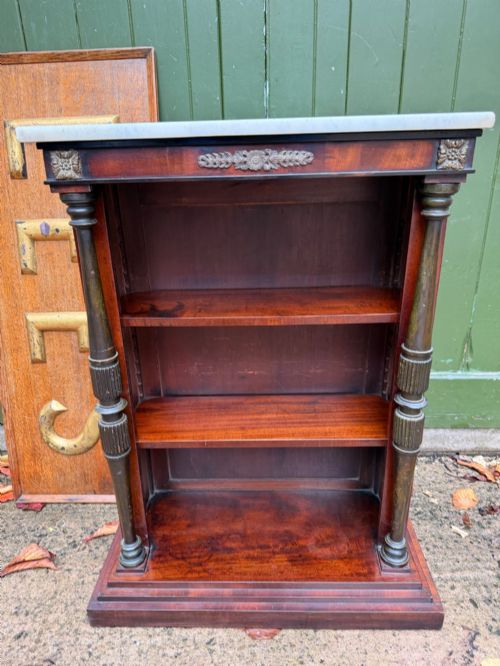
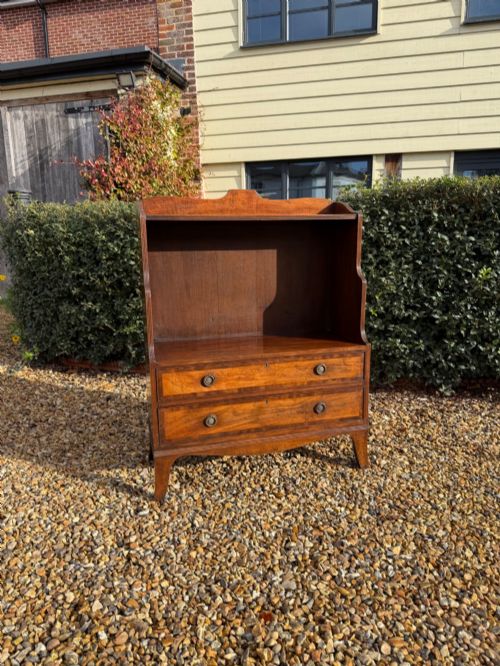
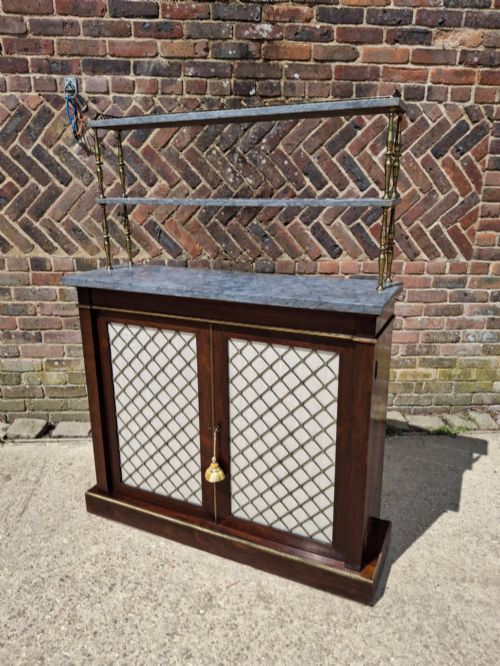
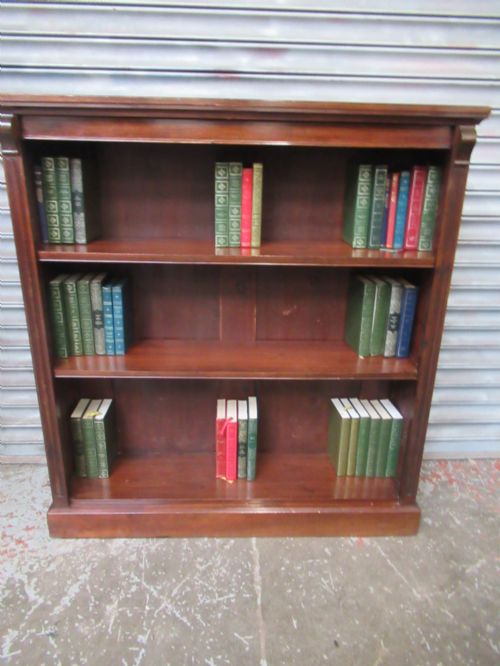
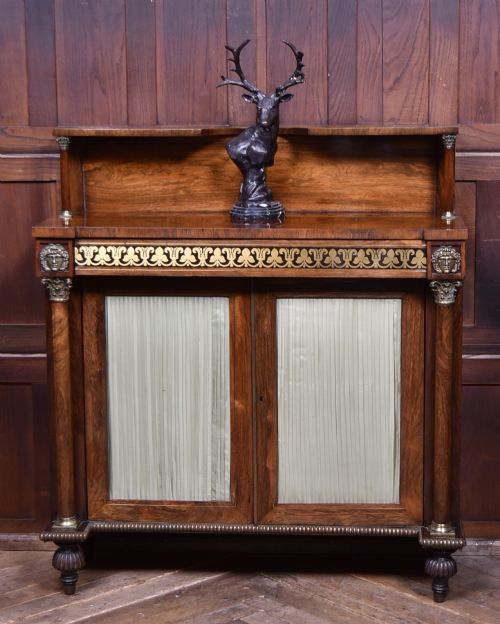
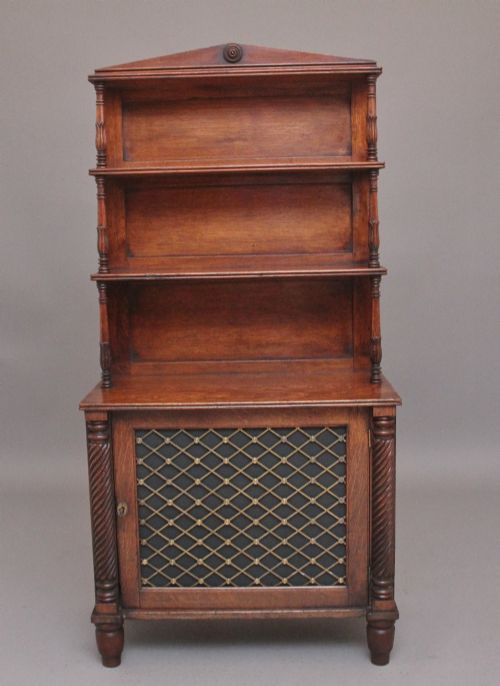
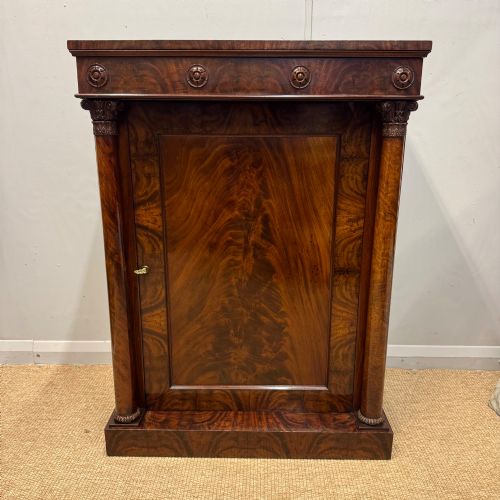
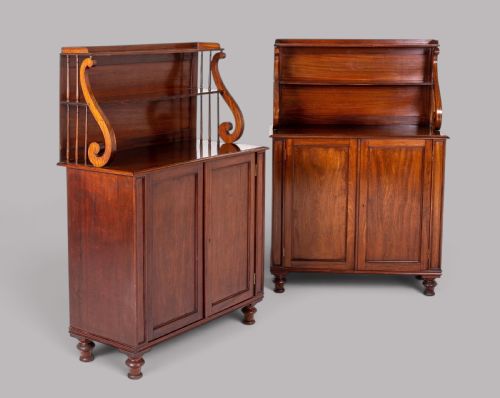
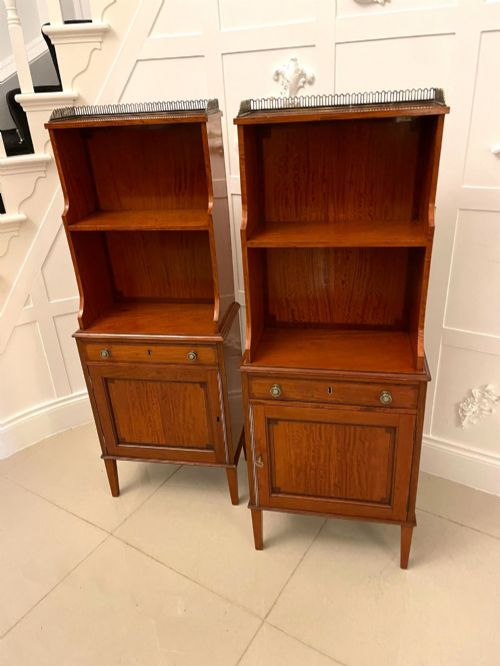
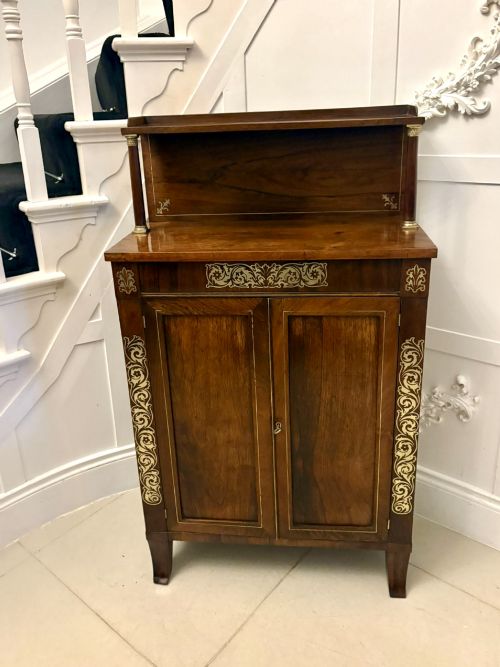
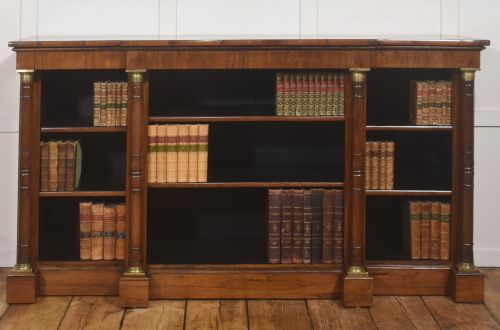
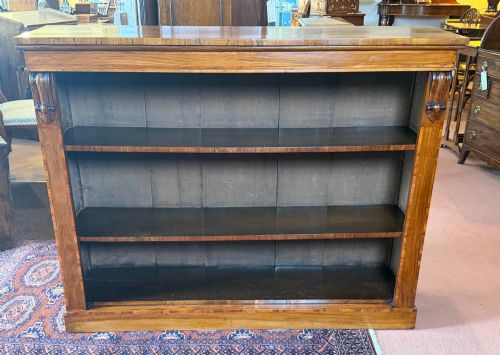
A regency cabinet with shelves spans several functional forms including chiffoniers, open bookcases, side cabinets, and whatnots designed for domestic utility and display. The version most frequently met on this page is the mahogany or rosewood chiffonier or waterfall bookcase dating from the Regency and wider Georgian periods.
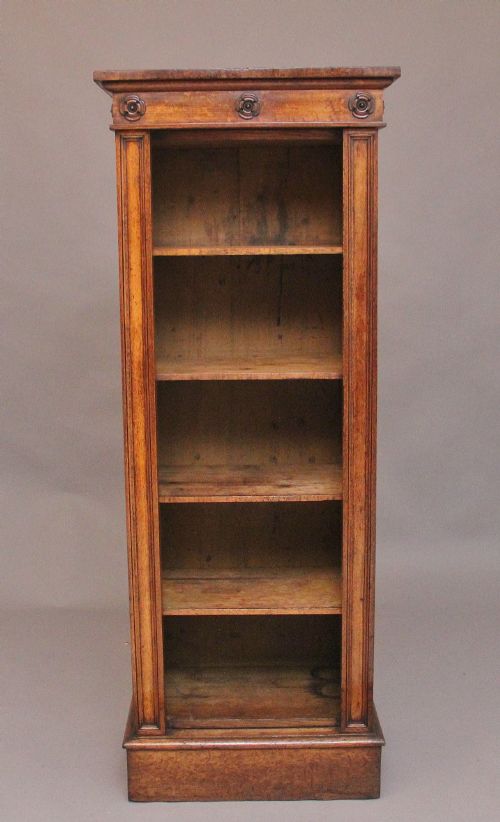
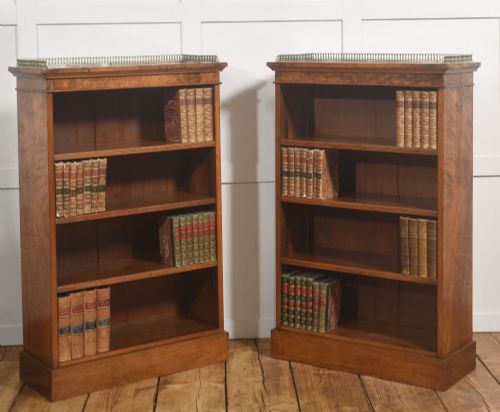
These items originate primarily from the nineteenth century, encompassing Regency, George IV, and William IV eras alongside later revival pieces. Formats range from low pier cabinets and dwarf bookcases with adjustable shelving to tall open display shelves fitted with brass galleries.
Makers and cabinetmakers of the period engineered these pieces to serve specific rooms, combining enclosed lower cupboards with upper open shelves for books and decorative objects.
How they were made
Timbers such as mahogany, rosewood, burr walnut, and oak form the structural foundation, frequently enhanced with flame mahogany veneer or simulated rosewood graining. Cabinetmakers applied these select woods over solid carcases to achieve rich figured surfaces.
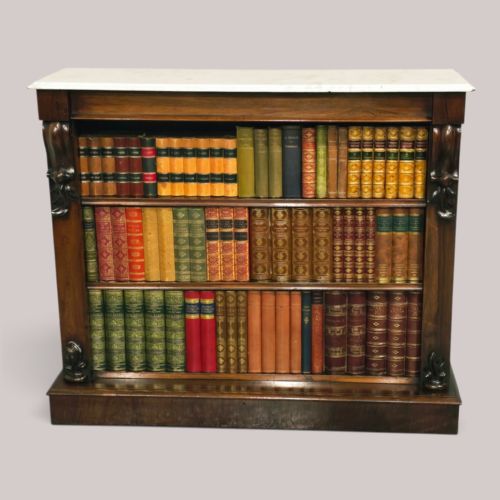
Metalwork and trim complete the construction, incorporating brass galleries, ormolu mounts, parcel gilt details, and inset leather dummy books. Interiors often utilise adjustable wooden shelving supported by peg systems or ratchets.
Regency Cabinet with Shelves Retail Price Guide 2026
Typical asking prices for regency cabinet with shelves among the pieces listed under this phrase on Sellingantiques today, from the lower quarter to the upper quarter. They describe what is for sale here now, not the wider market.
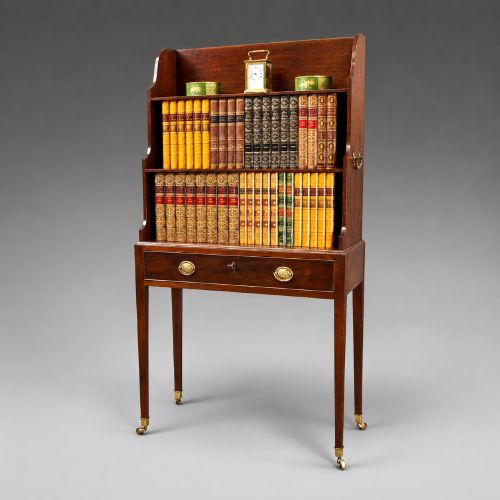
Several pieces conceal their contents behind clever leather dummy books, proving that nineteenth-century neatness occasionally relied on delightful optical illusions.
What varies in quality
The degree of refinement in timber selection and figuring dictates the visual appeal, where matched flame veneers or dense rosewood grain elevate the piece above plain domestic carcases. Superior examples exhibit precise proportions and restrained joinery.
The integration of secondary materials such as fine brass galleries, marble tops, and delicate parcel gilt highlights distinguishes master craftsmanship from simpler workshop output. Original hardware and intact adjustable shelving mechanisms further separate the best work.
The Regency Cabinet with Shelves Glossary
- Chiffonier
- A low sideboard or cabinet featuring enclosed cupboards below, often surmounted by a shelf back or superstructure. This form became popular during the Regency period for dining and drawing rooms.
- Waterfall bookcase
- A tiered open bookcase where each successive shelf steps back from the one below it, creating a cascading profile. These pieces typically date from the Georgian and Regency eras.
- Ormolu
- Gilded bronze mounts applied to furniture for decorative enrichment. French Empire and Regency pieces frequently utilise these cast metal ornaments.
- Pier cabinet
- A low freestanding cabinet designed to fit narrow wall spaces between windows. They often incorporate adjustable shelves and glass or wood doors.
- Dummy books
- Faux book spines attached to cabinet doors or compartments to conceal storage spaces. They reflect the playful yet functional design choices of the period.
Regency Cabinet with Shelves: Frequently Asked Questions
How were these cabinets used originally?
In period interiors, these cabinets served to store books, display ceramic collections, and organise household items in drawing rooms, libraries, and parlours. The combination of open shelving and closed cupboard space accommodated both display and concealment.
Upper shelves held frequently read volumes or decorative ornaments, while lower cupboards secured linens, papers, or household sundries away from dust.
How do I style a cabinet in a modern home?
These cabinets integrate easily into contemporary rooms by functioning as focal points for book storage, bar accessories, or art displays. Their compact proportions allow them to sit comfortably in hallways, living spaces, or bedrooms.
Pair the rich tones of rosewood or mahogany with neutral walls and restrained lighting to let the natural grain and brass details stand out without visual clutter.
How can I tell a Regency piece from later revivals?
Identifying a true Regency piece involves examining construction methods, timber choice, and secondary woods alongside stylistic details like brass inlay or parcel gilt. True period examples date roughly from the early nineteenth century under George IV.
Later Victorian and twentieth-century revivals often utilise different interior secondary timbers, heavier carcase construction, or standardised mechanical shelf supports not found in earlier workshops.