

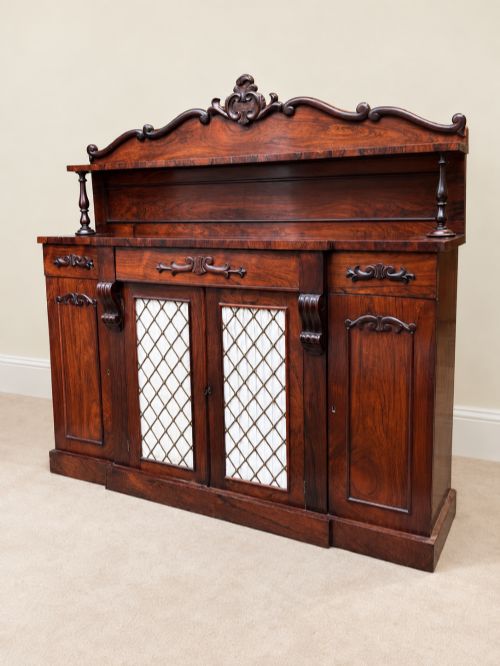
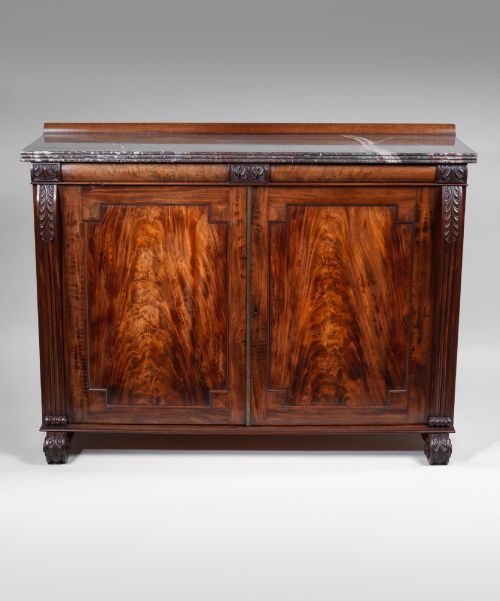
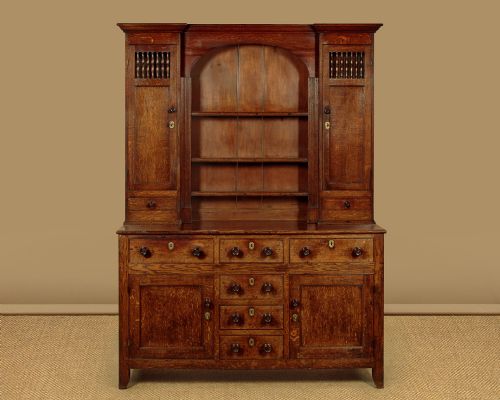
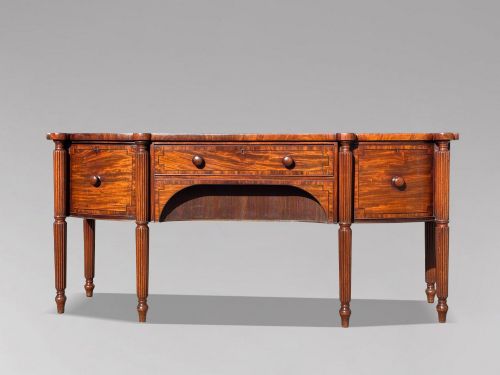
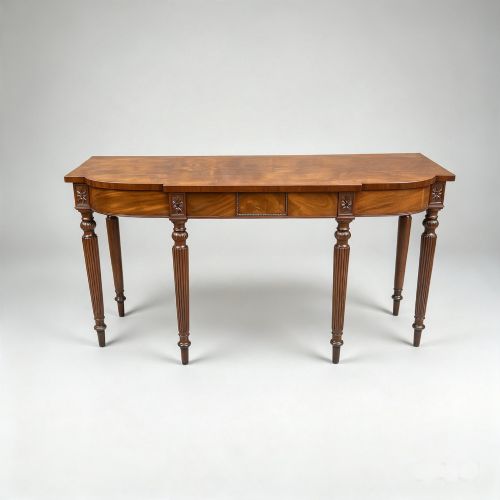
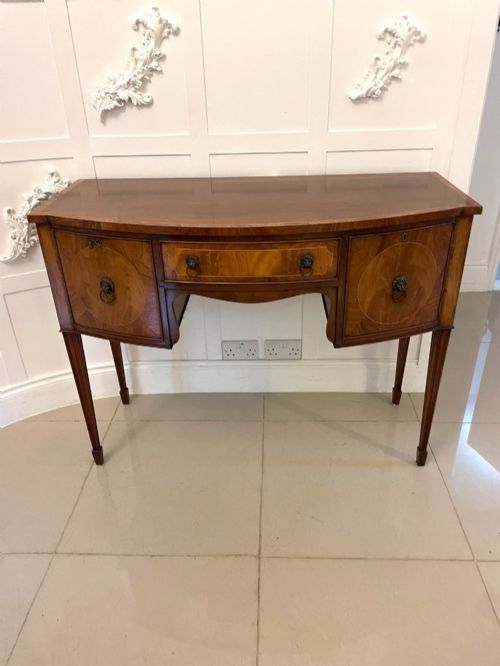
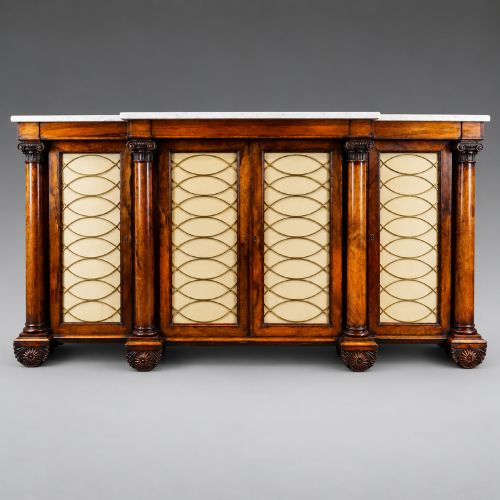
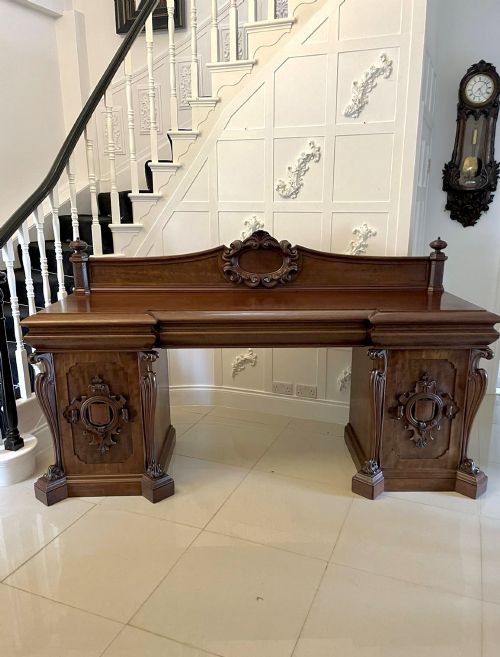
Regency Buffet Sideboard
These pieces of regency buffet sideboard furniture bring architectural dignity to dining spaces through rich timbers and disciplined classical lines.
Regency Buffet Sideboard
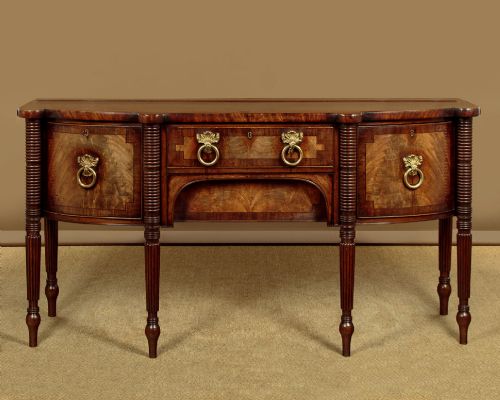
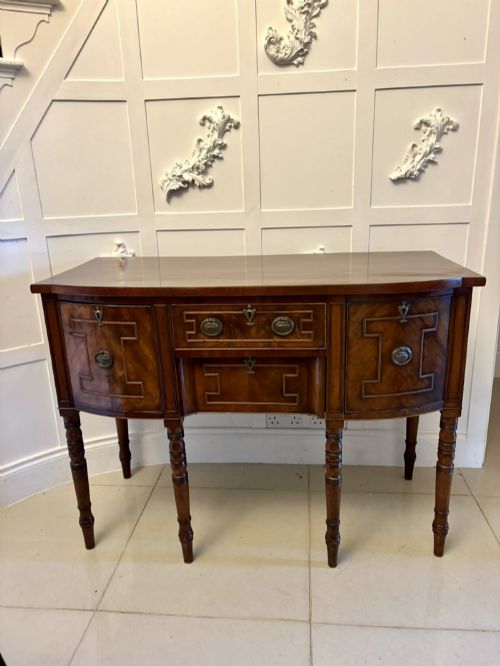
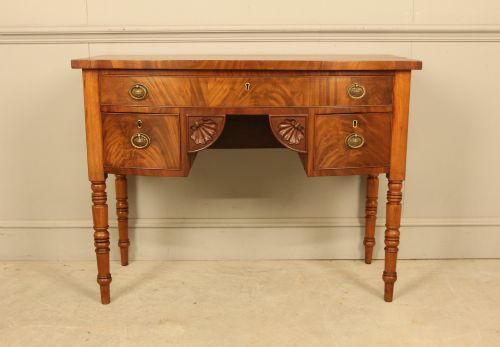
A regency buffet sideboard serves as a commanding focal point in a dining room, designed to store silver, linen and glassware while displaying serving dishes. Buyers browsing this selection encounter primarily mahogany and rosewood forms originating from the nineteenth century, alongside later revival pieces from the twentieth century.
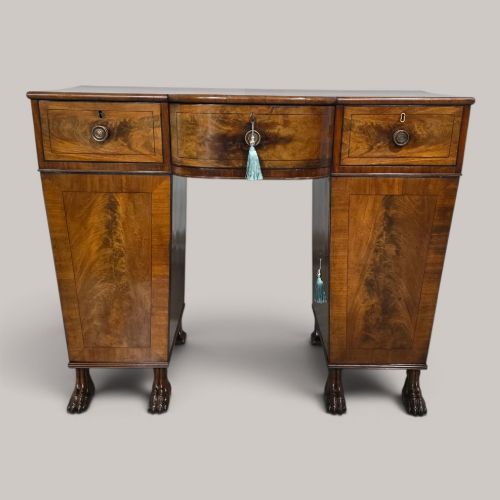
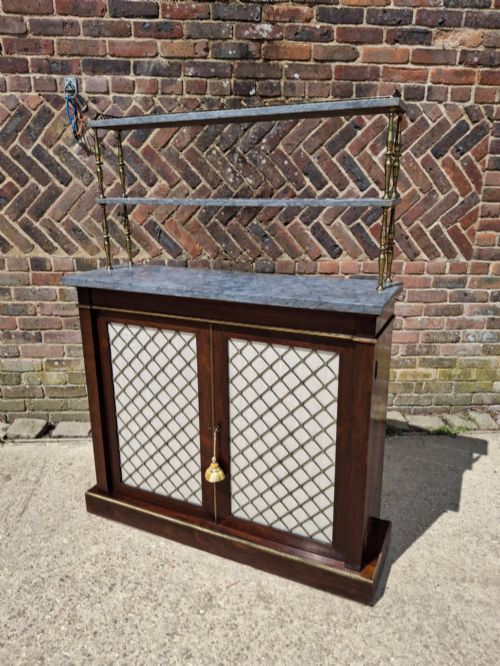
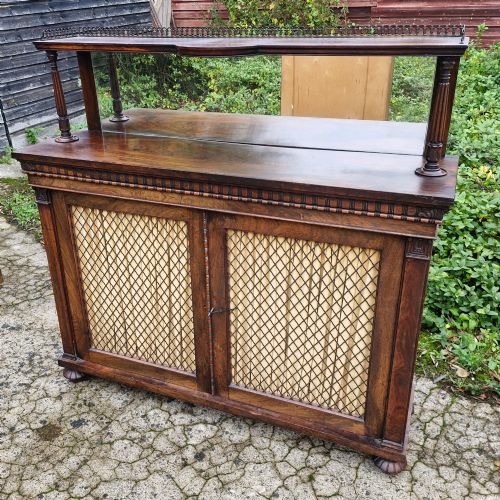
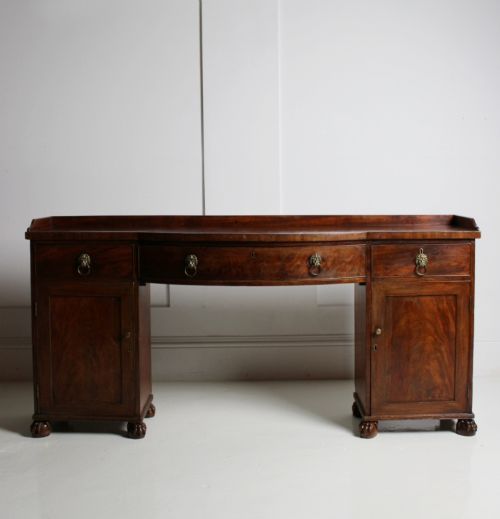
The dominant configurations on this page include bow-fronted designs, breakfront carcasses and pedestal arrangements. Scottish variations and smaller compact cabinets appear alongside large architectural pieces outfitted with brass inlays and lion paw feet.
While the core inventory spans the regency, georgian and william iv eras, revival iterations from periods like the nineteen-twenties and nineteen-thirties also represent the category. These later interpretations adopt the classic proportions and flame mahogany veneers of the earlier Regency models.
Materials and Technique
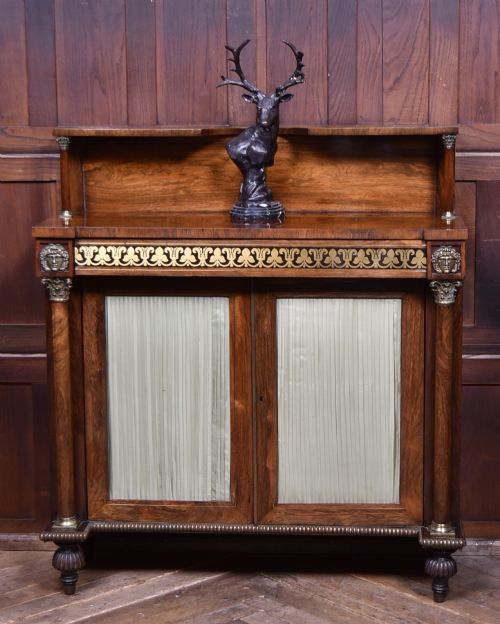
Cabinetmakers constructed these pieces using solid timbers and carefully selected veneers over secondary woods, relying heavily on figured mahogany, flame mahogany and rosewood. Craftsmen enhanced these rich brown and reddish surfaces with contrasting boxwood stringing and polished brass inlays.
Structural embellishments frequently include hand-carved mahogany details, such as classical columns and lion paw feet, which anchor the heavy pedestals. Marble tops and metal grill fronts also appear on specific serving cabinets and chiffoniers from the period.
Joinery techniques prioritize stability across wide carcasses and heavy sideboard tops, utilising traditional framing methods to support the weight of dense hardwoods. Veneers are book-matched symmetrically across drawer fronts to create striking grain patterns.
Regency Buffet Sideboard Retail Price Guide 2026
Typical asking prices for regency buffet sideboard among the pieces listed under this phrase on Sellingantiques today, from the lower quarter to the upper quarter. They describe what is for sale here now, not the wider market.
Several sideboards rest upon carved lion paw feet, standing ready to pounce on the dining room turkey.
Judging Quality
The distinction between ordinary and exceptional examples rests upon the selection of timber and the precision of the cabinetmaker's eye. Pieces featuring highly figured flame mahogany veneers or intricate brass inlay demonstrate a superior grade of craftsmanship compared to plain timber carcases.
Proportion and restraint dictate the visual success of the piece, where crisp lines and well-executed classical carving elevate the design. Finer specimens display harmonious scaling across pedestal doors and bow fronts without heavy or clumsy additions.
The Regency Buffet Sideboard Glossary
- Bow Front
- A convex curved cabinet front that projects outward in a smooth arc. This shape softens the corners of the dining room and was popular during the Regency period.
- Breakfront
- A large piece of furniture whose central section projects forward from the flanking outer cabinets. This architectural arrangement creates depth and shadow across the front elevation.
- Pedestal Sideboard
- A sideboard design featuring two separate pedestals or cupboards flanking a central serving table or recessed drawers. These often sit upon substantial feet.
- Chiffonier
- A low cabinet with doors enclosing shelves, frequently topped with a superstructure or mirror. These compact pieces function similarly to small sideboards in smaller rooms.
- Flame Mahogany
- A veneer cut from the branch wood forks of the mahogany tree to produce a flickering, flame-like grain pattern. Cabinetmakers reserved this decorative wood for prominent drawer and door panels.
Regency Buffet Sideboard: Frequently Asked Questions
Where should a regency buffet sideboard go?
These sideboards suit dining rooms or large hallway spaces where their length and storage capacity function effectively. They anchor a room visually and provide a surface for serving food or displaying decorative objects.
Ensure adequate clearance around the doors and drawers before placing the sideboard against a dining room wall. The heavier proportions of these pieces require a room with sufficient scale to balance their visual weight.
How do I care for mahogany surfaces?
Maintain the timber by dusting regularly with a soft, dry cloth and avoiding harsh chemical polishes. Natural wax applied sparingly preserves the historical patina of the wood.
Keep the cabinet away from direct heat sources and strong sunlight to prevent the mahogany and rosewood veneers from drying out or fading. Consistent indoor humidity protects the underlying joinery.
How do I identify a revival piece?
Revival pieces from the twentieth century often display machine-sawn timber elements and standardised internal secondary woods. Examining the backboards and drawer linings reveals the manufacturing methods of later eras.
Stylistic cues from the nineteen-twenties and thirties mimic earlier Regency proportions but lack the specific wear patterns and tool marks associated with nineteenth-century workshops.