

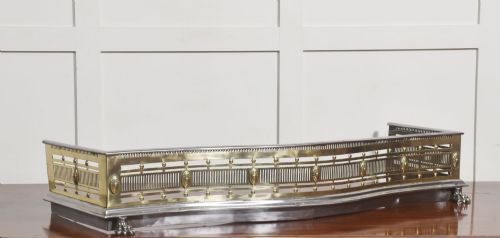


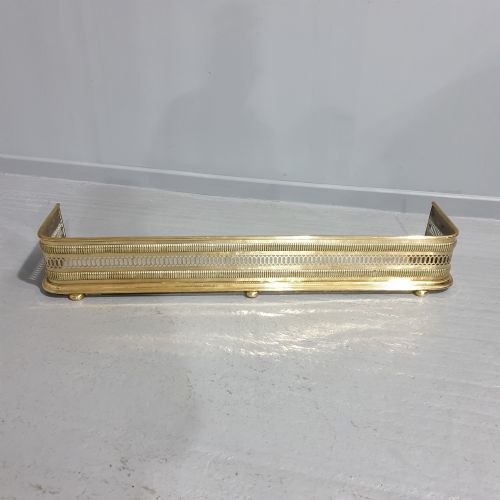
Regency Brass Hearth Surround
These Regency brass hearth surround examples combine bright metal and sturdy frames to frame an open fire with real presence.
Regency Brass Hearth Surround
A regency brass hearth surround protects the room from stray embers while anchoring the fireplace within the floor plan. These pieces appear in forms such as fireguards, curb fenders, and fireplace accessories.
Most examples found here date from the nineteenth century, including the Regency and Georgian periods. Makers utilised durable metals to create functional boundaries for domestic hearths.
Materials and construction
Workshops combined brass, bronze, and polished steel to build each frame. Iron provided structural strength for the heavier curved or straight barriers.
Ornaments such as brass garlands and cast figures were applied to the metal surfaces. Neoclassical motifs and Victorian influences guided the decorative schemes.
Regency Brass Hearth Surround Retail Price Guide 2026
Typical asking prices for regency brass hearth surround among the pieces listed under this phrase on Sellingantiques today, from the lower quarter to the upper quarter. They describe what is for sale here now, not the wider market.
Listings feature items spanning the Georgian, Regency, and Victorian eras, utilising brass, iron, and polished steel.
Judging quality
Heavier gauges of metal and substantial casting distinguish superior examples from lighter production. Details like cast lions or hand-chased brass garlands show greater skill.
The integration of polished steel with brass requires precise fitting. Better execution shows clean joints and balanced proportions across the entire curve.
The Regency Brass Hearth Surround Glossary
- Curb fender
- A low metal barrier placed on the floor around a hearth. It contains ash and keeps burning fuel inside the fireplace.
- Gilt bronze
- Metal treated with a gold wash or mercury gilding to give a rich surface finish. It appears on decorative mounts and highlights.
- Polished steel
- Iron alloy treated to a bright, reflective finish that contrasts with yellow brass. It requires careful maintenance to prevent tarnishing.
- Neoclassical
- A design style drawing on classical Greek and Roman forms. It influences the geometric shapes and motifs seen on these frames.
Regency Brass Hearth Surround: Frequently Asked Questions
How do I clean a brass hearth surround?
Use a soft cloth and mild metal polish to remove soot and tarnish from the brass surfaces. Avoid abrasive pads that scratch the polished metal.
Keep steel components oiled lightly to prevent rust from forming near the fireplace opening.
What is the difference between a fender and a fire guard?
A fender sits low on the floor to contain logs and embers within the hearth boundary. It acts as a physical barrier for the room.
A fire guard stands taller to block stray sparks from reaching carpets or furniture. Some designs combine both functions into a single unit.
How do I date an antique brass fender?
Examine the construction methods, such as hand-cut screws, dovetail joints, or cast versus stamped ornamentation. Heavier materials often point to earlier nineteenth-century production.
Compare the decorative motifs, such as neoclassical garlands or lion figures, against known period styles.
Will a vintage fender fit my modern fireplace?
Measure the width and depth of your hearth floor carefully before selecting a metal surround. Antique pieces come in various lengths and curved shapes that require exact clearance.
Check whether the inner dimensions match the opening of your specific fireplace hearth.