

Regency Bow Fronted Commode
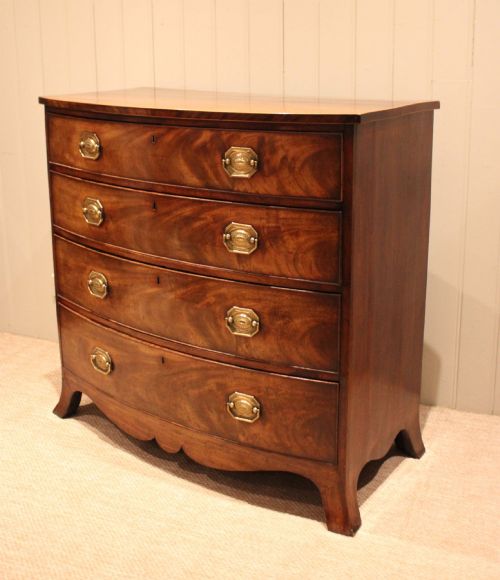
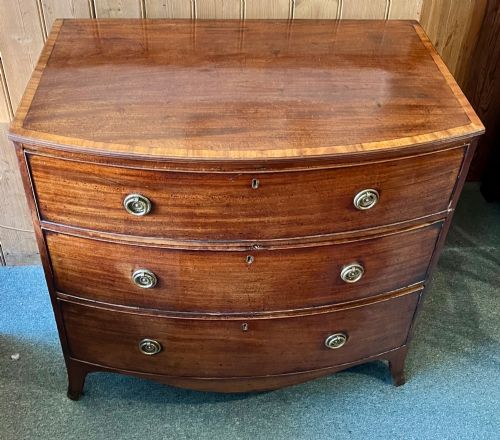
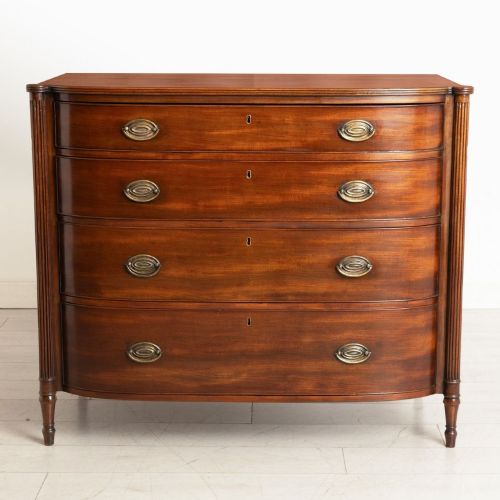
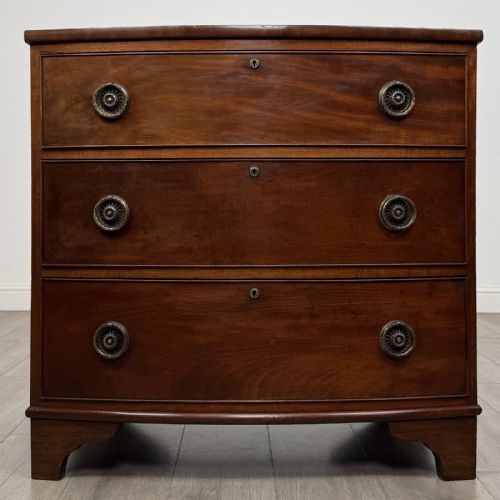
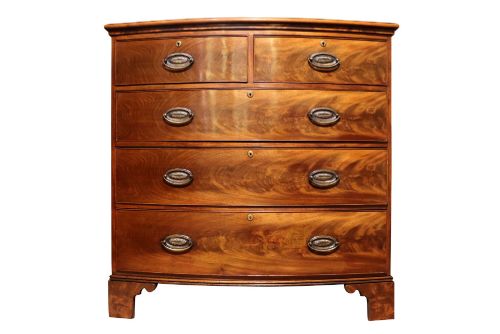
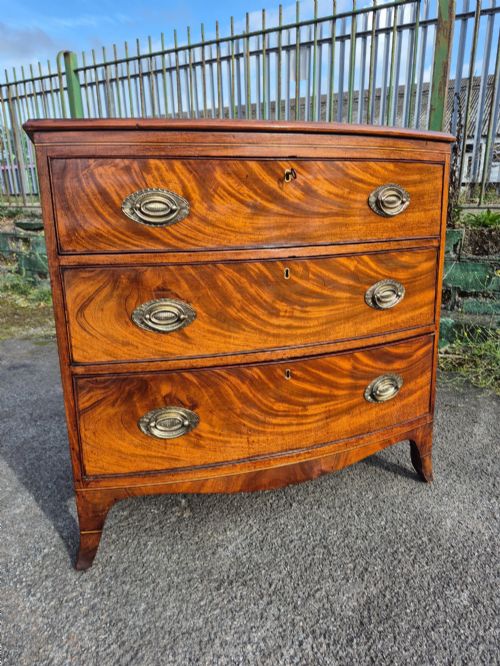
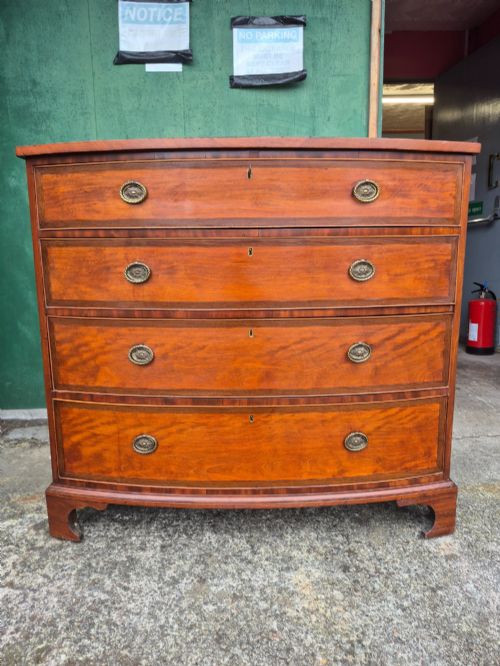
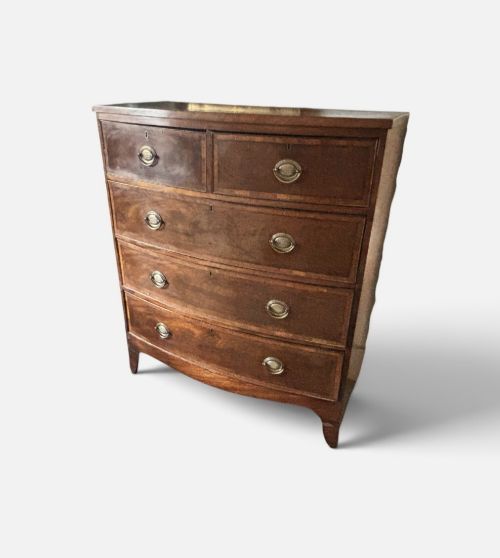
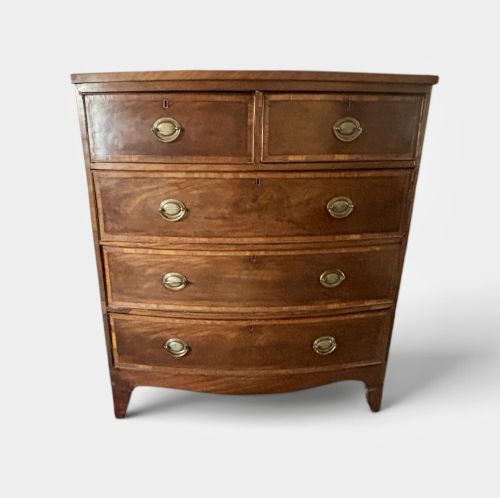
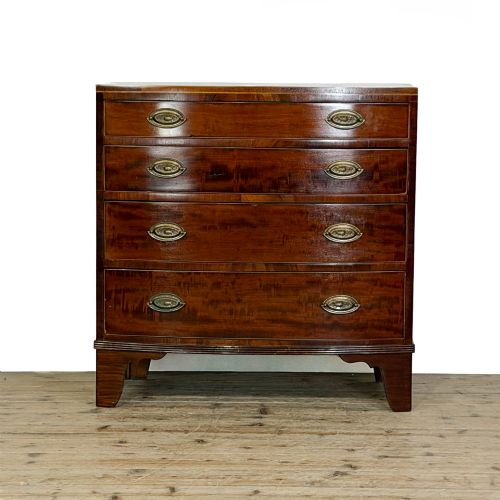
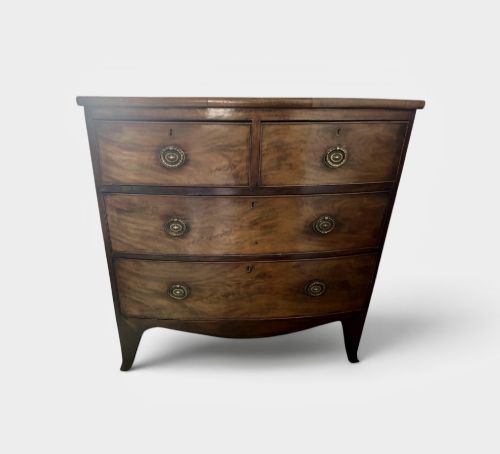
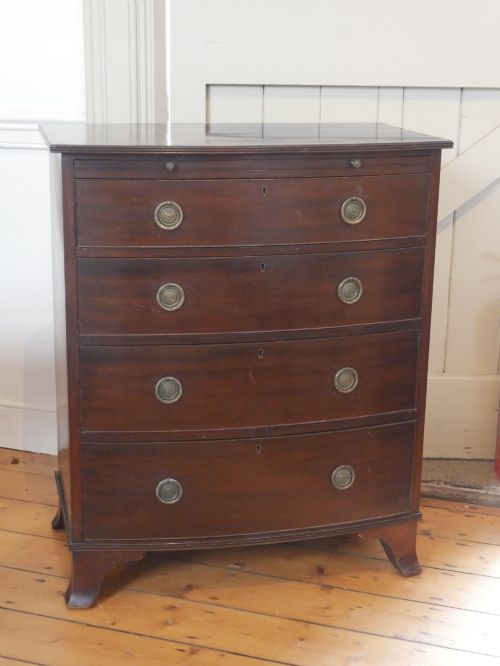
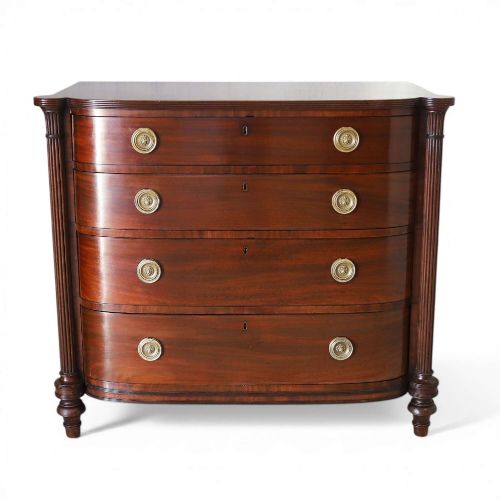
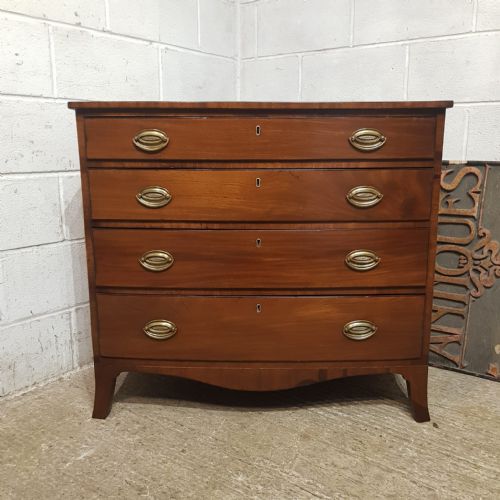
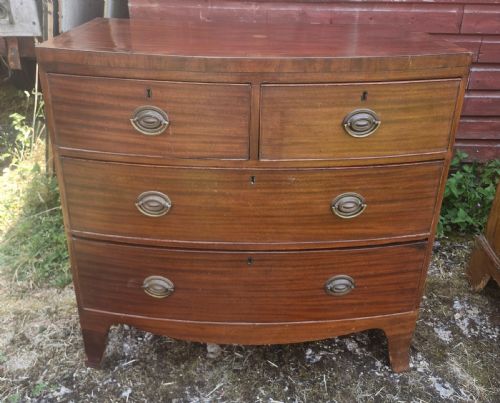
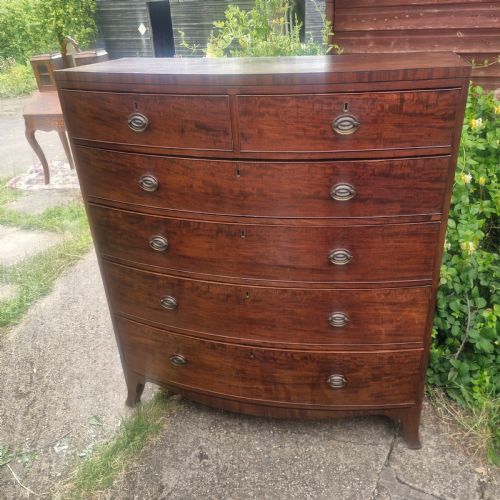
A regency bow fronted commode brings a sweeping curved front and rich timber figuring to any room.
Regency Bow Fronted Commode
Buyers seeking a regency bow fronted commode encounter elegant chests of drawers featuring a prominent convex curved front. The pieces seen here span the Regency, Georgian, and 19th Century periods, alongside occasional examples from the 18th Century, 1910, and 1920.
Most examples function as chests of drawers, though miniature furniture and bedside cabinets also appear. Originating primarily as refined case furniture, these items serve as practical storage solutions with a distinctive decorative presence.
The dominant forms display classic proportions with graduated drawers, often utilising timbers such as mahogany, flame mahogany, and satinwood. Scottish variations and smaller scaled pieces represent distinct stylistic choices within the selection.
Materials and construction
Cabinetmakers constructed these chests predominantly from solid and veneered timbers, utilising rich cuts of mahogany, flame mahogany, and satinwood to create striking visual depth on the curved drawer fronts. Contrasting details frequently incorporate boxwood inlay and cross-banding to frame the drawer edges.
Structural integrity relied on sturdy secondary woods like oak, combined with traditional joinery methods for the graduated drawers. Brass hardware, including drop handles and escutcheons, complemented the polished timber surfaces, while occasional pieces featured painted wood or ebonised finishes.
Regency Bow Fronted Commode Retail Price Guide 2026
Typical asking prices for regency bow fronted commode among the pieces listed under this phrase on Sellingantiques today, from the lower quarter to the upper quarter. They describe what is for sale here now, not the wider market.
Listings feature mahogany, satinwood, and painted wood, with periods spanning the Georgian era through to the early twentieth century.
What distinguishes finer examples
Quality rests significantly on the selection of timber veneers, where highly figured flame mahogany or carefully matched satinwood elevates the visual impact of the curved facade. Precision in the boxwood inlay and cross-banding demonstrates the cabinetmaker's skill in handling complex geometric alignments.
Proportion and execution of the curved bow front define the overall elegance, with superior pieces maintaining crisp lines and seamless drawer alignment. The integration of original brass fittings and the preservation of the polished surface contribute to the enduring appeal of the finest items.
Gillows
The Regency Bow Fronted Commode Glossary
- Bow front
- A convex curved cabinet front that projects outward in a smooth arc. This shape defines the primary silhouette of the pieces in this category.
- Cross-banding
- A strip of veneer applied perpendicularly to the grain of the main surface. It creates a decorative border around drawer fronts.
- Graduated drawers
- A series of drawers that decrease in depth from the bottom to the top of the chest. This arrangement maintains balanced visual proportions.
- Flame mahogany
- A highly figured veneer cut from the fork of the mahogany tree. It produces a distinctive flickering flame pattern across the timber.
- Satinwood
- A durable, yellowish timber prized for its lustrous sheen and smooth texture. It is often used for contrasting banding and inlay work.
Regency Bow Fronted Commode: Frequently Asked Questions
What is a bow front chest?
A bow front chest is a form of drawer unit featuring a convex, outward-curving front facade. This design softens the rigid angles typical of standard case furniture.
Cabinetmakers utilised this curved shape to introduce movement and elegance into bedrooms and living spaces while retaining ample internal storage capacity.
How do I identify a Regency period piece?
Regency pieces typically date from the early nineteenth century and display classical restraint combined with rich timber veneers. Look for balanced proportions and refined stringing or cross-banding.
These items often feature flame mahogany or satinwood surfaces supported by neat bracket feet or turned supports.
Where should I place a bow fronted chest?
These chests suit living rooms, hallways, or bedrooms where their curved profile can be appreciated without obstructing walkways. Their shallow ends make them adaptable for tighter spaces.
Pairing a chest with a simple mirror or placing it against a plain wall allows the figured timber grain to remain the focal point.
What is the difference between Georgian and Regency styles?
Georgian furniture encompasses a broader eighteenth and early nineteenth-century design evolution, often heavier in proportion. Regency style represents a specific subset focusing on classical antiquity and refined elegance.
Regency pieces frequently incorporate bolder wood figuring, contrasting banding, and more streamlined silhouettes than earlier Georgian counterparts.